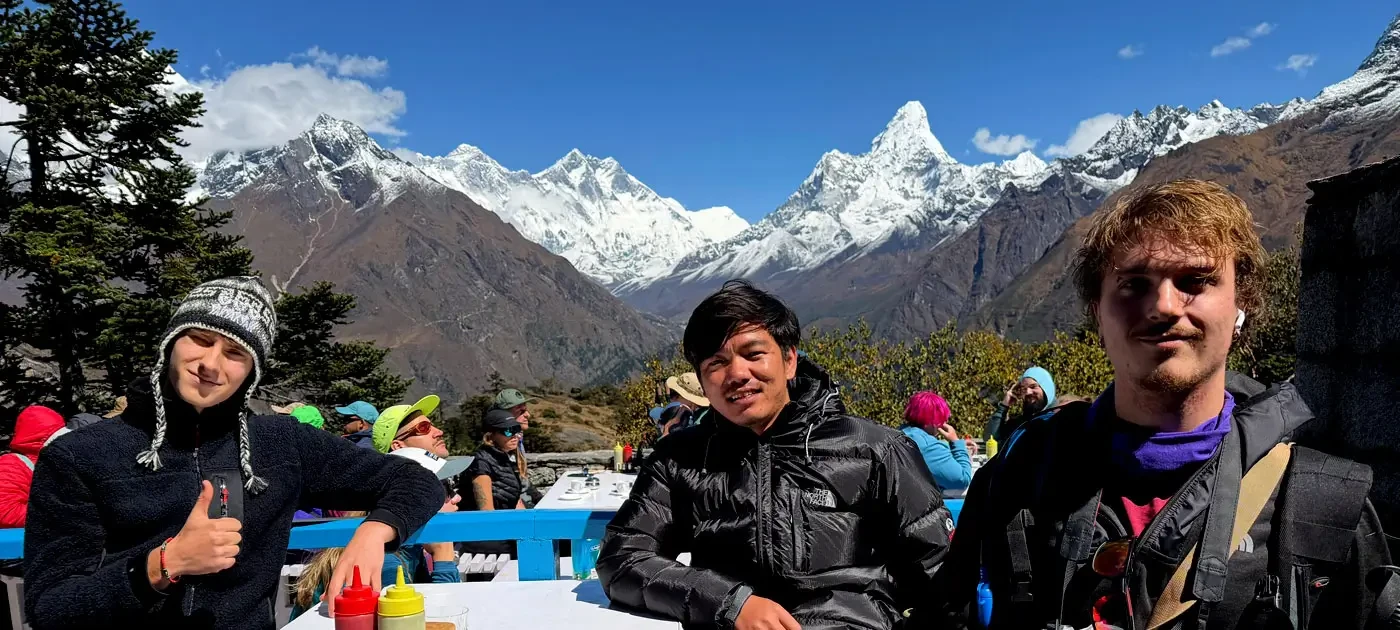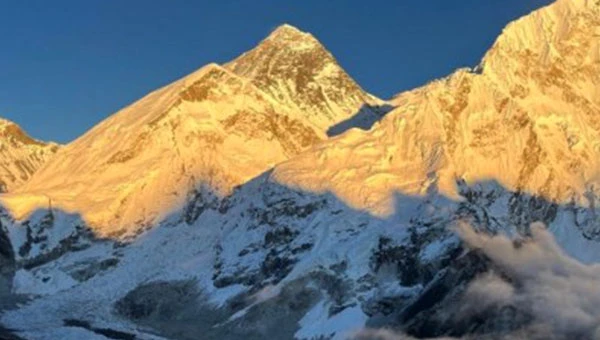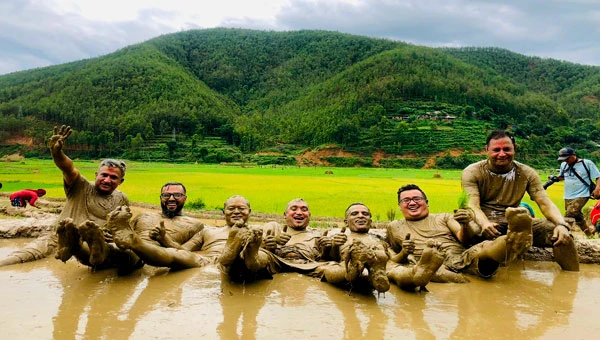
The months of September, October, and November fall in the autumn season. The autumn season is the time of the year that is neither hot nor cold. You will experience moderate weather during the Everest Base Camp Trek in autumn 2026/2027. There will be light rainfall in the early days of autumn, whereas the days get more sunny and pleasant in the latter part of autumn in the Everest region. The weather becomes more stable and sunny with fewer clouds.
The favorable weather provides a crystal-clear scenic vista of the Himalayas of the Everest region. As you ascend higher, the unobstructed vistas of the high Himalayas leave you in awe. The average temperature will be between 14 degrees Celsius and 20 degrees Celsius in the daytime, while the mornings and nighttime will be a bit cold. This is why more trekkers embark on their lifetime journey to Everest Base Camp in autumn.
Culture and Festivals during the Everest Base Camp Trek in Autumn
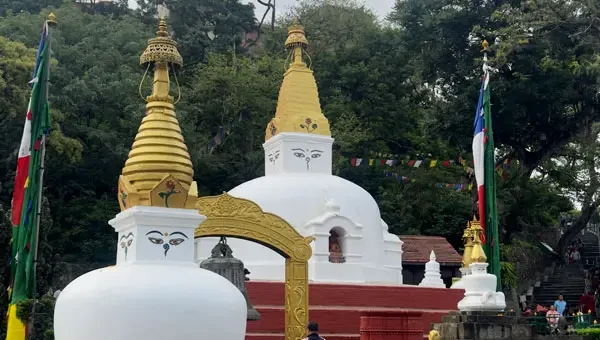
Everest Base Camp Trek in autumn allows you to experience the enriched culture and festivals of the Nepalese community. The cultural celebrations and festivities make the Everest Base Camp Trek in Autumn even more interesting and lively.
Mani Rimdu Festival
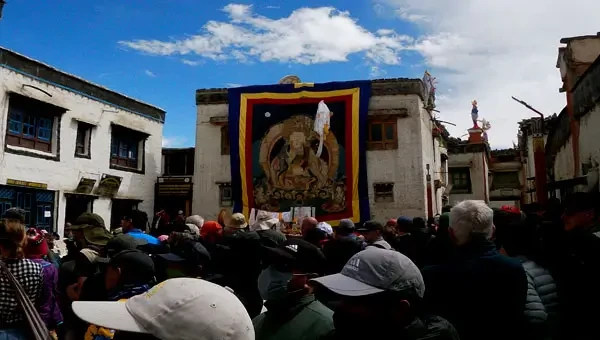
Mani Rimdu is the most important Sherpa Buddhist festival of the year, and the public celebration at Tengboche Monastery, right on the standard route, is expected around October 26 to 28, 2026, after weeks of private monastic preparation, including the construction of a sand mandala. The public days bring masked Cham dances, a blessing from the head lama, and a courtyard full of Sherpa villagers and trekkers at 3,860 meters with Ama Dablam behind the monastery. The exact dates are set by the head lama according to the Tibetan lunar calendar and usually confirmed only a few months out, so late October is a reasonable target to plan around, with confirmation closer to departure.
Dashain
Dashain is the biggest and longest festival in Nepal and is celebrated for 15 days. The families come together, enjoy the feast, and exchange blessings and gifts with each other. It is celebrated with great pujas to different forms of Goddess Durga. Children wear new clothes, visit their nearby ones, and play on the swing and fly kites. The whole country celebrates Dashain with great pleasure and joy.
Tihar
A festival of lights and flowers, Tihar is celebrated for five consecutive days. The festivals celebrate animals such as crows, dogs, cows, and oxen. The Goddess of wealth, Laxmi, is also worshipped. The nights will be dominated by vibrant lights and décor, while the beautiful flowers will dominate the days.
Chhath
The festival is predominantly celebrated in the Terai region of Nepal. However, it is celebrated all over Nepal. The banks of rivers and ponds are decorated for the celebration of the Chhath festival. The festival offers prayers and worship of God Surya, the Sun.
Why Autumn Is the Best Season for Everest Base Camp Trekking?
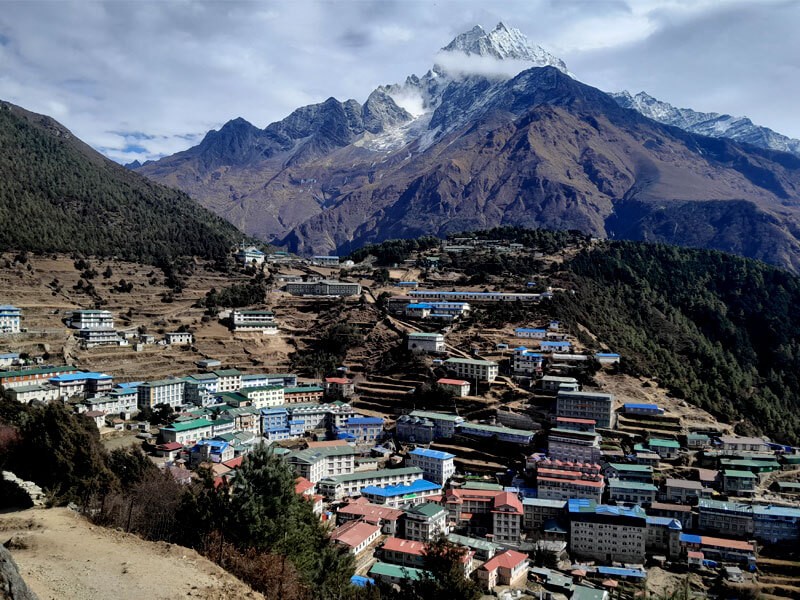
Once the monsoon ends in mid-September, the Khumbu settles into weeks of dry, settled weather that usually lasts through November. This is why autumn ties with spring as the region's peak high-altitude trekking season. Mornings are typically clear, trails through the Dudh Koshi valley are dry instead of muddy, and views of the Himalayan giants along the route, Everest, Lhotse, Nuptse, and Ama Dablam, are about as reliable as mountain weather gets anywhere in the world.
Compared to spring, autumn skies are clearer on average since there's less dust haze built up over the dry months. Compared to winter, the days are warmer, and the high passes stay open without the risk of being snowed in. Compared to monsoon, the difference isn't close; autumn trades a damp, cloud-covered trail for a dry, photogenic one through Sagarmatha National Park.
Tea Houses and Accommodation during the Everest Base Camp Trek in Autumn
There are many tea houses and lodges on the trail to the Everest Base Camp Trek. Tea houses and lodges provide Western foods as well as Nepali local cuisine, along with well-facilitated accommodations. Autumn is the most favorable time of the year for the Everest Base Camp Trek, so there will be many trekkers en route to Everest Base Camp in autumn. It will be a bit difficult to find tea houses and accommodation during the Everest Base Camp Trek in autumn. It’s highly recommended to pre-book accommodation for the Everest Base Camp Trek in autumn.
How Crowded Is the Trail in Autumn
Autumn is the busiest season on the Everest Base Camp trail, and October sees the heaviest traffic of the year. Popular teahouses in Namche Bazaar, Tengboche, and Dingboche can fill up by early afternoon, and trekking without rooms booked ahead sometimes means settling for a colder room or a longer walk to the next available lodge. Dining halls are lively most evenings, which a lot of trekkers genuinely enjoy as part of the teahouse trekking experience, but it also means slower service and fewer items left on the menu by the time you sit down.
If crowds are a real concern, early September or the back half of November offer most of autumn's weather benefits with noticeably thinner trails and easier lodge availability, while still falling inside the main trekking season.
Challenges during the Autumn Everest Base Camp Trek
The route naturally comes with its own unique set of high-altitude challenges, from steep, exhausting climbs to freezing alpine nights. Understanding what lies ahead is the best way to prepare for the journey, and being aware of these factors will help ensure you have a safe, successful, and deeply rewarding trek.
Physical Demands of the Daily Climb
Most days on the trail involve five to seven hours of walking on uneven, rocky terrain with a steady net elevation gain, and a few stretches, the climb out of the Dudh Koshi valley toward Namche Bazaar, and the long pull from Dingboche to Lobuche, are genuinely tiring even for trekkers who show up reasonably fit. Autumn's good weather doesn't change the physical demands of a multi-day, high-altitude teahouse trek, so building in some hill walking or stair training beforehand makes a real difference to how much of the trip you enjoy versus endure.
Cold Nights Despite Sunny Days
The swing between a comfortable afternoon in Namche and a freezing night at Gorak Shep also catches some trekkers off guard. Daytime temperatures in the mid-teens Celsius can lull people into underpacking, only to find themselves cold the moment the sun drops behind the ridgeline. Proper layering and a sleeping bag rated to at least minus 10°C aren't optional extras at the higher camps, regardless of how mild the days have felt lower down.
Occasional Weather Disruptions
Autumn is the most stable season on this route, not an immune one. Sudden weather disruptions, including out-of-season snowfall tied to broader storm activity in the Bay of Bengal, have briefly closed sections of the trail near Tengboche in recent years, even during what was otherwise a typical October [confirm this detail and any recent precedent with your guides before publishing]. It's rare, but it's a reminder that flexible scheduling and trusting your guide's call on pacing or rerouting matter just as much in autumn as in any other season.
Limited Connectivity and Amenities at Altitude
Above Dingboche, Wi-Fi and phone signal become noticeably limited. Charging a phone or camera battery usually incurs a small fee per device, and the menu narrows to fewer items as you climb higher, since everything above Namche is carried by porter or mule.
The Early Ramechhap Departure
Beyond the trail itself, the single most exhausting part of the trip for a lot of autumn trekkers is logistical rather than physical, the 1 am to 3 am pickup and four to five hour drive to Manthali Airport in Ramechhap before the flight to Lukla, covered in detail above. It's worth factoring that into how you plan day one and day two of the itinerary, rather than treating it as a minor formality before the "real" trekking begins.
While these challenges are a real part of the high-altitude experience, they are also exactly what make reaching Everest Base Camp so incredibly rewarding, and you won’t have to face them alone. Our experienced team handles all the heavy lifting and logistical headaches behind the scenes. From securing reliable teahouses and managing your gear to guiding you safely through unexpected weather or challenging terrain, we ensure every detail is expertly managed. We turn potential obstacles into seamless parts of your adventure, leaving you free to focus entirely on the breathtaking Himalayan views, the rich local culture, and the unforgettable triumph of the journey. With our team by your side, you can step onto the trail with absolute confidence, knowing you are fully supported every single mile of the way.
Who Should Trek to Everest Base Camp in Autumn
Autumn suits first-time trekkers and anyone prioritizing reliable weather and clear photos over solitude. If you'd rather avoid crowds and don't mind colder, quieter trails, our Everest Base Camp Helicopter Tour or a winter departure might be a better fit. If your dates can flex around late October, building the trip around the Mani Rimdu Festival Trek turns the same route into a deeper cultural experience.
Everest Base Camp Trail and Route in Autumn
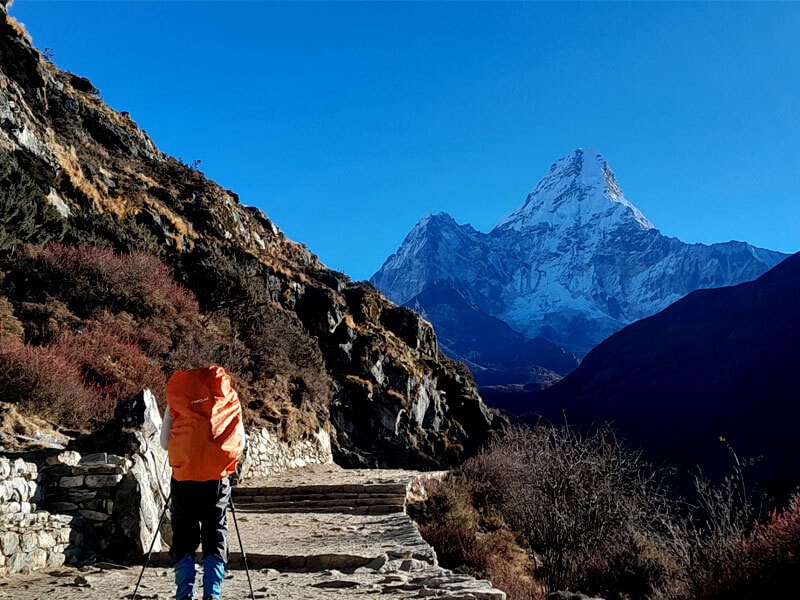
Autumn falls between the monsoon and the winter season. There is little chance of rainfall and no snow on the trail to the Everest Base Camp Trek in autumn. The trail and route will be dry and accessible to walk, as there won’t be any slippery mud or snow melting.
The colorful rhododendrons and wildflowers on both sides of the trail to Everest Base Camp in autumn make the journey more enticing.
Day-by-Day Autumn Itinerary
- Day 1: Arrival in Kathmandu (1,350m)
- Day 2: Drive to Ramechhap / Manthali (4.5-Hour Drive)
- Day 3: Fly to Lukla, Trek to Phakding (2,610m)
- Day 4: Trek to Namche Bazaar (3,440m)
- Day 5: Acclimatization Day in Namche Bazaar
- Day 6: Trek to Tengboche (3,860m)
- Day 7: Trek to Dingboche (4,410m)
- Day 8: Acclimatization Day in Dingboche
- Day 9: Trek to Lobuche (4,940m)
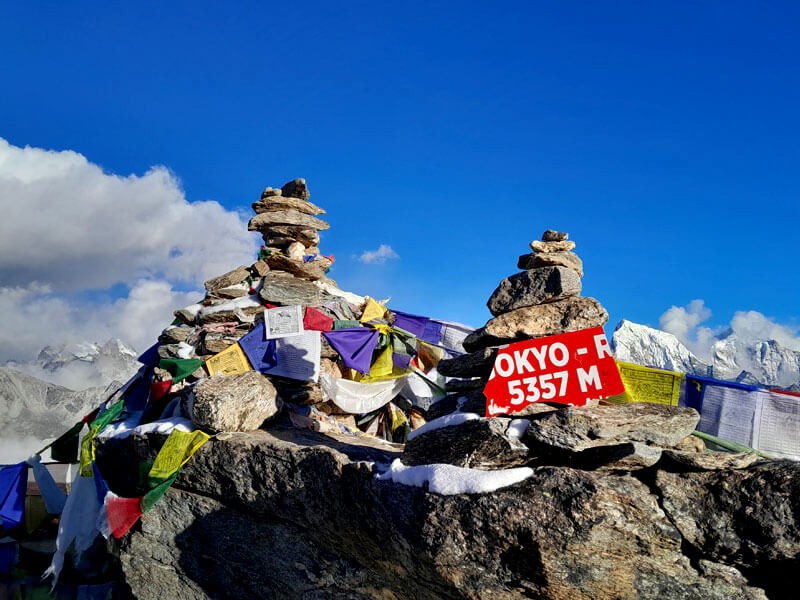
- Day 10: Trek to Gorak Shep (5,164m) & on to Everest Base Camp (5,364m)
- Day 11: Sunrise Hike to Kala Patthar (5,545m), Trek Down to Pheriche
- Day 12: Trek Down to Namche Bazaar
- Day 13: Trek Down to Lukla
- Day 14: Fly to Ramechhap, Drive Back to Kathmandu
Most operators build in one extra buffer day somewhere in this schedule, which is why the total trip length is usually quoted as 12 to 14 days. See the full 14-Day Everest Base Camp Trek itinerary for the detailed version.
Permits and Costs for the Everest Base Camp Trek in Autumn
When organizing your journey to Everest Base Camp, a few mandatory permits, transport arrangements, and field staff costs need to be factored into your overall plan.
1. Mandatory Trail Permits
To walk the standard route, you must secure two main pieces of documentation. Together, they total roughly USD 45 to 50 in local currency:
- Sagarmatha National Park Entry Permit: This costs NPR 3,000 (USD 25 to 28) and directly funds environmental conservation in the Everest region. It can be picked up at the park gates in Monjo or in Kathmandu beforehand.
- Khumbu Pasang Lhamu Rural Municipality Permit: This local regional fee is NPR 2,000 to 3,000 (USD 15 to 22) and is collected upon arrival in Lukla to support local community infrastructure.
Note: A traditional TIMS card is no longer required or used on this trail, as the local municipality has replaced it entirely with their own regional system.
2. Porter Support
Hiring local help is a fantastic way to support the mountain economy while keeping your own daypack light.
- Daily Wages: A professional trekking porter generally costs USD 20 per day. This baseline rate completely covers their daily wages, meals, travel expenses, and mountain accommodation.
- Weight Limits: A single porter typically carries up to 20 to 25 kg of luggage, which is often shared between two walking partners.
3. The Tipping Custom
Tipping is a deeply ingrained and proudly respected tradition in the Himalayas, serving as a direct way to thank your field crew for keeping you safe.
- The Baseline: While always based on your satisfaction, a standard tip for mountain staff usually equals 15% to 20% of their total trek wages.
- The Breakdown: For a typical 12-to-14-day itinerary, most hikers budget roughly USD 100 to 150 per client for their porter, and USD 150 to 200 per client for their main guide, which is happily handed over in a sealed envelope during the final group dinner in Lukla.
4. Mandatory Altitude Insurance
Because emergency services are complex in the high wilderness, having proper travel insurance before landing in Nepal is strictly mandatory. Your policy must be explicitly rated for high-altitude trekking up to 6,000 meters and feature unconditional coverage for emergency helicopter evacuation, as an unplanned high-alpine medical lift can easily cost thousands of dollars out-of-pocket.
Safety Tips for Autumn Trekking
Build in the acclimatization days at Namche and Dingboche rather than rushing the schedule. Pack layers for the swing between a mild Namche afternoon and a freezing night at Gorak Shep, book Lukla flights and the Ramechhap transfer with buffer days on either end, and carry enough Nepali rupees in cash since card payments thin out above Namche. Walk at a steady pace, drink plenty of water, and descend without hesitation if your guide recommends it.
Altitude and Acclimatization in Autumn
Altitude is the defining challenge of this trek in any season. Above 3,000 meters, the body needs time to adjust, and trying to keep pace with a crowded trail or a packed lodge schedule is one of the most common reasons trekkers run into trouble. The rest days built in at Namche and Dingboche exist for exactly this reason and shouldn't be shortened just to keep up with a group.
Packing List and Gear for Autumn
Autumn falls between the rainy season and the winter season. So you don’t need to prepare as much as you do for the Everest Base Camp Trek in spring and winter. The gear and equipment you need to pack for the Everest Base Camp in autumn are as follows:
Upper Body
- Woolen hat and cap
- Sunglasses and Sunscreen
- Neck Gaiters and Buff
- Thermal
- Trekking T-shirt
- Waterproof Jackets
- Down Jacket
- Gloves
- Headlamp
Lower Body
- Trekking Trousers
- Trekking Socks
- Trekking Boots
- In-house Slippers
Other Gear and Equipment
- Trekking Poles
- First Aid Kit
- Backpack
Proper layering of clothes, adequate gear, and equipment are essential for the Everest Base Camp Trek in autumn. You can read Everest Base Camp Trek Packlick for more detailed information regarding the packing list for Everest Base Camp Trek.
In Conclusion
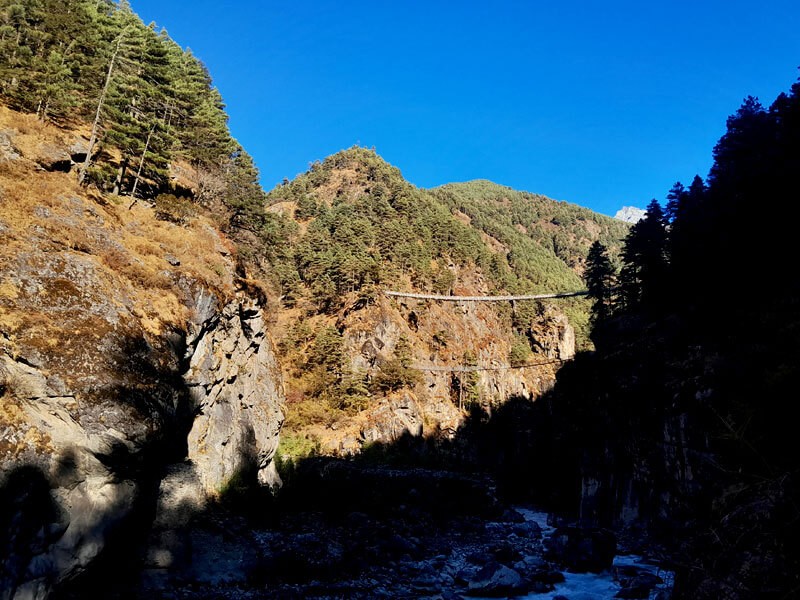
The months of September, October, and November are the most favorable times of the year to embark on a lifetime journey to Everest Base Camp. Clear blue skies with few clouds offer an unobstructed view of the majestic mountains of the Everest region. The vibrant cultural celebrations and festivities enrich your journey to Everest Base Camp in autumn even more. The hospitality of the Sherpa people, old-age monasteries, hanging suspension bridges, and friendly yaks en route to Everest Base Camp in autumn make your journey more enjoyable and memorable.
Also, check out the Everest base camp trek with helicopter return at this time of the month for a better and shorter experience.