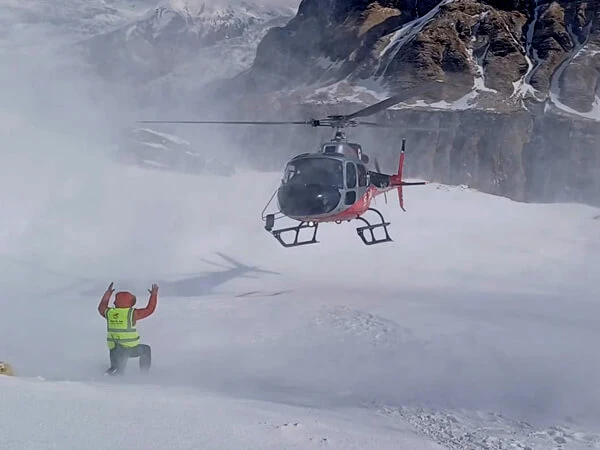
The Manaslu Tsum Valley and Larkya La Pass Trek is a 21-day trek in Nepal. It takes you through the restricted Manaslu region and Tsum Valley regions of Nepal, crossing the 5,160-meter Larkya La Pass into the Annapurna region. The route takes trekkers to Mu Gompa, Rachen Gompa, and Milarepa's Cave in Tsum Valley, past Punhyen Glacier, and up to Manaslu Base Camp at Samagaon, with views of Mt Manaslu, Himchuli, and Ganesh Himal along the way. Since the route passes through a restricted area and two conservation regions, it requires a Manaslu Restricted Area Permit, along with MCAP (Manaslu Conservation Area Project) and ACAP (Annapurna Conservation Area Project) permits, and trekkers must be accompanied by a licensed guide at all times. Spring (March to May) and autumn (September to November) are the best seasons. These months offer the clearest mountain views and stable trail conditions. The trek cost covers an experienced guide and porter support, full board accommodation, and all required permits. Trekkers with prior high altitude experience will find this trek manageable, and first-time trekkers can also join with good preparation and a steady pace.
Manaslu Tsum Valley and Larkya La Pass Trek
Trip Facts
What is Manaslu Tsum Valley and Larkya La Pass Trek?
The Manaslu Tsum Valley and Larkya La Pass Trek is a multi-region trekking journey in Nepal that combines three areas in one route. You walk through the remote Manaslu restricted region, the hidden Tsum Valley, and then cross into the Annapurna region over the Larkya La Pass. Few trekking routes in Nepal combine a restricted region, a hidden valley, and a high mountain pass in a single itinerary.
This Himalayan trek begins in the lowlands near Machha Khola and gradually climbs alongside the Budhi Gandaki River. You pass through small villages, forests, and farmland before entering the Manaslu restricted region near Samagaon and Samdo. Tsum Valley is situated apart from the main trail, accessible via a side route within the same restricted region. Tsum Valley is known for its old monasteries and its close ties to Tibetan Buddhist culture, kept alive over many centuries with little outside contact. Because Tsum Valley and the wider restricted region are both protected, this trek gives you rare access to a part of Nepal that most travelers never see.
This adventure trek is not only about mountain views. It also gives you a slow, honest look at how people live in one of the most remote and protected corners of the Nepal Himalaya.
How Many Days is the Manaslu Tsum Valley and Larkya La Pass Trek?
Manaslu Tsum Valley and Larkya La Pass Trek is 21 days from arrival in Kathmandu to final departure. The trek includes a drive to the starting point, walking days through the Manaslu restricted region and Tsum Valley, the Larkya La Pass crossing, and the return drive to Kathmandu. A short acclimatization day at Sama Gaon is also part of these 21 days, to help your body adjust before the high pass.
If you have less time, you can do shorter Manaslu treks that don’t include Tsum Valley. However, to safely visit both the valley and cross the pass, you will need the full 21 days.
Why Choose the Manaslu Tsum Valley and Larkya La Pass Trek?
Manaslu Restricted Region and Tsum Valley in One Trekking Route
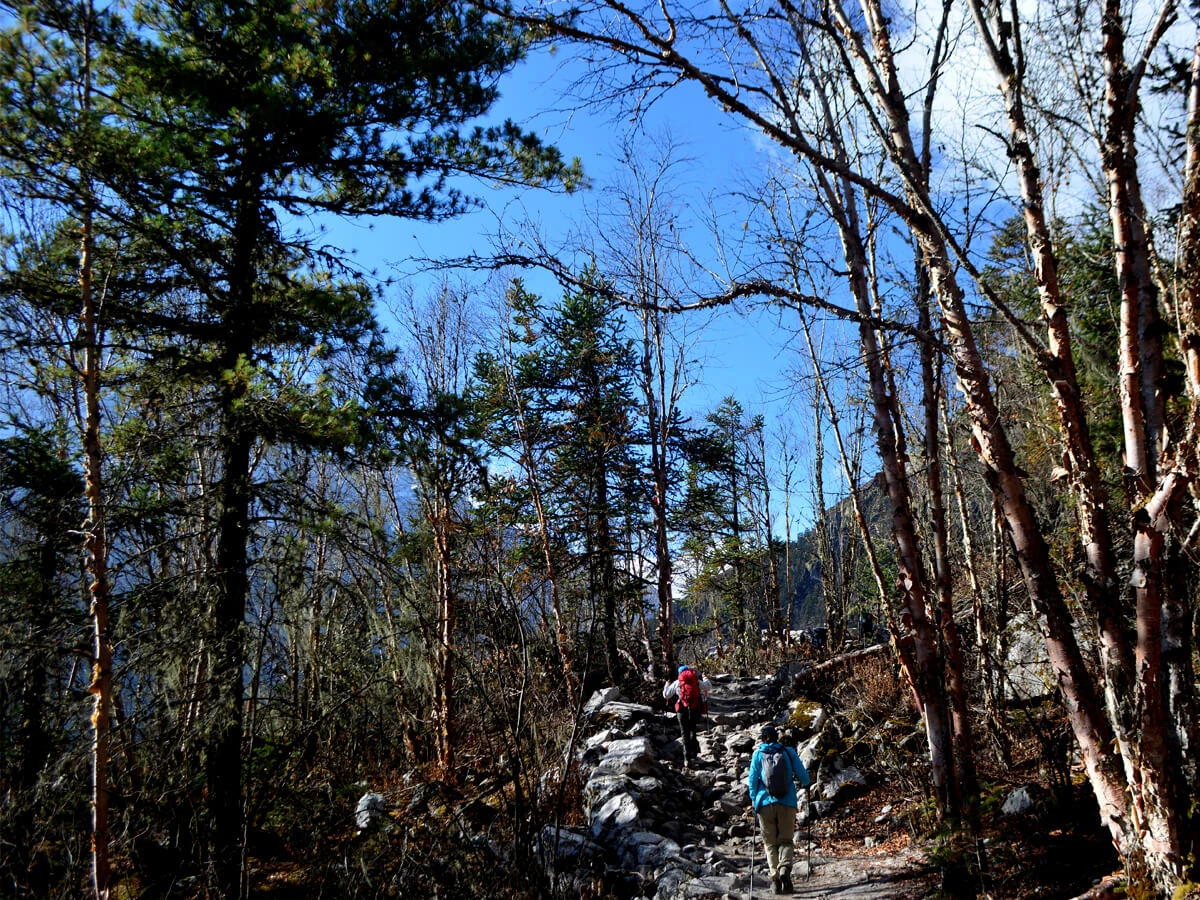
Most treks in Nepal stay inside one valley or one region. This trek is different. You will have the chance to walk through the Manaslu restricted region, the hidden Tsum Valley, and then over the Larkya La Pass into the Annapurna region, all inside one itinerary. You get to experience three distinct landscapes and three different cultures without booking three separate trips. Along the way, you will see the trail change from lowland forest near Machha Khola to high dry valleys near Samagaon, then to alpine terrain at the pass, and finally into greener Annapurna countryside on the way down. Few trekking routes in Nepal let you experience this much variety in one connected journey, which makes this trek worth choosing over a single-region trek.
Tsum Valley Trekking for Untouched Himalayan Culture
Tsum Valley stayed closed to outside trekkers for many years. You will get to see monasteries, prayer walls, and Tibetan Buddhist traditions that remain close to how they were centuries ago. Walking through this valley gives you a side of Nepal that far fewer travelers ever get to see, since it sits inside a restricted region with controlled entry. You can visit Mu Gompa, Rachen Gompa, and Milarepa's Cave, sites that hold deep meaning for local Tibetan Buddhist communities. You will also experience village life that still follows old patterns, with local farming, small monasteries, and quiet mountain settlements that have changed very little over generations. This is a valley worth visiting for anyone who wants to see Himalayan culture up close, not just from a distance.
Larkya La Pass Crossing Without Crowded Trails
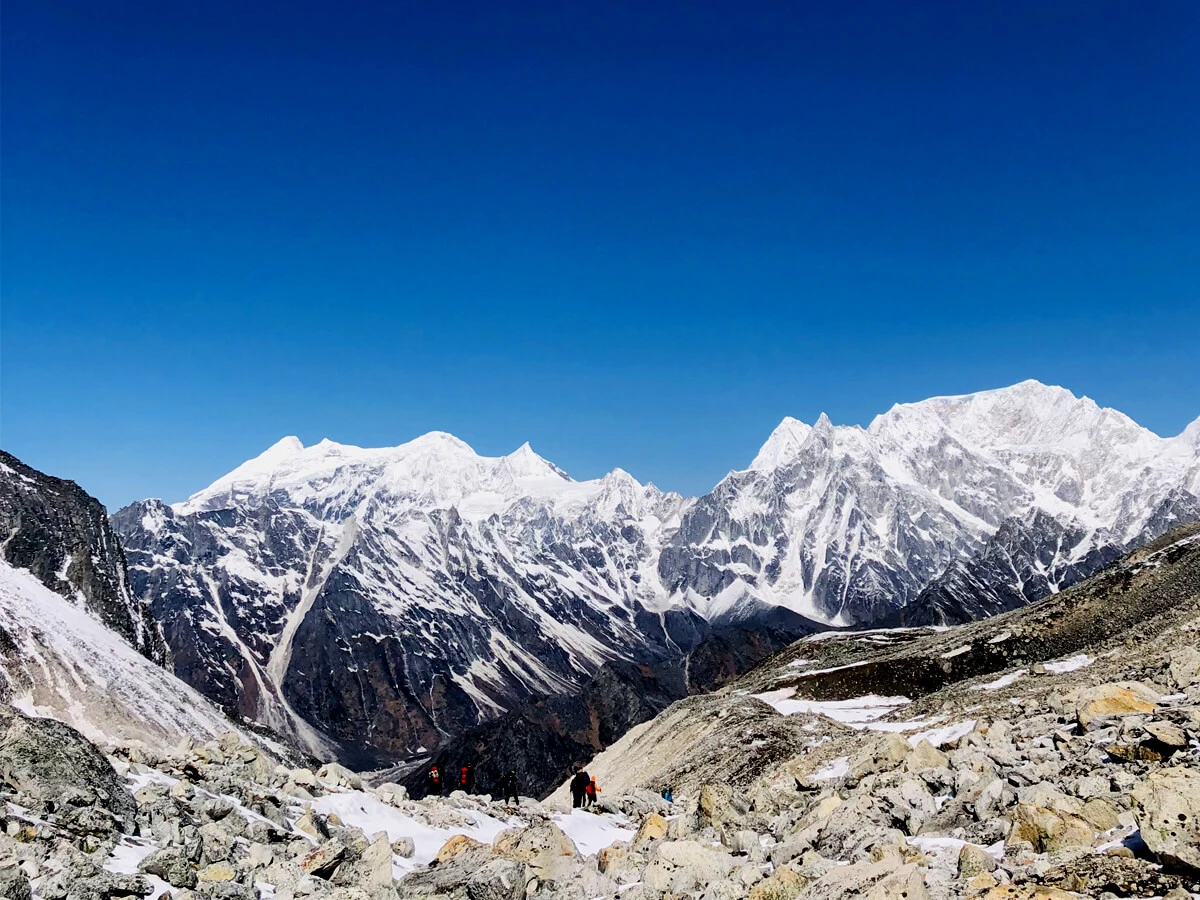
The Larkya La Pass sits at 5,160 meters, and you will get open views of Himlung, Cheo Himal, Kang Guru, and Manaslu itself from the top. Unlike more popular passes in Nepal, this route sees far fewer trekkers each season, so you get to experience the trail and the mountain views in a quiet, personal way. You will pass through Dharmasala on the approach and descend to Bhimthang on the other side, walking beside glaciers, moraine, and prayer flags at the highest point of your journey. If you want a real high altitude crossing without walking alongside large crowds, this pass is worth experiencing at least once.
Manaslu Tsum Valley Trek Suited to All Experience Levels
Trekkers with prior high altitude experience will find this route very manageable, since the itinerary already builds in a full acclimatization day at Sama Gaon before the higher sections begin. First-time trekkers are just as welcome here as long as they prepare well physically before the trip and keep a steady pace once on the trail. The gradual altitude gain over the first two weeks, followed by a slower approach to the pass, gives most trekkers enough time to adjust naturally to the elevation, so this journey stays within reach whether it is a first trek or a tenth.
A Remote Nepal Trekking Experience Fewer Travelers Ever Get to See
Every year, thousands of trekkers walk the Everest and Annapurna trails. Very few get the chance to enter Tsum Valley or cross Larkya La. Choosing this route means you will come home with photos, stories, and memories that stand apart from the usual Nepal trekking experience. You will walk through villages where daily life continues almost untouched by tourism, and you will stand at a mountain pass where the silence itself becomes part of the memory. This is the kind of trek you will find yourself talking about for years afterward, not because it was easy, but because it was real.
A Complete Himalayan Journey in a Single Trip
Few treks in Nepal bring together a restricted cultural valley, a base camp view of the world's eighth-highest mountain, and a high mountain pass crossing into a different region, all in one route. This trek brings all three together. By the time Kathmandu comes back into view, the journey will have passed glaciers, centuries-old monasteries, a 5,160-meter pass, and some of the Himalaya's most striking peaks seen up close. That much variety and depth inside a single trip is hard to find anywhere else in Nepal.
How is the Manaslu Tsum Valley and Larkya La Pass Trek different from the Manaslu Circuit Trek?
The Manaslu Circuit Trek follows the main trail around Mt Manaslu, passing through Samagaon and Samdo before crossing the Larkya La Pass into the Annapurna region, without the side route into Tsum Valley. The Manaslu Tsum Valley and Larkya La Pass Trek follows this same core route but adds a detour into Tsum Valley through Lokpa, Chumling, Chhokhangparo, and Nile, before rejoining the main trail toward Samagaon. This extra loop is the main reason the Manaslu Tsum Valley and Larkya La Pass Trek takes around 21 days to complete, compared to 14 to 18 days for the Manaslu Circuit Trek alone.
The scenery also shifts more across this longer route. Tsum Valley adds drier, high desert-style landscapes, old monasteries, and quiet farming villages that the standard Manaslu Circuit Trek does not pass through, alongside views of Ganesh Himal and Himchuli that are unique to this side valley. The Manaslu Circuit Trek stays focused on the main Budhi Gandaki valley and the approach to Samagaon and the pass, with less variation in scenery along the way.
The experience differs, too. Trekkers on the Manaslu Circuit Trek move at a faster pace toward the pass, with less time spent in any one village. This trek slows that pace down, giving more time in Tsum Valley's monasteries and villages before continuing to the pass, which suits trekkers who want depth over speed.
The benefit of choosing the longer route is straightforward. For a few extra days on the trail, trekkers gain an entire valley, its culture, and its scenery that the standard Manaslu Circuit Trek simply does not include, while still finishing with the same Larkya La Pass crossing and Annapurna descent.
Major Attractions of the Manaslu Tsum Valley and Larkya La Pass Trek
Mu Gompa, the Highest Monastery in Tsum Valley
Perched at 3,700 meters, Mu Gompa stands as one of the highest active monasteries in the Tsum Valley region. Monks here still follow daily rituals passed down through generations, largely undisturbed by the outside world until the valley opened to trekkers in recent decades. The walk up from the Nile takes a few hours through open, dry terrain, and the monastery itself offers wide views across the upper Tsum basin toward the Tibetan border. Many trekkers consider this the spiritual high point of the entire cultural section of the trek.
Rachen Gompa and the Nunnery of Tsum Valley
Rachen Gompa sits close to farmland and small rice terraces near Lama Gaon, lower down the valley than Mu Gompa. Buddhist nuns live and pray here daily, and the site is also called the Nunnery Gompa by locals and guides. Trekkers who stop here usually spend less time than at Mu Gompa, since it sits directly on the main trail rather than requiring a side walk.
Milarepa's Cave and the Legend Behind It
Milarepa's Cave, known locally as Piren Phu or the pigeon cave, sits behind the village of Burji. Local tradition holds that the Tibetan yogi Milarepa meditated here, and a rock formation inside the cave is pointed out by guides as his footprint. The site is treated as sacred by Tibetan Buddhists in the valley and is a short stop on the way to or from Mu Gompa.
Manaslu Base Camp ( 4800 meters )
Mt Manaslu rises to 8,163 meters, making it the eighth-tallest peak on earth and the dominant landmark of this entire region. Near Samagaon, an optional side trail during the acclimatization day leads toward its base camp, putting trekkers within close range of the mountain's south face, its hanging glaciers, and the icefall that has challenged mountaineers for decades. Even without summiting, standing at the base of a peak this size leaves a lasting impression that few other treks in Nepal can match.
Crossing Punhyen Glacier on Foot
Rather than viewing a glacier from a distant ridge, this trek walks directly across Punhyen Glacier, giving a rare ground-level encounter with moving ice, crevasses, and exposed moraine in the high Manaslu region. The scale of the glacier becomes obvious only once you are walking across it, surrounded by rock debris carried down from the surrounding peaks over thousands of years.
Larkya La, the Highest Point of the Journey
At 5,160 meters, Larkya La marks the trek's crossing point into the Annapurna side of the journey and its most physically demanding day. Clear mornings reveal Himlung, Cheo Himal, and Kang Guru rising together above the pass, alongside Manaslu itself, seen from an angle that few other viewpoints in Nepal offer. Prayer flags strung across the pass mark the achievement for every trekker who reaches it, before the long descent toward Bhimthang begins.
Heritage Sites in Kathmandu Before the Trek Begins
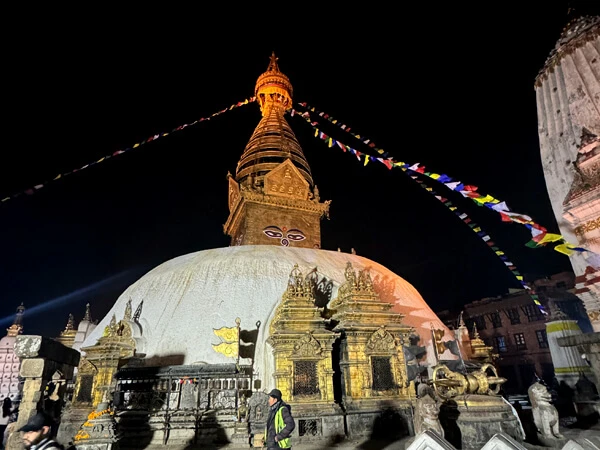
Ahead of the mountain stages, a city tour covers Pashupatinath temple, the hilltop Swoyambhunath stupa known locally as the Monkey Temple, and the wide Boudhanath stupa, three of the valley's oldest religious landmarks. This introduction gives trekkers a useful cultural context on Nepal's Hindu and Buddhist heritage before the trail shifts fully into the mountains.
Birendra Lake as an Easier Acclimatization Side Trip
A short walk from Sama Gaon leads to Birendra Lake, fed by glacial meltwater from the Manaslu massif and framed by mountain backdrops on all sides. For trekkers who prefer a lighter outing on the rest day, this offers a gentler alternative to the longer hike toward Manaslu Base Camp, while still delivering strong mountain views.
Tibetan-Influenced Villages Along the Trail
Settlements such as Chhokhangparo, Nile, and Samdo carry visible Tibetan roots, from carved mani walls to traditional stone houses built for the region's harsh winters. Daily life in these villages, including yak herding, barley farming, and small-scale trade routes toward Tibet, has shifted little across generations, offering a living picture of Himalayan culture rather than a staged one.
Highlights of the Manaslu Tsum Valley and Larkya La Pass Trek
- Trek through Mu Gompa, Rachen Gompa, and the smaller monasteries scattered across Tsum Valley, each still active with daily Tibetan Buddhist prayer and ritual
- Visit Milarepa's Cave, known locally as Piren Phu, one of the most sacred sites in Tsum Valley, tied to the legend of the Tibetan yogi Milarepa
- Walk close to Mt Manaslu, the world's eighth highest mountain at 8,163 meters, with an optional side trail toward its base camp near Samagaon
- Cross Punhyen Glacier on foot, a rare ground-level encounter with Himalayan ice, crevasses, and moraine
- Stand at Larkya La Pass, 5,160 meters, the highest point of the Manaslu Tsum Valley and Larkya La Pass Trek, with views of Himlung, Cheo Himal, Kang Guru, and Manaslu together on a clear day
- Experience Tibetan Buddhist village life in remote settlements like Chhokhangparo, Nile, and Samdo, where mani walls, farming, and yak herding still shape daily routines
- Pass through heritage stupas and temples in Kathmandu, including Pashupatinath and Boudhanath Stupa, before the mountain stages begin
- Travel from the Manaslu Trekking Region into the Annapurna Trekking Region in a single journey, crossing between two of Nepal's most well-known conservation areas
- Take in glacier-fed views at Birendra Lake near Sama Gaon during the built-in acclimatization day
Why Choose Nepal Adventure Team for the Manaslu Tsum Valley and Larkya La Pass Trek?
A restricted region trek like this one comes with real stakes. Permits are mandatory, a licensed guide is required by law, and once you cross into the higher stretches of the route, proper medical help is not close by. In a setting like this, who you trek with matters more than almost any other decision you make before departure.
Here is why you should choose Nepal Adventure Team.
- Government-licensed guides with wilderness first aid training, fluent in English and multilingual, with years of hands-on experience leading treks through the Manaslu and Tsum region
- Full permit processing for the Manaslu Restricted Area Permit, Tsum Valley Restricted Area Permit, MCAP, and ACAP is handled through registered government channels before departure
- +10 years of experience in the Manaslu and Tsum region, with route knowledge built over repeated seasons on this same trail
- Customized itineraries built around your fitness, time, and interests, including a Manaslu Circuit extension over Larkya La or an added acclimatization day at Sama Gaon
- Small group sizes for more personal attention and flexibility on the trail
- Transparent, all-inclusive pricing, with no surprise permit or porter fees on the mountain
- Registered with the Nepal Tourism Board, with a track record you can check through past trekker reviews
- Honest safety decisions. If weather or trail conditions force a change, you hear it immediately, and your safety always comes first
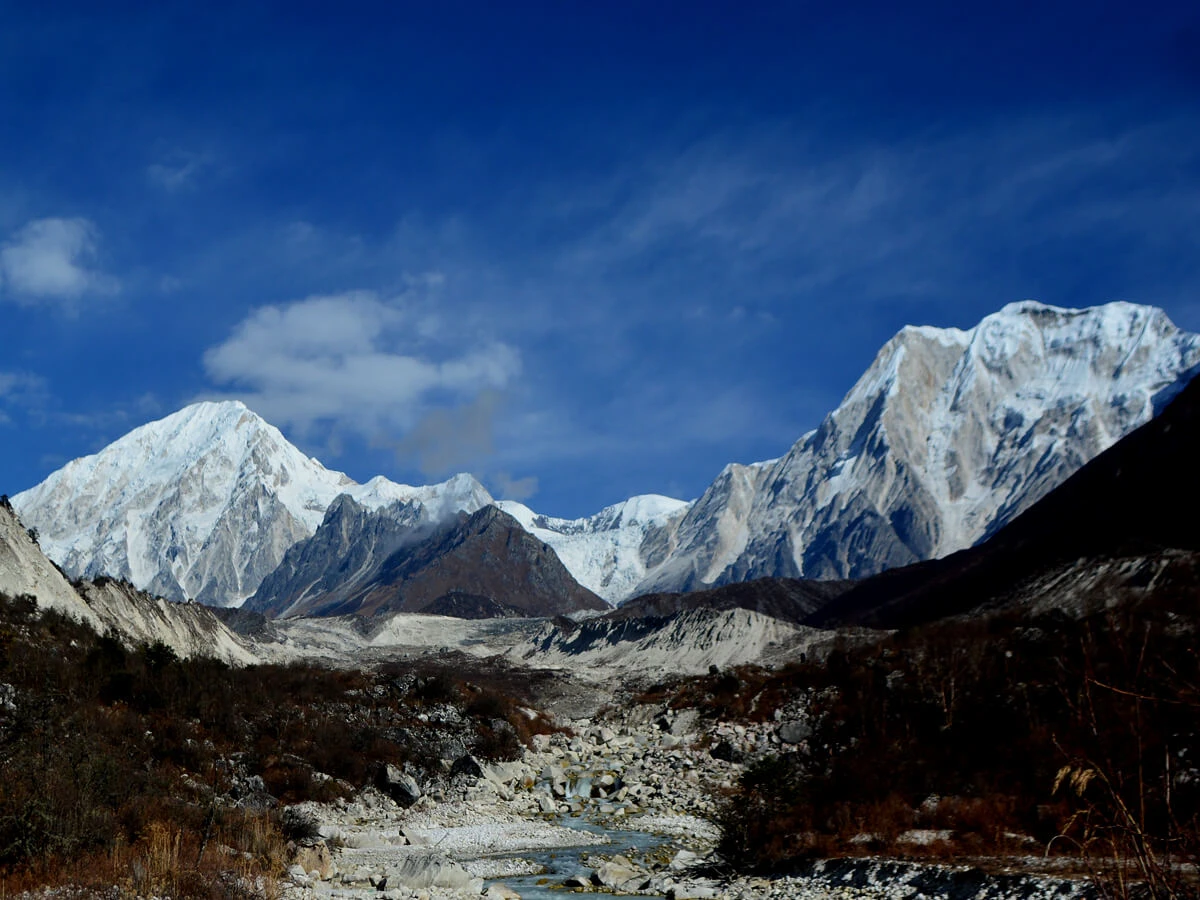
Outline Itinerary
Manaslu Tsum Valley and Larkya La Pass Trek Itinerary
Arrival in Kathmandu (1350m)
When arriving at Tribhuvan International Airport (TIA) in Kathmandu, you will be met by a Nepal Adventure Team member holding our company’s signboard. After that, you will be taken and transferred to your respective hotel. Depending on the time, it is possible to go for a stroll and get familiar with Thamel – the tourist area of ​​Kathmandu. In the evening you will have dinner at a welcome dinner banquet hosted by the Nepal Adventure Team at an authentic Nepalese restaurant. There, you will have a chance to taste the real Nepali cuisine, as well as watch folk dances.
Trek Preparation, Applying Restricted Region Permit
After a hearty breakfast, you get an organized city tour to see several attractions in Kathmandu, namely historical and cultural as well as world heritage sites. First of all, you go to Durbar Square to watch ancient building and to learn about Newari life. Subsequently, you visit the most important Nepalese Shrine, the Lord Pashupatinath & also the Monkey Temple, known as Swoyambhunath by the Buddhists. Last is the Boudhanath Stupa, which is a very large stupa in Kathmandu Valley. At the end of the tour, there is a pre-trip meeting where you get to know your trek leader and crew and also learn more about the trek ahead and time for general questions.
Drive to Machha Khola (870 m) 7-8 Hours
You start from Kathmandu, where early in the morning, you head for Machha Khola passing through Gorkha and Arughat. Take a silent drive in the rich green slopes of hills and some beautiful Nepalese villages before you get Dhading Besi (1050m) which is the administrative headquarters of the Dhading District on black topped road only. After Dhading Besi, the road stretches out, and it becomes dusty and muddy with an uneven surface throughout. There are no direct buses to Machha Khola from Arughat, so you make a transit and continue your trip by public jeep. However, you can also transit in Dhading Besi, which is approximately 870 meters and can be reached by a local bus. Thus, after 7-8 hours of continuous driving with some stops for few times, you reach the destination at Soti Khola, where you will be staying for the night.
Trek to Jagat (1,400 m/4,593 ft), lunch at Dovan (1,340 m) 5-6 hours
You will be proceeding to Jagat, which is about a 6-7-hour trek on foot from here. The first hike is a moderately challenging path; in approximately 1 and a half hours, you arrive at Khorla Besi village, that stands at 960 meters above sea level. This is almost a 6-hour trek starting from Khorla Besi, but you get to Tatopani within an hour, which is famous for its hot spring for a brief bath. After a cup of tea, the route gradually proceeds towards Dovan, which is at 1000 meters above sea level and a halt is taken for lunch. After lunch, you start walking for Yauraphat and proceed on your track until you come to Jagat, a broad space leading on the western part of Budhi Gandaki.
Trek to Lokpa (2,040 m/6,692 ft) 4-5 hours
Getting up after taking breakfast in the restaurant of Jagat, you can replace it with a fascinating walk along the sand trail. Your trail will begin its descent to Sirdibas, which lies at an altitude of 1430 m. Turning left and proceeding further in upstream, you will get a suspension bridge on the bank. On the other side, across the bridge, one will find a village known as Philim with an altitude of 1590 meters and the inhabitants are mostly the Gurungs. Continuing the journey north beyond Philim, the visitor gets to Ekle Bhatti which is at the altitude of 1600 meters. Subsequently, crossing over a pine forest area and a spiral trail leads to the place known as Lokpa, nestling at 2040 meters above the sea level. The first part of the Annapurna circuit trek offers a stunning view of Himchuli (7893 m) and Ganesh Himal (7422 m). The following day, you will spend a night in a lodge in Lokpa.
Trek to Chumling (2,386 m/7,828 ft) 5-6 hours
This morning, after having breakfast with your guide and assistance, you will begin today’s trek to Chumling. It is the most popular among trekkers for its places offering views of Ganesh Himal and Boudha Himal. You will trek for about two hours through the pine forest before arriving at Gumlung at 2130 meters above sea level. And from there, it kinematically rises continuously to Ripchet, which is situated at an elevation of 2470 meters above sea level. Climbing a steep trail would not be easy, but you will have to follow the steps and cross a wooden bridge over Shier Khola. The next village after crossing the bridge is Chumling, which is a small, beautiful village with typical Arunachal-style buildings and a Shringeri Himal view. Here you can also see the older Gompa as part of this trek before you spend the night here in Chumling.
Trek to Chhokhangparo (3,031 m/9,944 ft) 5 - 6 Hours
Today will be easier for you, as you will go through an easy trail and cross a long suspension bridge to the other side. While walking, you will be at the side of the astonishing Ganesh Himal. It will take the same route as the previous day, going through the dense forests until you get to Rainjham (2400 m), where you will have lunch. Then, you will move further towards Serpu Khola, and there you will find yourself in Tsum, the secluded valley. Ascending steeply will take you to Chhokhangparo, which will be our halt for the night. This beautiful village gives some spectacular views of the Himchuli mountain peak, which is 7893 meters high.
Trek to Nile (3,361 m/1126 ft) 3-4 hours, visit Mu Gompa (3,700 m/1,213 ft) 2-3 Hours
Carrying along your back, Chhokhangparo is left behind while you move towards the Nile, passing through Gompas and caves. Ensure that you do not get affected by altitude sickness, especially when you are high up in the mountains. If you are in good health, you will traverse the trail to Lama Gaon (3202 m) and through the rice field to Rachen Gompa, or better still, Nunnery Gompa (3240 m). The next place that will be on your roadmap is Milarepa’s Cave in Tsum Valley, right behind Burji, where you can find the footprint of the great Tibetan yogi Milarepa. Plying in the pleasant track, you will get to Nile (3361m), the place where you are going to stay the night. From there, you will move on to Mu Gompa at 3700m, located in the Manaslu region, which was founded in 1985 AD. It takes about 1 to 5 hours from the Nile to get to Mu Gompa, and on the way, there is a mountain view beside the old historical site.
Nile to Chhokhangparo (3031 m), 4- 5 Hours
When you go back to Chhokhangparo village, there are more scenic mountain views and beautiful villages on the route, travelling from the Nile through the Phurbe, Pangdu, and Chule villages. At the end of the trip, you will then get to Chhokhangparo village and spend a night in the village at a campsite.
Chhokhangparo to Lokpa (2040 m) , 5-6 hours
If you plan your trip back to Chhokhangparo village from Nile, you will get a range of mountains in the path that passes through the beautiful villages of Phurbe, Pangdun, and Chule. So the final destination at the end of the journey is Chhokhangparo village, where you will be staying for the night.
Lokpa to Deng (1,860 m), 5-6 hours
There is Trekking on the 12th day of the Manaslu Tsum Valley and Larkya Pass Trek – Lokpa to an exposed track from Philim. This will take not more than an hour and at around half of this journey; you will have the opportunity to cross Budi Gandaki River arriving at Bhatti from where you get your last view of Tsum Valley and on to Larkya La Pass. The trail is downhill and uphill, where you will walk through a very, very narrow gorge. Two and a half hours later from the previous day, trekkers reach Sirdibas (1860m) at Nupri and cross through the bamboo forests to the Gurung village of Deng (1800m) which would be the overnight stop.
Deng to Namrung (2,630 m), 5-6 hours
If you leave Deng early enough, and cross the Thullu River to the eastern side, you will proceed uphill to Rana Gaon (1980m ). The next destination is Ghap which situated at the altitude of 2160 m after you crossed the river named Shier Khola. Mani walls shall be come across while on a walk to Bhimthang. The second day of the trip allows you to see beautiful landscapes of Ganesh Himal, Jugal Himal and Shringeri Himal before arriving Namrung. That would be the place where you will be spending the night.
Namrung to Lho Gaon (3,157 m),5-6 hours
It is going to be a long day for travelling; you have to travel 11 kilometers to get to Lho Gaon from here. But need to cross the Budhi Gandaki River and get to meet some local people who wear Tibetan costumes on the whole trip. In total everyone will enjoy a trip through a tree line, along the impressive mani stone wall, and through beautiful villages. Although the walk is comparatively easy, you’ll reach Lho Gaon (3180 M) only by evening. That is where you will spend the night.
Lho Gaon to Sama Gaon (3,530 m), 5 hours
Depending on the specific trail you take, you will follow the right bank of the Budhi Gandaki River, hike through forests, and get to the beautiful village of Shyala. From there you get to enjoy spectacular view of Phungi, Manaslu and Himchuli mountains which are actually far impressive than even the highest mountains of countries. On the last part of this trek, you will be treated to views of the south face of Mt. Manaslu and the Ganesh Himal range to the east. When you have ascended a number of hundred meters more to reach a village in comparison to this one, then Mt. Manaslu is out of view. Food crops that can be grown in this village by considering the elevation, include potatoes and barley. In the evening, seeing Sama Gaon monastery, a well-known monastic institution, becomes possible, where you will spend the night.
Sama Gaon Acclimatization
Sama Gaon is a charming village with an altitude of 3,520 meters where you’ll spend your acclimatization day. You have two main options for a day hike: It is going to take 4-5 hours to reach till Pungyen Gompa and for those who are less adventurous you can take a 2 hours trek to Birendra Lake. In this case, you may choose a more time-consuming trek that might take 7-8 hours to reach Manaslu Base Camp with an amazing view of a crystal lake and great mountain landscape. One has to embark on these hikes to enable the physical body to adjust to the altitude to minimize altitude related complications during the trek.
Trek to Samdo (3,865 m) 3-4 hours
In as much as the trek you embark on is following an easy trail towards Samdo, the scenery is amazing. Gradually, ascending, the trail leads through the yak grazing territories in a wide valley affording views of three large Mani walls and a wooden bridge over the Budhi Gandaki river. Finally, you approach Samdo, a pretty village located at a rather high altitude of 3860m. Here you can walk through the village area which for us was a plus because it is not filled with tourist traps, you can also watch the yak herding and Stana’s name means more such beautiful area with fewer people and more animals and natural fodder shelters.
Samdo to Dharmasala (4,460 m) 4-5 hours
Today, you start from the village of Samdo which is the last village on the upper part of the Manaslu valley moving on a wide trail. After, you are required to trek through a wooden bridge over the Budhi Gandaki and the ancient trading route to Tibet. This route leads to a very old and historical market that was very vibrant during our grandparents time. After crossing a few streams emerging out of the glacier you come to Dharmasala (4460 m) which is also called Larkya La Phedi. Here you can get a nice picture of Larkya Glaciers with beautiful mountain in the background of Mt. Manaslu. You will spend an overnight stay in Dharmasala. Tomorrow, you will be ascending the Larkya La pass, a highly revered one among all the passes in the area.
Dharmasala to Larkya La Pass and trek to Bhimthang (3,590 m) 7-8 hours
You rise early to undertake the physically demanding trek to Larkya La Pass because of high winds that come after sunrise in the morning when snow has accumulated. A companion noted that the morning provided less snow for the trail and it was easier to excavate through the snow carpet. As you ascend gradually through the way, you will cross over the ridge and the big lateral moraine of Larkya Glacier and exploring the views of Cho Danda and Larkya Peak. The landscape remains rough; the trail proceeds to move downhill along with few glacierified lakes and then rises to the left to Larkya La Pass at 5160m. Here, we have erected prayer flags and from here, one can enjoy the view of Himlung (7126 meters), Cheo Himal, Kang Guru (6981 meters), Annapurna II (7937 meters), and Manalsu peaks. After you enjoyed your time in these mighty mountains you take a steep descend to Bhimthang at the height of 3720 meters. Free from the glaciers and moraine, you follow an easier path to the left of the large lateral moraine, and you’ll cross through a meadow before reaching Bhimthang, a broad green valley with a few lodges where most trekkers spend the night.
Trek to Tilche (2,300 m) 6-7 hours
At this point, you will be begin to drop down rapidly in the difficult trail towards the Annapurna mountain range. During this walk, you cross through the agricultural land where yaks are grazed and pass through two tiny places, Kharche and Gho, due to the decrease in altitude. A final stop is Tilche at for 2300m which mark the end of the journey or your trekking will be ended.
Drive back to Kathmandu
This day you will say goodbye to your tour in the Manaslu Tsum Valley and the Larkya La Pass. You will be joining the main полов with most of the trekkers all the way down through Besisahar to Chamje and then finally to Kathmandu. The journey will take you approximately 8-9 hrs. Chamje to Besisahar is an off-road, with some bumpy roads. It will take around 3-4 hours, after Besisahar, for almost an hour you get onto Prithvi Highway. On the tri,p you can get some magnificent views of different green hills, mountains, farming terraces, villages and two rivers Marshyangdi and Trishuli. After your early arrival, you will be picked up from the airport and taken to your hotel to rest for some time. You will also set out for a farewell dinner party by Nepal Adventure Team in the evening where feedbacks regarding the trip are normally entertained and the whole experience shared.
Optional: if you don’t want to drive by public bus, you can also take a private jeep from Chamje to Kathmandu which will be more comfortable and faster.
Final Departure
Your long Manaslu Tsum Valley and Laekya La Pass Trek comes to an end as you head towards your home. There may be a few hours left from your scheduled flight for last-minute shopping. If you have time, you can do sightseeing and enjoy shopping for souvenirs. Nepal Adventure Team’s representative will take you to the airport approximately three hours before the flight. We hope you have a safe journey back home. We are hopeful to guide you to your next adventure in Nepal.
Manaslu Tsum Valley and Larkya La Pass Trek Cost Details
Includes
- All transportation is by local bus, Jeep, and private vehicle for airport pick-up and drop-off
- Welcome and farewell dinner at a typical Nepali restaurant
- Kathmandu to Soti Khola driven by a local bus and a local Jeep.
- 3-night hotel in Kathmandu on a BB basis (bed and breakfast)
- 19 nights of tea house lodge accommodation in the mountains during the trek
- Full meal during the trek (breakfast, lunch, dinner, and tea/coffee)
- An experienced and English-speaking guide, his food, travel, salary, equipment, and insurance
- Strong porter (2 people will be sharing one), his food, travel, salary, equipment, and insurance
- Manaslu Special Trekking Region Permit (USD 100 for a week)
- MCAP (Manaslu Conservation Area Project) permit, ACAP (Annapurna Conservation Area Project) permit
- TIMS Card (Trekkers Information Management System) fees
- Chamje to Beshisahar by Local Jeep and to Kathmandu by local bus
- Nepal Adventure Team's T-shirt as a gift and a certificate of appreciation
- First Aid Medical Kit Bag and Trekking Map
- All government VAT and Local Taxes
Excludes
- Nepal visa fee
- International flight (airfare)
- Personal expenses such as phone bill, chocolate, bakery, drinks, battery charge, laundry
- Extra accommodation and meals behind schedule
- Travel and rescue insurance
- Tips to guide and porters
Dates & Availability
We have guaranteed group joining departure dates for the Manaslu Tsum Valley and Larkya La Pass trek throughout the year, with the best schedules designed for the optimal trekking experience. If our group departure dates do not fit your travel schedule, we also arrange private and tailor-made treks based on your itinerary.
If you prefer a private trek, solo adventure, or group tour with flexible dates, we can customize the itinerary to your schedule, physical condition, and trekking style. Private treks allow for more flexibility in pacing, accommodation choices, and additional rest days for further acclimatization.
Contact us to book your preferred departure date or to plan a tailor-made trekking experience!
Essential Information
Acclimatization on Manaslu Tsum Valley and Larkya La Pass Trek
This trek climbs to 5,160 meters at Larkya La Pass, so the body needs time to adjust before reaching the higher sections of the route. The itinerary builds in a dedicated acclimatization day at Sama Gaon, at 3,530 meters, before continuing toward Samdo and Dharamsala. On this rest day, trekkers can choose a shorter hike to Birendra Lake, a longer hike toward Pungyen Gompa, or a full-day trip to Manaslu Base Camp, each helping the body adjust while keeping the day active.
The trek also gradually climbs in altitude overall, moving step by step through Namrung, Lho Gaon, and Sama Gaon before the higher stages near Samdo and Dharmasala, which reduces the risk of altitude sickness compared to a faster ascent. Guides observe for early symptoms of altitude sickness, such as headaches, nausea, or strange fatigue, particularly in the days before the pass crossing. If symptoms occur, they can slow the pace, suggest additional rest, or help facilitate a descent as needed.
What Permits Are Required for the Manaslu Tsum Valley and Larkya La Pass Trek?
The Government of Nepal has designated the Manaslu Region, from Jagat to Dharapani, as a Restricted Area to protect its unique culture, environment, and natural heritage from the impacts of mass tourism. Because of this special status, all trekkers must obtain a Restricted Area Permit (RAP) before entering the region. Independent trekking is not permitted in the Manaslu Region. Trekkers must travel in a group of at least two people and be accompanied by a licensed local trekking guide. In addition, all required permits must be arranged through a government-registered trekking agency. Freelance guides are not authorized to process or issue the permits needed for the Manaslu Circuit Trek.
The trek requires several permits:
- Manaslu Restricted Area Permit (RAP) – $100(September−November), $100 (September−November), $75 (December-August) for the first week, with additional fees for extra days.
- Manaslu Conservation Area Permit (MCAP) – $30 per person.
- Annapurna Conservation Area Permit (ACAP) – $30 per person (required after crossing Larkya La Pass).
- Tsum Valley Restricted Permit – 40 (September−November),40 (September−November), 25 (December-August) for the first week.
- The Chumnubri Rural Municipality Entrance Permit is often overlooked by trekkers and some agencies. Costing NPR 1,000 per person, the fee goes directly to the local municipality, supporting community development and tourism in the villages along the Manaslu Circuit Trek.
Our team handles the complete application process for all four required permits before you depart from Kathmandu, ensuring everything is arranged smoothly and in compliance with government regulations.
When is the Best Season for the Manaslu Tsum Valley and Larkya La Pass Trek?
The best seasons to trek Manaslu Tsum Valley and Larkya La Pass are spring and autumn. Spring runs from March to May. During this time, rhododendron forests bloom lower down the trail, and the days stay mild and pleasant for walking. Autumn runs from September to November, with clear skies and steady weather all the way through Larkya La Pass. Spring and autumn are also when most trekkers choose to do this trek, since trail conditions stay predictable and mountain views are at their clearest during these months.
Winter runs from December to February. Trekking is still possible during these months, but heavy snow can block the pass or make the crossing more difficult. Some trekkers choose to skip Larkya La in winter if conditions turn unsafe, but we can manage and adjust the itinerary depending on snowfall that season.
Summer runs from June to August. This is the monsoon season in Nepal. Tsum Valley stays a bit drier than other parts of the country, since it sits in a rain shadow area. But the Manaslu side of the trek still gets rain, leeches on the lower trail, and reduced visibility of the mountains. Trails can also feel more slippery during this season, especially on the lower forested sections before Samagaon.
Budgeting and Cost Considerations for the Manaslu Tsum Valley and Larkya La Pass Trek
Planning a budget for this trek means looking at four main areas: transportation, permits, food and drinks, and guide and porter services.
- Transportation costs mainly come from the drive between Kathmandu and Soti Khola or Machha Khola, along with the return journey through Besi Sahar. A local bus keeps this cost low, while a private jeep costs more but saves time and adds comfort on a long, bumpy road. Airport transfers and the short Kathmandu city tour are usually included as part of a package, so these rarely add extra cost on their own.
- Permits make up a fixed part of the budget, since the Manaslu Restricted Area Permit, Tsum Valley Restricted Permit, MCAP, and ACAP are all required by law and cannot be skipped. Restricted area permit costs also shift with the season, so trekking outside the busiest months can bring this part of the budget down slightly.
- Food and drinks add up more than trekkers often expect, especially at higher altitudes. Standard meals at teahouses are reasonably priced, but bottled water, hot showers, charging devices, and Wi-Fi all cost extra as the trail climbs higher, since everything has to be carried in by porter. Bringing a water bottle with a filter or purification tablets can help cut down on the cost of bottled water over three weeks.
- Guide and porter costs cover their daily wage, food, and accommodation during the trek, and this is often bundled into the overall package price rather than paid separately. On top of this, tipping the guide and porter at the end of the trek is customary in Nepal and is worth budgeting for separately, since it is not included in the standard trek cost.
Community and Culture in Manaslu Tsum Valley and Larkya La Pass
Tsum Valley sits behind the main Manaslu range and remained closed to outside trekkers until 2008, later than the rest of the Manaslu region. Its villages, Chhokhangparo, Nile, and Samdo among them, are home to communities of Tibetan origin whose daily life still centers on barley and potato farming, yak herding, and small trade that once carried goods across the border to Tibet.
Monasteries and prayer sites anchor the valley's religious life. Mu Gompa, the valley's largest monastery, and Rachen Gompa, its main nunnery, remain working centers of daily prayer rather than sites kept purely for visitors. Prayer flags, mani walls, and chortens appear even along the quieter, more sparsely populated stretches of trail, a sign of how deeply Buddhist practice runs through the valley. Because tourism arrived here later and more slowly than in Everest or Annapurna, daily life has kept much of its traditional shape, in farming methods, in dress, and in the rhythm of monastery routines that continue largely as they have for generations.
Further along the route, past Larkya La Pass and into the Annapurna side, the culture shifts. Villages like Bhimthang and Tilche see a more established trekking presence, with lodges more used to steady foot traffic. This contrast, between Tsum Valley's slower, more insulated way of life and the more trekking familiar villages beyond the pass, is part of what makes this particular route stand out from either region on its own. Greet people, treat the monasteries with respect, and ask before taking anyone's photo, small things that carry real weight in a place where outside visitors are still a fairly recent addition.
Essential Packing Tips for the Manaslu Tsum Valley and Larkya La Pass Trek
This trek swings between warm lowland days near Machha Khola and freezing mornings at Larkya La Pass, so your packing list needs to cover both ends of that range.
Clothing and Layering
- Moisture-wicking base layer
- Fleece or similar mid-layer
- Windproof, waterproof outer shell
- Down jacket for higher, colder nights and the pass crossing
- Quick-drying trekking pants
- Thermal leggings for the coldest stretches near Samdo and Dharamsala
Footwear
- Trekking boots, broken in well before the trip
- Wool or synthetic hiking socks, a few pairs to rotate through
- Camp shoes or sandals for evenings at the lodge
Accessories
- Warm hat
- Sun hat
- Gloves, ideally a lighter pair and a warmer insulated pair
- Buff or scarf
- Sunglasses with strong UV protection
Gear and Equipment
- Cold-rated sleeping bag
- Headlamp with spare batteries
- Trekking poles
- Basic first aid kit
- Water purification tablets or a filter bottle
- Dry bag or backpack liner
Personal Items
- Passport copies and passport-sized photos for permits
- Personal medications and a small supply of basic pain or altitude medicine
- Toiletries, including a small towel, wet wipes, and hand sanitizer
- Sunscreen and lip balm with SPF
- Power bank and charging cables
- Cash in Nepali rupees for teahouses, snacks, and tipping
- Snacks such as energy bars or nuts for the higher stretches of the trail
Manaslu Tsum Valley and Larkya La Pass Trek FAQs
The Manaslu Tsum Valley and Larkya La Pass Trek is a 21-day Himalayan adventure that combines the remote Manaslu Circuit, the sacred Tsum Valley, and the spectacular Larkya La Pass (5,160 m). It offers breathtaking mountain scenery, Tibetan Buddhist culture, ancient monasteries, and one of Nepal's most rewarding off-the-beaten-path trekking experiences.
This trek is considered moderately difficult to challenging due to its long trekking days, high altitude, and the crossing of Larkya La Pass. Anyone with good physical fitness and proper preparation can complete the trek successfully.
The complete itinerary takes 21 days, including your arrival and departure in Kathmandu, transportation, acclimatization days, and the trek through Tsum Valley, Manaslu, and Larkya La Pass.
You need five permits:
- Manaslu Restricted Area Permit (RAP)
- Tsum Valley Restricted Area Permit
- Manaslu Conservation Area Permit (MCAP)
- Annapurna Conservation Area Permit (ACAP)
- Chumnubri Rural Municipality Entrance Permit
Nepal Adventure Team arranges all permits before your trek begins.
Yes. The Manaslu and Tsum Valley are Restricted Areas where independent trekking is prohibited. Nepal Government regulations require every trekker to be accompanied by a licensed guide and book through a registered trekking agency.
Spring (March to May) and autumn (September to November) are the best seasons. These months offer stable weather, excellent visibility, comfortable temperatures, and the safest conditions for crossing Larkya La Pass.
The cost varies depending on group size, itinerary, accommodation, and services included. Most packages cover permits, transportation, accommodation, meals during the trek, an experienced guide, porter service, and government taxes.
The highest point is Larkya La Pass at 5,160 meters (16,929 feet). Many trekkers also hike to Manaslu Base Camp during the acclimatization day near Sama Gaon.
Yes, beginners with good fitness, determination, and adequate preparation can complete this trek. The itinerary includes gradual altitude gain and acclimatization days to help reduce the risk of altitude sickness.
Highlights include Tsum Valley, Mu Gompa, Rachen Gompa, Milarepa's Cave, Manaslu Base Camp, Birendra Lake, Punhyen Glacier, Larkya La Pass, traditional Tibetan villages, and panoramic views of Mt. Manaslu, Ganesh Himal, Himlung Himal, Cheo Himal, and Annapurna.
The Manaslu Circuit Trek follows the main route around Mt. Manaslu, while this itinerary includes an additional journey into the hidden Tsum Valley before rejoining the circuit. It offers richer cultural experiences, more monasteries, and a longer adventure.
Accommodation is provided in local teahouses offering simple twin-sharing rooms. Meals include Dal Bhat, noodles, soups, fried rice, Tibetan bread, pancakes, pasta, eggs, and seasonal vegetables. Vegetarian options are widely available.
Walk at a steady pace, stay well hydrated, eat nutritious meals, avoid alcohol, and follow the planned acclimatization schedule. Your guide will monitor your health throughout the trek and adjust the itinerary if necessary.
Essential items include waterproof trekking boots, warm layered clothing, a down jacket, a sleeping bag, trekking poles, gloves, sunglasses, sunscreen, water purification tablets, a headlamp, personal medications, and a quality backpack.
Nepal Adventure Team has over a decade of experience organizing treks in the Manaslu region. We provide licensed local guides, complete permit arrangements, experienced porters, carefully planned itineraries, transparent pricing, quality service, and 24/7 support to ensure a safe and memorable Himalayan adventure.
What Our Guests Say?
The Manaslu Tsum Valley and Larkya La Pass Trek was a Himalayan gem, offering a unique blend of natural beauty and cultural richness. The trek took us through lush forests,...
My son has selected this package. Very grateful and thankful for a caring and helpful Nepal Adventure Team. It was a wonderful getaway for my son. He has been sharing...
The Manaslu Tsum Valley and Larkya La Pass Trek was a journey into serenity, surrounded by the majestic Himalayan landscapes. The highlight was exploring the culturally rich Tsum Valley, where...