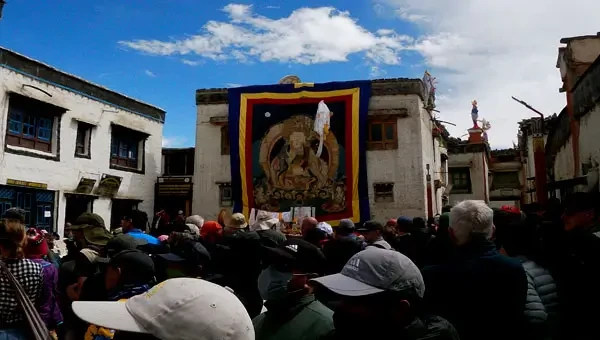
Nepal is a country where religion is a big part of life. It's not something you do on Sundays. You live it every day. You see it in the butter lamps that burn outside a temple at dawn. You see it in the prayer flags that fly across mountain passes. It is a devotion of an old woman walking in a circumambulation(kora) of a stupa. She does this walk every morning. She has been doing it for fifty years.
And once a year, all of that daily devotion rises to something extraordinary. That time is Saka Dawa.
What is the Saka Dawa Festival in Nepal?
The Saka Dawa festival is the holiest month in the Tibetan Buddhist calendar and the most sacred festival for the Buddhist communities of Nepal. It is celebrated on the full moon day of the 4th month in the Tibetan lunar calendar. Saka Dawa celebrates three of the most important events in the life of Gautama Buddha, all of which are believed to have occurred on the same auspicious day:
- The birth of Lord Buddha
- His enlightenment under the Bodhi Tree
- His passing into Parinirvana
For Buddhists in Nepal, Tibet, Bhutan, and the wider Himalayan world, this is the holiest day of the year, a day when all acts of kindness, all prayer, and all moments of real compassion are believed to generate multiplied good karma. Many say merit accrued on Saka Dawa Düchen, the full moon day, is multiplied ten million times. You can feel that sort of spiritual energy when you are at Boudhanath Stupa on the night of a full moon. And there is no place on earth where that spiritual energy feels more grounded, more real, and more connected to the actual life of the Buddha than Lumbini, the very soil where he was born more than 2,500 years ago.
The Meaning Behind the Name
Saka Dawa is a word from the Tibetan language. Saka is a star that is prominent in the night sky this lunar month. Dawa just means month. Saka Dawa literally means the month of the Saka star. The name draws inspiration from ancient Tibetan astronomy and how traditional communities marked time by the movement of the heavens.
It is sometimes also written as Saga Dawa in Tibetan contexts. Both spellings refer to the same holy month.
Why This Festival Is Unlike Any Other
Saka Dawa celebrates three of the most important events in the life of the most important figure in Buddhism, all on the same day. This concentration of meaning gives Saka Dawa a quality that is hard to describe to those who have not experienced it. There is a weight to the air during the festival, not a dark weight, but a weight of meaning. People walk more slowly. They talk more softly. They are more generous. Life moves at a slower, more conscious, and internal pace.
Buddhist teachings say that the quality of an action matters, but so does the timing. On Saka Dawa, especially on the full moon day, the spiritual charge of activities is not the same as on normal days. That is why you find people doing three hundred circumambulations (kora) in a day at Boudhanath. That’s why families who normally can’t afford to give food or money find a way to do so this month. That is why monks chant all through the night. "Everybody's trying to take advantage of a window that only opens once a year. During the saka dawa, people participate in highly specific virtuous activities:
- Not eating meat: A lot of Buddhists do not eat meat for a month during this time of year.
- Following rules: Some people who are not monks take the Eight Mahayana rules, which means they do not eat, drink things that can make them drunk, and do not wear things for one to three days, especially when the moon is full.
- Circumambulating(kora): People walk around stupas, monasteries, or special holy sites in a clockwise direction while saying special words or praying to the Buddha. It is believed that doing kora, it brings blessings, purifies the soul, and cleanses negative karma.
- Charity: People give money or things to monasteries or to people who need help so they can have positive karma.
- Reading books: People read special Buddhist books, like the Golden Light Sutra, out loud and go to local places where they can learn how to meditate.
Saka Dawa and Tibet. The Cultural Root of the Festival
To really get Saka Dawa in Nepal, you have to know where it comes from. That means looking north to Tibet. Tibet is where Saka Dawa started. The festival comes from Tibetan Buddhism. This is a special and old spiritual tradition. The way Tibetan people celebrate Saka Dawa shows how important this holy month is to them.
In Lhasa, the capital of Tibet, Saka Dawa changes the city. The Jokhang Temple is a sacred place in Tibet. It becomes the center of activity for pilgrims. Thousands of Tibetans walk around the Jokhang Temple and the Barkhor circuit. They do this every day during the month. Many pilgrims travel for weeks to get to Lhasa for Saka Dawa. Some even do full-body prostrations the way.
The streets of Lhasa are filled with Tibetans wearing chuba robes during Saka Dawa. Families have picnics and celebrations in the parks. They combine things with community joy. This is very Tibetan. They think devotion and celebration are not things. There are two ways of being grateful for life.
At Mount Kailash, Saka Dawa is very special. This mountain is holy for Tibetan Buddhists, Hindus, Jains, and Bon practitioners. Pilgrims from all over Asia come to Mount Kailash to walk around it. This is called the Kailash Kora. It is 52 kilometers and very high up during the Tibet Kailash Tour. Doing this during Saka Dawa is considered powerful. Some pilgrims do it by prostrating themselves. This takes weeks.
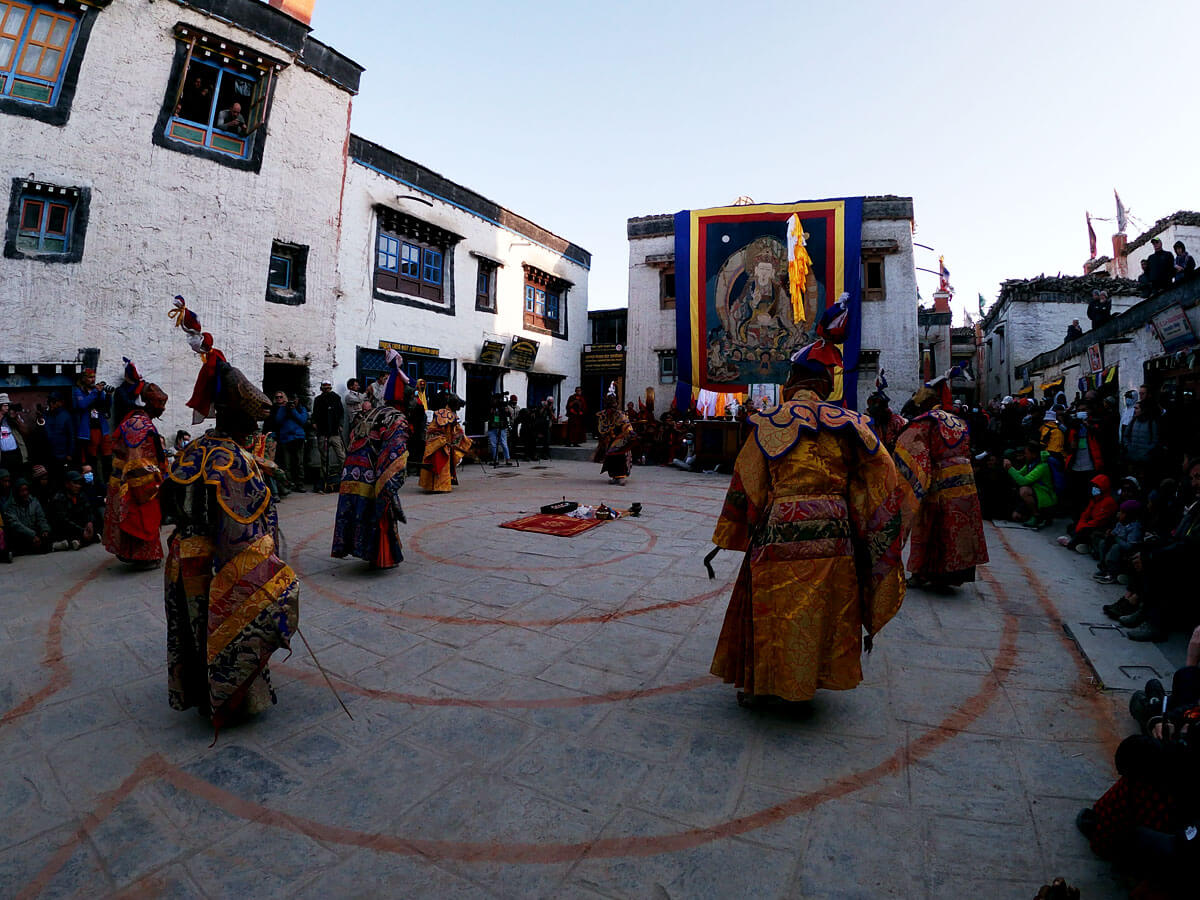
Every monastery in Tibet has dances during Saka Dawa. These are called Cham dances. Monks wear masks and dance to show teachings. These dances have been done for centuries. They are a part of the Tibetan Buddhist tradition.
The Nepal Connection
Nepal and Tibet are connected during Saka Dawa. The cultural and spiritual things that happen in Lhasa and the monasteries flow into Nepal. The Buddhist communities in Nepal celebrate Saka Dawa the same way as their Tibetan brothers and sisters. Many of Nepal's monasteries were started by lamas. The monks in Nepal were trained in the same way as those in Lhasa.
When you see the kora at Boudhanath during Saka Dawa, you are seeing a connection to Tibet. Boudhanath was built as a site for Tibetan Buddhist traditions. It has been a home for Tibetan pilgrims and refugees for generations.
Then there is Lumbini. This brings the story circle. Saka Dawa is a festival that lives in Tibetan Buddhist culture. It commemorates the birth of the Buddha, which happened in Nepal in Lumbini. Tibetan pilgrims come to Nepal during Saka Dawa to visit the birthplace of the Buddha. Nepal is not just influenced by Buddhist culture during Saka Dawa. Nepal is where the story of the festival started.
Lumbini — Where It All Began
Lumbini is the place where it all started. Situated in the lowland Terai area of Nepal, Lumbini is the birthplace of Prince Siddhartha Gautama, who would eventually become the Buddha. Lumbini is regarded as one of the four most sacred pilgrimage sites in Buddhism, this includes Bodh Gaya, Sarnath, and Kushinagar. In 1997, Lumbini was designated as a World Heritage site by UNESCO, acknowledging its importance both to Buddhists and humankind as a whole.
During the month of Saka Dawa, Lumbini acquires great significance. Followers come to Lumbini from all over Nepal, India, Sri Lanka, Thailand, Japan, South Korea, China, Tibet, and several other nations, sometimes even after preparing for years for this journey. The sacred garden around the temple of Maya Devi is filled with devout followers. Butter lamps illuminate the paths that lead to the temple. There is an abundance of incense and chanting in various languages.
On the night of Saka Dawa Düchen, Lumbini holds candlelight and butter lamp vigils that bathe the entire sacred garden in a golden glow. Thousands of pilgrims gather around the Maya Devi Temple for prayers and meditation. It is one of the most quietly beautiful things you can witness in Nepal.
Why Travel to Nepal During Saka Dawa?
Saka Dawa is one of those experiences that changes the way you think about Nepal. It is really something that makes you see Nepal in a new way. Here is why you should plan your trip to Nepal for the Saka Dawa festival:
- What you witness is a true tradition, not a performance. The festival of Saka Dawa has been celebrated in Nepal uninterrupted for centuries. What you see at Boudhanath or Swayambhunath during this festival is not staged for visitors. It is real faith, practiced exactly and never altered throughout history.
- Visit the birthplace of Buddha. Lumbini is one of the four holiest sites in all of Buddhism, and during Saka Dawa, visiting the birthplace of the Buddha carries a spiritual significance that is difficult to put into words. Pilgrims from across Asia travel specifically to Lumbini for Saka Dawa every year.
- The atmosphere at sacred sites. Thousands of pilgrims from across the Himalayan region gather at Nepal's great stupas and monasteries. You can find the smells of incense and butter lamps. Prayer wheels spin continuously. Monks chant through the night. The surroundings become sacred and peaceful.
- Best time for Nepal's adventure experiences. The Saka Dawa season in late May and June sits perfectly between the spring trekking season and the monsoon. It is an ideal time to pair a Himalayan helicopter tour, a cultural trekking experience, or a monastery visit with the festival itself.
- In-depth understanding of Himalayan culture. Many travelers tell us that witnessing Saka Dawa was the moment their Nepal journey became something they will carry for life, not just a holiday, but a real experience of a culture and a faith that has endured for thousands of years.
- Sacred atmosphere around the sites. Thousands of pilgrims from across the Himalayan region gather at Nepal's great stupas and monasteries. You can find the smells of incense and butter lamps. Prayer wheels spin continuously. Monks chant through the night. The surroundings become sacred and peaceful.
How Saka Dawa Is Observed in Nepal
Lumbini — The Birthplace of Buddha and the Soul of Saka Dawa
If there is one place in the world that belongs to Saka Dawa above all others, it is Lumbini. Located in the Terai region of southern Nepal, Lumbini is the birthplace of Siddhartha Gautama. The man who became the Buddha. It is one of the four holiest pilgrimage sites in Buddhism, alongside Bodh Gaya, Sarnath, and Kushinagar. In 1997, UNESCO designated Lumbini a World Heritage Site in recognition of its immeasurable significance to humanity.
During Saka Dawa, Lumbini becomes the destination of Buddhist pilgrims from Nepal, India, Sri Lanka, Thailand, Japan, South Korea, China, Tibet, and beyond. People who have been planning this pilgrimage for years, sometimes for their entire lives, finally arrive here during this holy month to walk the ground where the Buddha took his first steps. You can circumambulate (kora) around the sacred sites, stupas, and monasteries of Lumbini. You can see different religious events happening in the sacred site. The surounding is aroused with inner peace, and you will find yourself at ease.
What to experience at Lumbini during Saka Dawa:
The Maya Devi Temple — This is the most sacred spot in all of Lumbini, the precise location where Queen Maya Devi gave birth to Siddhartha Gautama beneath an Ashoka tree. The ancient temple houses a marker stone that pinpoints the exact birthplace. Standing here during Saka Dawa, surrounded by pilgrims from across Asia in quiet prayer, is one of the most profound travel experiences in Nepal tours.
The Sacred Garden — The Maya Devi Temple is surrounded by a special garden. This garden has an old pillar called the Ashoka Pillar. This was built by Emperor Ashoka in 249 BCE, the sacred Puskarni Pond, where Queen Maya Devi is said to have bathed before giving birth, and the ruins of ancient monasteries and stupas that stretch back more than two millennia. Walking through this garden during Saka Dawa, when it is filled with the soft sound of chanting and the fragrance of offerings, feels like walking through time itself.
The Monastic Zone — Lumbini's monastic zone is really special. It's a planned area where Buddhist countries from around the world have built their own monasteries and temples. They built them in their styles. You can see pagodas next to Tibetan monasteries. Thai temples are near Sri Lankan viharas. Korean and Chinese Buddhist centers face each other across canals. During Saka Dawa, all these monasteries are busy with ceremonies. People. Make offerings. Walking through the zone during this holy month is amazing. You can visit monasteries, see different traditions, and learn about the variety of Buddhist practices. Lumbini's monastic zone and Saka Dawa are truly eye-opening experiences.
The Eternal Peace Flame — it was lit in 1986 by the United Nations. The Eternal Peace Flame burns continuously at Lumbini as a symbol of world peace and non-violence. Sitting near this flame during Saka Dawa, with pilgrims gathered in quiet meditation around it, brings the universal message of Buddha's teachings into sharp and beautiful focus.
Candlelight and Butter Lamp event — On the night of Saka Dawa Düchen, Lumbini holds a special candlelight and butter lamp event that lights up the sacred garden in soft golden light. Thousands of pilgrims gather around the Maya Devi Temple and the sacred pond for prayers, meditation, and collective celebration of the Buddha's birth on this very ground. It is one of the most moving events we include in our Saka Dawa Lumbini pilgrimage packages.
Dhamma Janani Vipassana Center — For travelers interested in meditation during Saka Dawa, Lumbini's Vipassana centers offer structured meditation retreats during the holy month. Meditating in silence at the birthplace of the Buddha during Saka Dawa is an experience that sits in a category entirely its own.
Visiting Lumbini during Saka Dawa is not just sightseeing. It is a pilgrimage in the truest form, and Nepal Adventure Team considers it the spiritual anchor of any complete Saka Dawa Nepal tour.
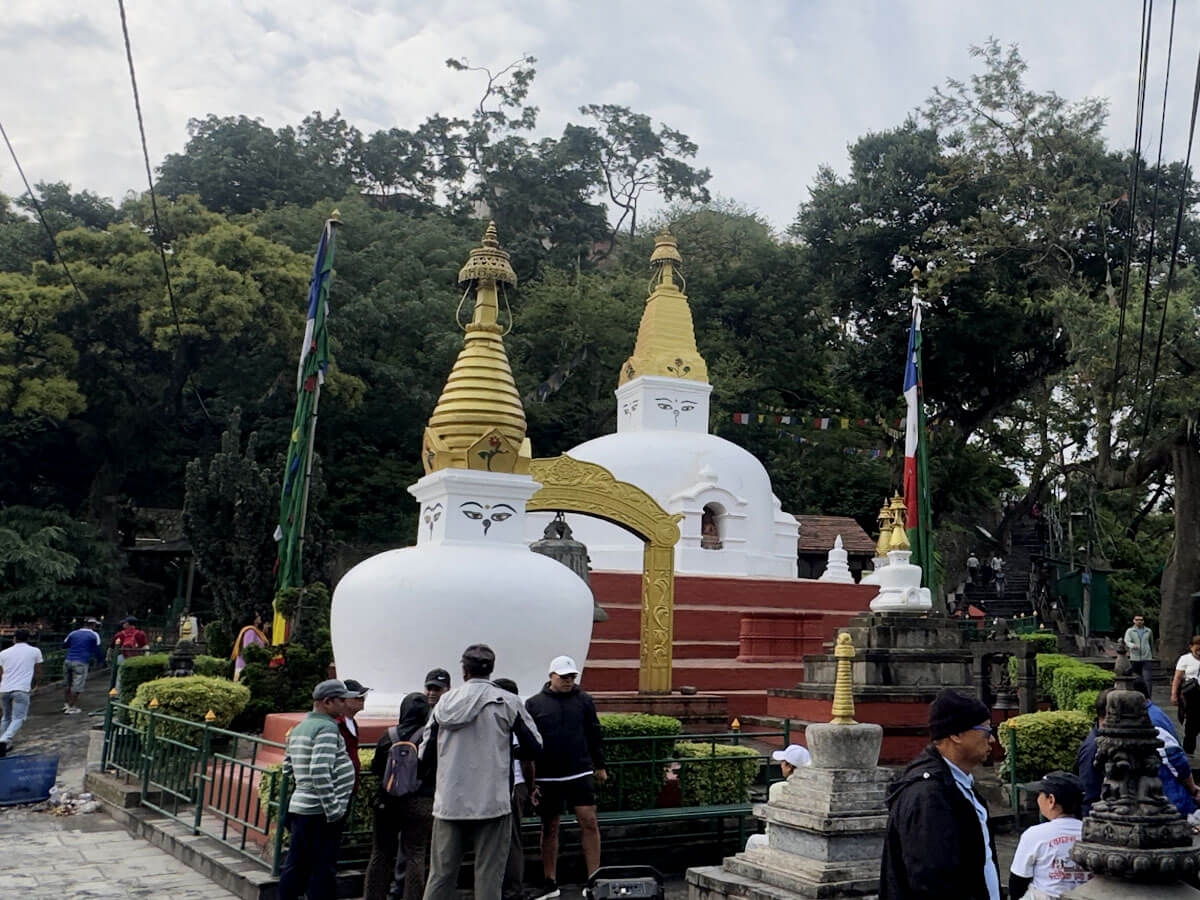
Boudhanath Stupa, Kathmandu
If you experience Saka Dawa in only one place in Nepal, let it be Boudhanath. This UNESCO World Heritage Site is the largest Buddhist stupa in Nepal and the spiritual heart of Tibetan Buddhism outside Tibet. During Saka Dawa and especially on the full moon night, Boudhanath becomes one of the most spiritually charged places on earth.
Thousands of pilgrims circumambulate (Kora) the great stupa clockwise through the day and deep into the night, spinning prayer wheels, reciting mantras, and counting beads. It is believed that by doing kora, it brings blessings, purifies the soul, and cleanses negative karma. Butter lamps illuminate the stupa's base in a warm golden glow. Monks from surrounding monasteries chant in long, resonant sessions. The collective devotion of everyone gathered creates an atmosphere that is simultaneously peaceful and profoundly moving.
Arriving at Boudhanath at dusk on Saka Dawa Düchen and staying through the evening is an experience Nepal Adventure Team includes in every Saka Dawa itinerary we offer because nothing else we can show a first-time visitor captures the soul of Nepal so completely.
Swayambhunath Stupa, Kathmandu
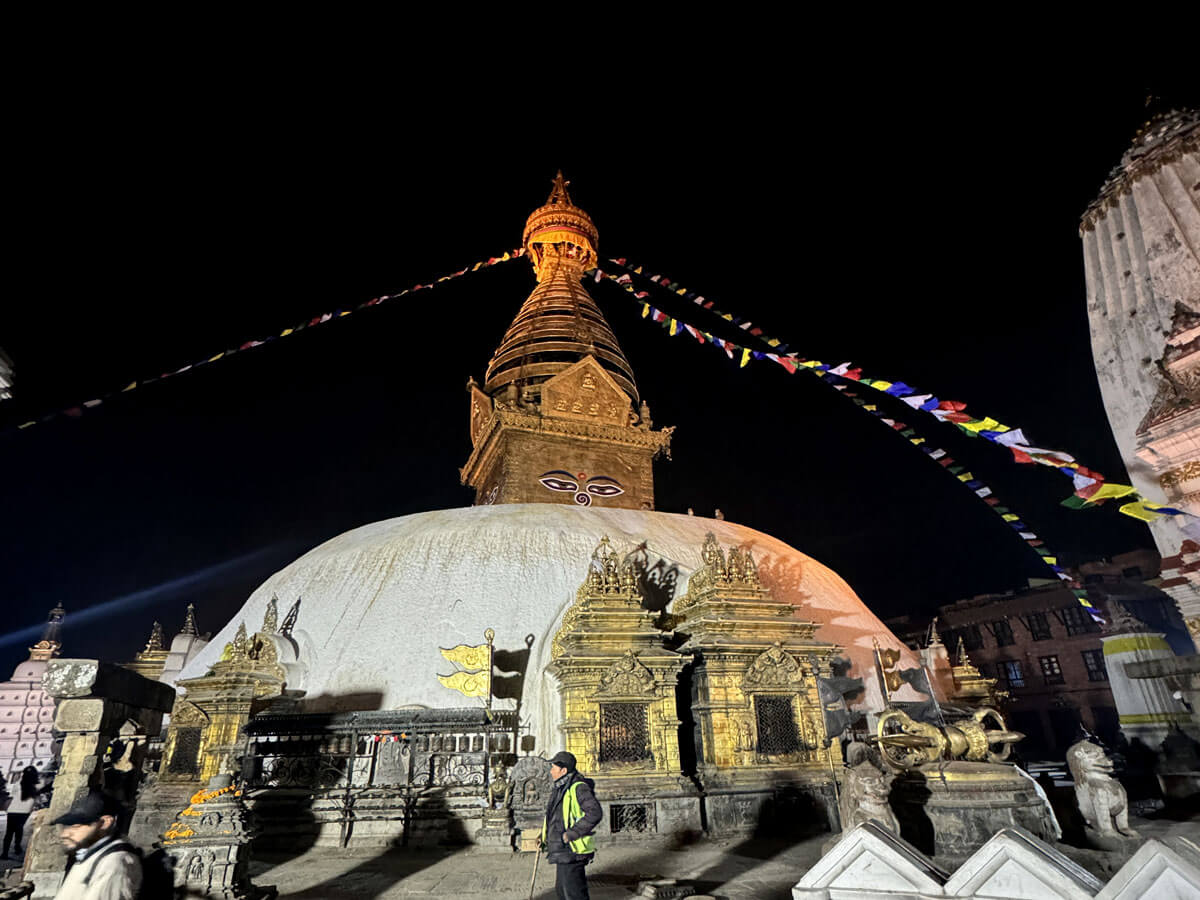
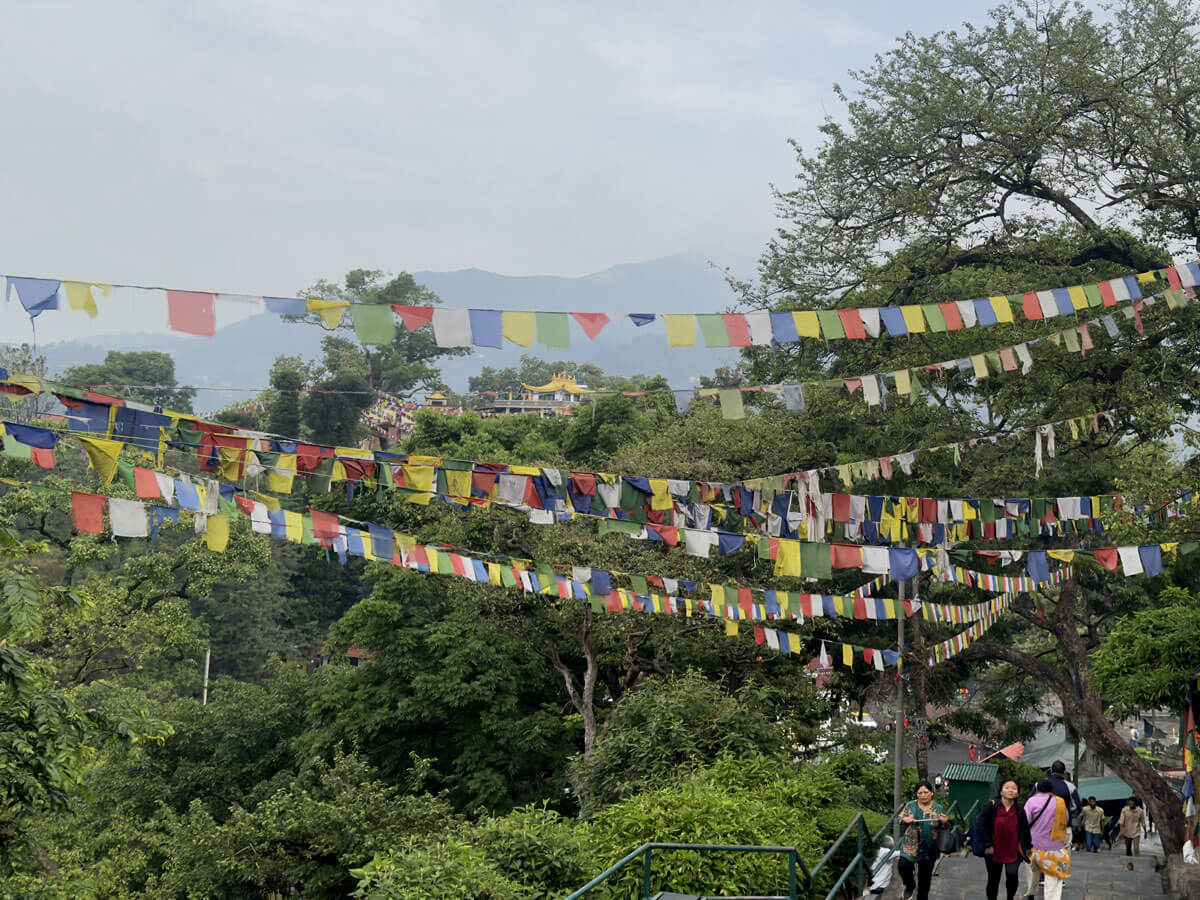
Swayambhunath (the Monkey Temple) is one of the oldest and most sacred Buddhist sites in all of Nepal, perched on a hilltop overlooking the entire Kathmandu Valley. During Saka Dawa, pilgrims climb the 365 steps to the summit at dawn to offer prayers as the sun rises over the valley and the Himalayan peaks shimmer on the horizon.
The combination of ancient spiritual architecture, sweeping Kathmandu Valley views, and Saka Dawa energy makes Swayambhunath one of the most photographically and spiritually rewarding places to visit during the festival.
Namo Buddha, Kavrepalanchok
About three hours from Kathmandu, Namo Buddha is one of the most sacred Buddhist pilgrimage sites in Asia. According to Buddhist legend, this is the spot where a compassionate prince offered his own body to feed a starving tigress and her cubs, an act of selfless generosity that embodies the spirit of Saka Dawa perfectly.
During the holy month, Namo Buddha draws serious pilgrims and meditation practitioners from across Nepal and the region. The monastery here holds special prayer ceremonies and teachings throughout Saka Dawa. Walking the gentle pilgrimage trail from Namo Buddha to Boudhanath during this season, joining the pilgrims on the path, is one of the most quietly powerful experiences Nepal offers.
Tengboche Monastery, Everest Region
For travelers who want to combine Himalayan trekking with Saka Dawa spiritual experiences, Tengboche Monastery in the Khumbu region offers something truly extraordinary. Sitting at 3,867 meters with Ama Dablam, Lhotse, and Mount Everest visible above the monastery rooftops, Tengboche holds special Saka Dawa ceremonies during the holy month. Pairing an Everest Base Camp trek or Everest region helicopter tour with a visit to Tengboche during Saka Dawa creates one of the most complete Nepal travel experiences imaginable, high-altitude Himalayan adventure combined with authentic Buddhist festival culture.
Muktinath Temple, Mustang
Muktinath sits at 3,800 meters in the Mustang district and is one of the most revered pilgrimage sites in Nepal. During Saka Dawa, devoted pilgrims travel long distances to reach Muktinath and offer prayers at this ancient temple.
Combining an Annapurna helicopter tour with a Muktinath landing during Saka Dawa is one of the most unique and exclusive Nepal spiritual travel experiences available today. You can fly over the entire Annapurna range, land at Muktinath, join the pilgrims in offering prayers, and return all in a single extraordinary morning.
Kopan Monastery, Kathmandu
For travelers seeking a more contemplative Saka Dawa experience away from the busier city stupas, Kopan Monastery on the peaceful hills northeast of Kathmandu is a beautiful choice. Special teachings, guided meditation sessions, and prayer ceremonies are held here throughout the holy month and are open to respectful visitors.
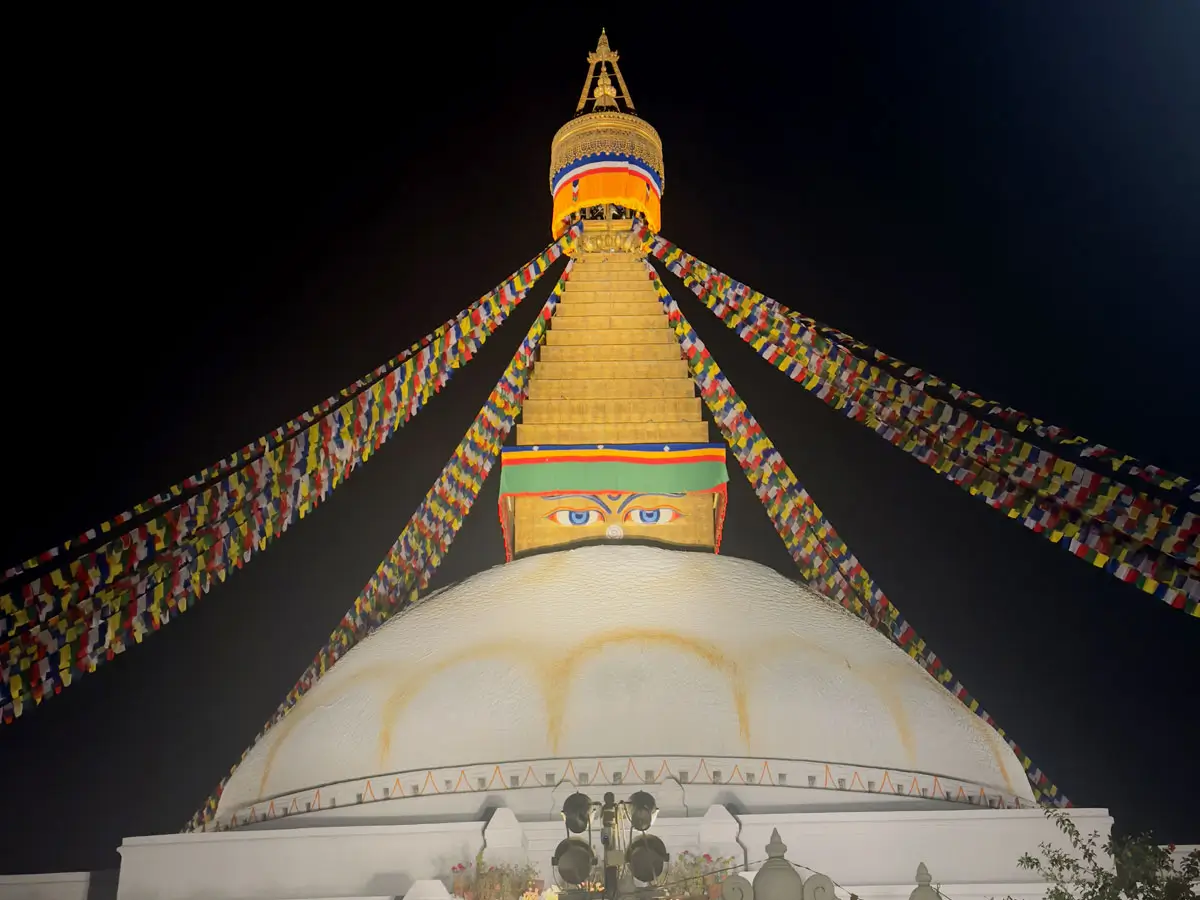
Saka Dawa Rituals and Traditions: What You Will Witness
Understanding what you are seeing makes the experience infinitely richer. Here is what to expect at sacred sites across Nepal during Saka Dawa:
Butter Lamp Offerings — Temples and monastery halls are filled with thousands of small butter lamps, casting everything in warm, trembling golden light. Each lamp represents wisdom dispelling the darkness of ignorance — one of the most visually beautiful traditions in all of Buddhist culture.
( Kora ) Sacred Circumambulation — Pilgrims walk clockwise around stupas and sacred sites, sometimes for hours, sometimes for entire days — spinning prayer wheels and reciting mantras with each step. Joining the kora at Boudhanath, even briefly, connects you to a tradition that stretches back centuries.
Sutra Chanting — Long communal chanting sessions fill monastery courtyards with deep, resonant sound. Monks recite the Sutra of the 1000 Buddhas throughout the day, and the accumulated sound of collective chanting is extraordinarily peaceful to sit near.
Acts of Generosity and Charity — Saka Dawa is a time when Buddhists engage deeply in charitable giving — donating food, clothing, and money to those in need. The belief that merit is multiplied during this holy month makes generosity feel especially purposeful. Witnessing this culture of giving in action is genuinely touching.
Devoted Pilgrimages — Deeply devoted pilgrims perform full-body prostrations along sacred routes, measuring the ground with their own bodies as an act of profound spiritual dedication. Witnessing this level of faith is humbling in a way that stays with you.
Fasting and Meditation — Many Buddhists practice partial or complete fasting during Saka Dawa, which is combined with extended meditation practice. The overall energy at sacred sites during this month feels quieter, more intentional, and more inward than at any other time of year.
Traveling Respectfully During the Saka Dawa Festival in Nepal
Saka Dawa is a religious event. It is not just something to watch. At Nepal Adventure Team, participating in the Saka Dawa festival isn't just about observation; it's about an immersive cultural experience. Guests actively engage in the sacred practices that define this holy month, connecting deeply with the local Tibetan and Buddhist communities. A few simple guidelines go a long way:
- When you are visiting stupas and monasteries, always walk around them in a clockwise direction.
- You should remove your shoes before you enter any building.
- It is an idea to dress modestly when you are at sacred sites. This means you should cover your shoulders and knees.
- Before you take a picture of monks, pilgrims, or ceremonies, you need to ask for permission.
- You have to keep your voice low when you're inside the monastery grounds.
- Do not touch the statues, the religious objects, or the offerings.
- If you are sitting near a ceremony, you should sit quietly. Your presence is welcome. Your patience is appreciated at these Saka Dawa ceremonies.
- Consider making a charitable donation when you visit these sites. It is a nice thing to do, and it is in the spirit of Saka Dawa generosity.
Useful Information
The entire fourth lunar month leading up to this date is considered holy, so arriving in late May gives you time to experience the growing energy of the festival before the full moon peak. This is some useful information from a practical Nepal travel planning perspective:
- Weather: Late May and early June bring warm, clear mornings ideal for sightseeing and helicopter tours. Afternoon showers are possible as the pre-monsoon season begins, but mornings are generally beautiful.
- Crowds: Sacred sites are busier than usual with pilgrims but significantly less crowded with general tourists than during the October and April trekking peaks. This creates a more intimate, authentic experience.
- Accommodation: Book early, especially hotels near Boudhanath in Kathmandu. The area fills up with pilgrims and spiritually minded travelers around the full moon period.
- Combining with trekking: If you want to pair Saka Dawa with a Nepal trek, the Everest region and Annapurna region are still accessible in early June before monsoon conditions fully set in.
What makes Saka Dawa different than other festivals?
I have visited Boudhanath a lot of times when there are festivals. Saka Dawa is different. I do not know why. Saka Dawa is special to me. Saka Dawa is a festival in Nepal. We do not have fireworks during Saka Dawa. We do not have processions or big performances. The things that happen during Saka Dawa are simple. They are very meaningful. This is what makes Saka Dawa so powerful. Saka Dawa is a time for reflection, and this is what I love about Saka Dawa.
What really gets to me is how sincere everything is. This man walks around Boudhanath every single morning. He has been doing this for forty years. On the night of the moon, he walks around three hundred times. He does not do it because people are watching him. He does it because he really thinks it makes a difference. The family from a remote village has traveled for two days to Lumbini to stand for a few minutes at the Maya Devi Temple. The young monk chants in a courtyard at four in the morning when the only audience is the stars.
Saka Dawa is not a festival that puts on a show for people who come to visit. It is Saka Dawa. That is what makes Saka Dawa so special. Saka Dawa is worth going to because it is real.
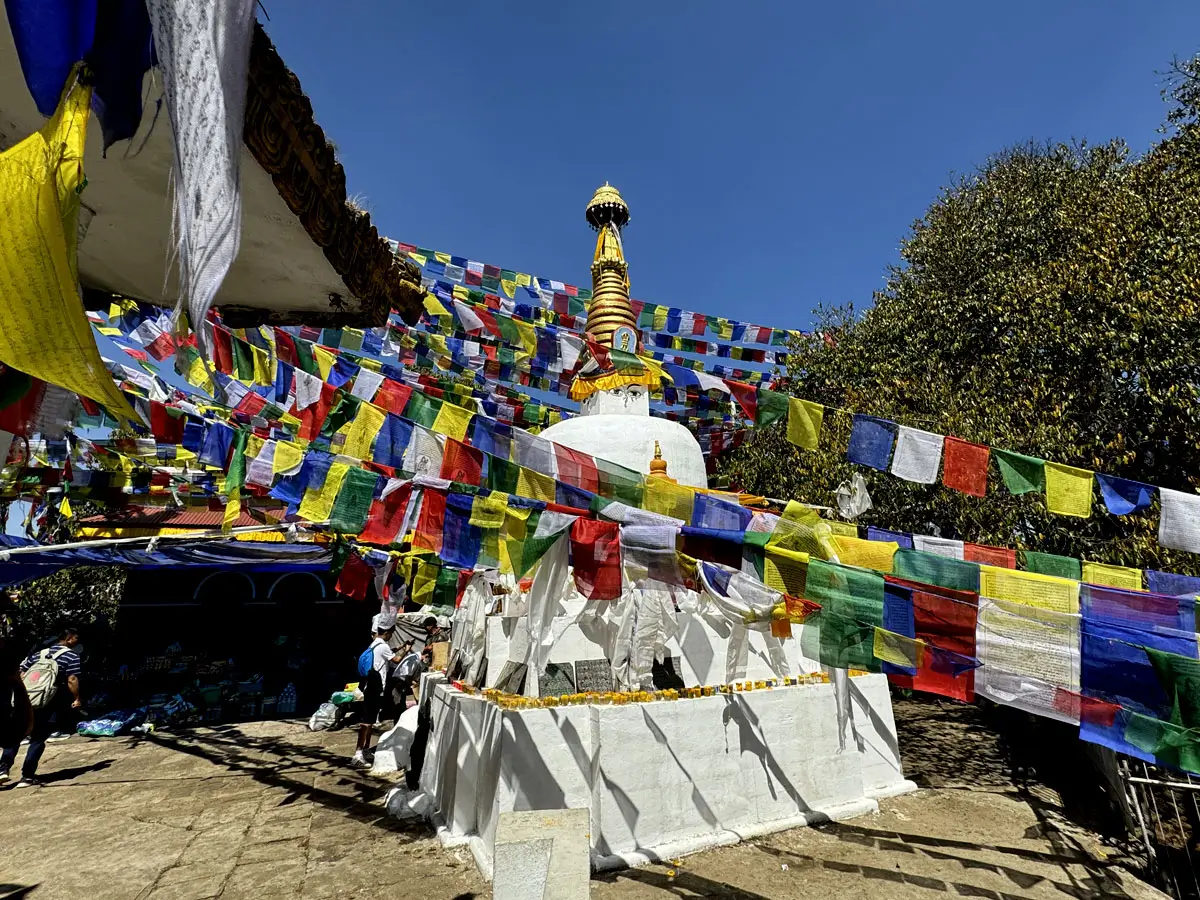
Why Travel Nepal's Saka Dawa Festival with Nepal Adventure Team
We are not a foreign travel company selling Nepal from the outside. We are Nepali. This is our home, our culture, and our lived heritage. When our guide explains what is happening inside a monastery ceremony, you are getting something that no generic tour operator can give you: a genuine connection to a culture that is ours as much as it is ancient. Everything we do at Nepal Adventure Team is built on three commitments:
- Authenticity — Real ceremonies, real communities, real Nepal. We do not make up stories of Saka Dawa for tourists. We bring you into the experience.
- Responsibility — We work with local monasteries, local guides, and local businesses. Your travel spending directly supports the communities whose culture you are coming to experience.
- Depth — Our guides are not just knowledgeable; they are passionate and personally connected to Nepal's Buddhist heritage. They do not just show you places. They help you feel them.
Whether you are looking for a Nepal Buddhist festival tour, a Himalayan spiritual journey, a monastery trekking experience, a luxury Saka Dawa private tour, or simply want to be at Boudhanath on the night of June 11th, Nepal Adventure Team is ready to make it happen.
Frequently Asked Questions
Is Saka Dawa suitable for non-Buddhist travelers?
Absolutely. Saka Dawa welcomes all respectful visitors regardless of faith or background. Many of our guests are not Buddhist but describe their Saka Dawa experience as one of the most moving and meaningful of their lives.
Can I combine a Saka Dawa festival tour with trekking in Nepal?
Yes, and we highly recommend it. Early June still allows trekking in the Everest and Annapurna regions before monsoon conditions fully set in. Several of our packages combine trekking or helicopter tours with Saka Dawa cultural experiences.
What should I wear during the Saka Dawa festival visits?
Modest, comfortable clothing. Cover shoulders and knees at all sacred sites. Bring a light jacket for early morning visits to hilltop sites like Swayambhunath.
How do I book a Saka Dawa tour with Nepal Adventure Team?
Simply reach out through our website or email us directly. We will discuss your interests, travel dates, and budget and put together the perfect Saka Dawa Nepal itinerary for you.