The Manaslu Circuit and Larke Le Pass Trek (2026) is a 14-day trek through the Manaslu Conservation Area, offering a peaceful trail with fewer crowds. The itinerary includes hiking through lush forests, crossing high mountain passes, walking over many suspension bridges, and exploring Gurung and Tibetan traditional villages. You’ll see mountains like Manaslu (8,163m), Ganesh Himal, Himalchuli, Naike Peak, and many more stunning mountains. An acclimatization day is planned to help your body adjust to the altitude. You can also customize the itinerary to suit your preferences. On the Trek, you need special permits and must go with a licensed guide and at least one porter. However, this is all dependent on your preferences and the conditions; all these details are included in the itinerary. It’s perfect for those looking for a scenic and cultural trek in Nepal.
14 Days Manaslu Circuit Trek, & Larke Le Pass
Trip Facts
The Manaslu Circuit trek (2026) is a challenging and popular route in the Manaslu region. Trekking to Manaslu is an amazing trip where you can explore Manaslu (8,163 m), the eighth-highest peak in the world. You'll also pass through Larke La at 5,106 metres (16,752 ft), offering stunning views of the mountains in the Manaslu and Annapurna regions.
The Manaslu trek opened to visitors in 1992, aimed at trekking and tourism. Since then, it has become famous for its breathtaking scenery, unique vistas, and the rugged beauty of snow-capped slopes. The name Manaslu means "soul mountain," referring to a protective deity worshipped by local communities. The trek provides views of majestic mountains and showcases the rich culture and unique lifestyles of various ethnic groups along the trail. These aspects make the Manaslu trek a cherished journey.
The challenging Manaslu Circuit is perfect for adventure seekers. It offers beautiful views of nature and mountains while providing insights into both Buddhism and Hinduism. The trek is an amazing experience in the remote Nubri Valley of the Himalayas.
Manaslu Base Camp (4848m)
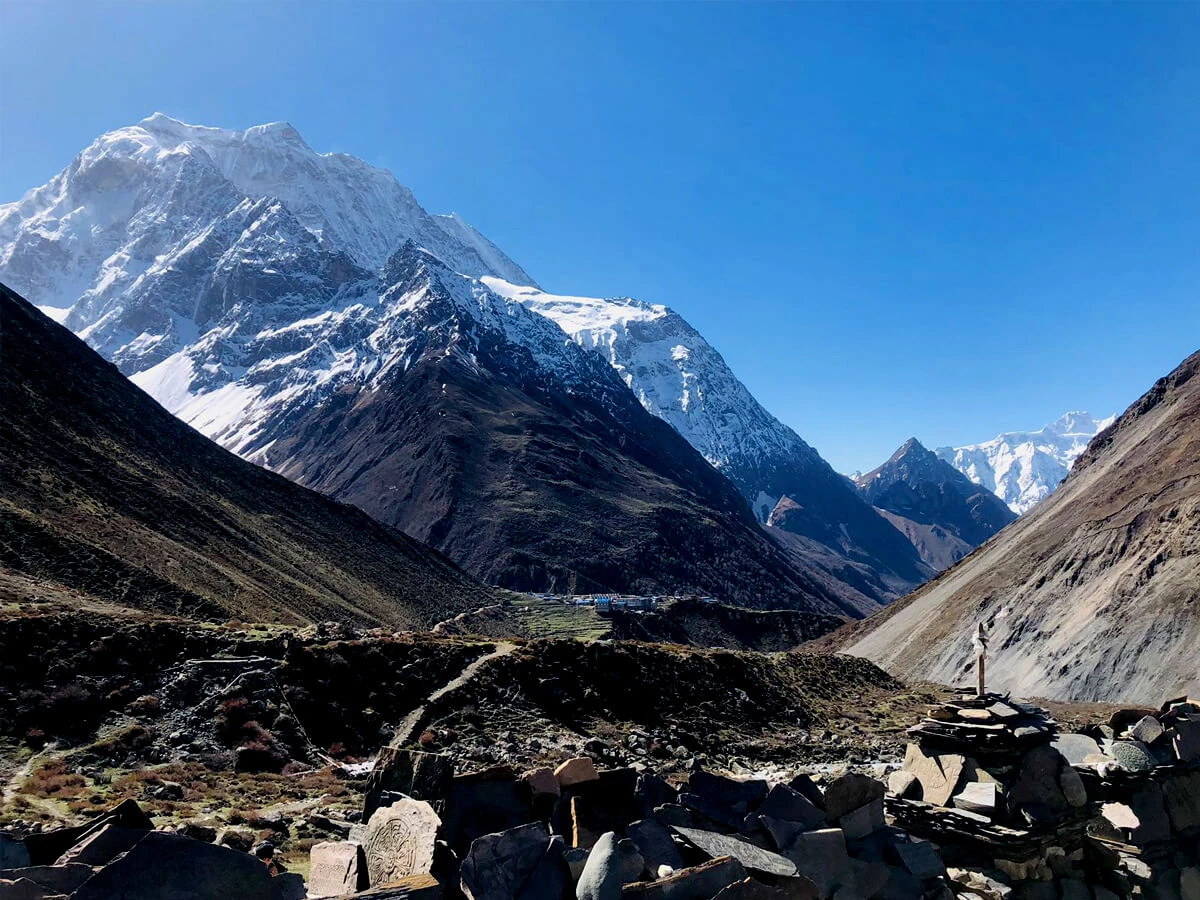
Manaslu Base Camp is an exciting side trip on the Manaslu circuit trek. It leads you to the base of Mt. Manaslu, the world's eighth-highest mountain. On acclimatization day in Sama Gaon, you can walk through forests. The steep climb takes you to Manaslu Base Camp at 4848m, marked by many prayer flags. You may experience breathing difficulties due to altitude, so stay hydrated and walk slowly. From the base camp, you’ll enjoy the best views of Mt. Manaslu.
Manaslu Circuit Trek off Beaten Trails
The Manaslu round trek (2026) is highly recommended for those seeking stunning landscapes and the true essence of the Himalayas. Unlike popular treks like Everest or Annapurna, the Manaslu Circuit sees fewer visitors, allowing you to discover Nepal's exotic culture. The trek winds through lush forests, streams, and waterfalls, along with stark high-altitude trails and valleys. You’ll hear birds singing and see age-old villages where the locals are friendly and welcoming.
Another key point about the Manaslu trek is that it is off -beaten path. You won't find crowded trails or large tea houses frequented by many tourists. Instead, you’ll experience authentic culture, deepening your connection to the Himalayas. This trek is an opportunity to engage with local people, learn about their lives, and experience their warm hospitality. You’ll be greeted with friendly smiles, and the simple yet delicious food reflects the essence of life in these regions.
The Manaslu Circuit Trek invites tourists to experience nature's adventurous charm in Nepal. It is well-hidden, like a precious gemstone. When revealed, it offers challenging inclines and the essence of pursuing one's passion. This trek is not just physically demanding; it is a profound spiritual journey. It allows you to connect with the spirit of the Himalayas and discover Nepal's beautiful natural wonders.
Must-See Places Along the Manaslu Circuit Trek
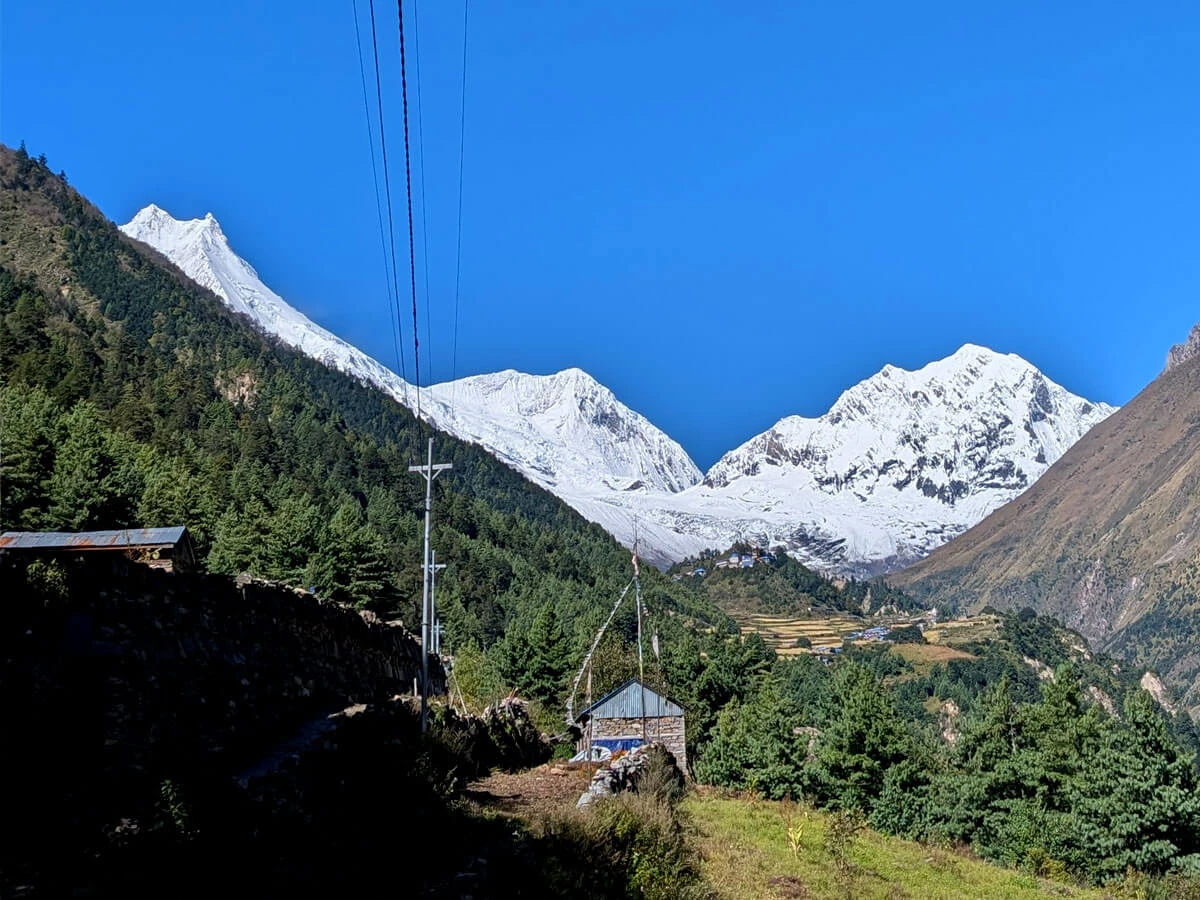
The Manaslu Circuit Trek, in the heart of the Nepal Himalayas, offers a chance to enjoy breathtaking nature and rich culture. Mount Manaslu, also known as Kunti Kesh, stands at 8,163 m, making it the eighth-tallest mountain in the world. The stunning view of this giant, especially from Lho or Samagaun, inspires awe in trekkers. These villages serve as great viewpoints and showcase the local Tibetan culture, featuring monasteries and traditional stone houses.
Another highlight is the thrilling Larkya La Pass, peaking at 5,135 m. This high pass is famous for its beautiful landscapes, including Himlung Himal, Cheo Himal, and the Annapurna ranges. Crossing the pass offers amazing views and is not technically hard, making it a rewarding experience. It represents the highest point trekkers reach, evoking a sense of achievement amid stunning surroundings. The area combines glacial terrains, snow-capped slopes, and steep valleys, adding excitement to the journey.
The trek also provides lovely views of Samdo, a village near the Tibetan border. Samdo is the last stop before Larkya La and offers insights into life at high altitude. The village is home to descendants of Tibetan refugees, showcasing their traditional culture, monasteries, and yaks. The cultural experience in Samdo, along with interactions with locals, deeply enriches trekkers.
The Manaslu Circuit Trail also features beautiful spots like Birendra Lake, near Samagaun. The glacial lake is stunning, and we spent a day there, resting and enjoying views of Manaslu. The peaceful surroundings offer a nice break from the trek's challenges, allowing trekkers to marvel at nature's beauty. These diverse sights along the Manaslu Circuit create a memorable trek in one of Nepal's remote areas.
Best Time for Manaslu Circuit Trek
The Manaslu Circuit Trek, known as one of the most beautiful treks of the Manaslu region, is possible in the pre-monsoon or the post-monsoon period. March through May is the beginning of spring, and the area's climate is generally favourable. However, there might be occasional showers, and the flowers, especially rhododendrons, give the trails a spectacular burst of colour. This period has relatively mild climates, thereby making it suitable for trekking. It also prizes some of the best views of the surrounding mountains, including Mount Manaslu. It is much more active, with vibrant foliage and flowers, adding real beauty while on the trails of the trek.
Another good season for the Manaslu round treks and other treks in Nepal is autumn, which is in September, October, and November. The monsoon rains wash away dust and pollutants, thus offering pristine air and splendid views of the looming mountains. The climate is relatively moderate to warm, and most of the time, the weather is favourable for trekking, with not many dangers of extreme terrains or paths. It also coincides with major festivals in Nepal, including Dashain and Tihar, so that one can get a real feel of the cultural tour in addition to trekking. The first of these seasons is ideal for appreciating the natural beauty and cultural heritage that the Manaslu Circuit offers its visitors.
Accommodation Options During Your Manaslu Circuit Trek
The Manaslu Circuit Trek offers two distinct accommodation options: tea houses and camping, each with unique charm and benefits.
Tea Houses on the Manaslu Circuit Trek
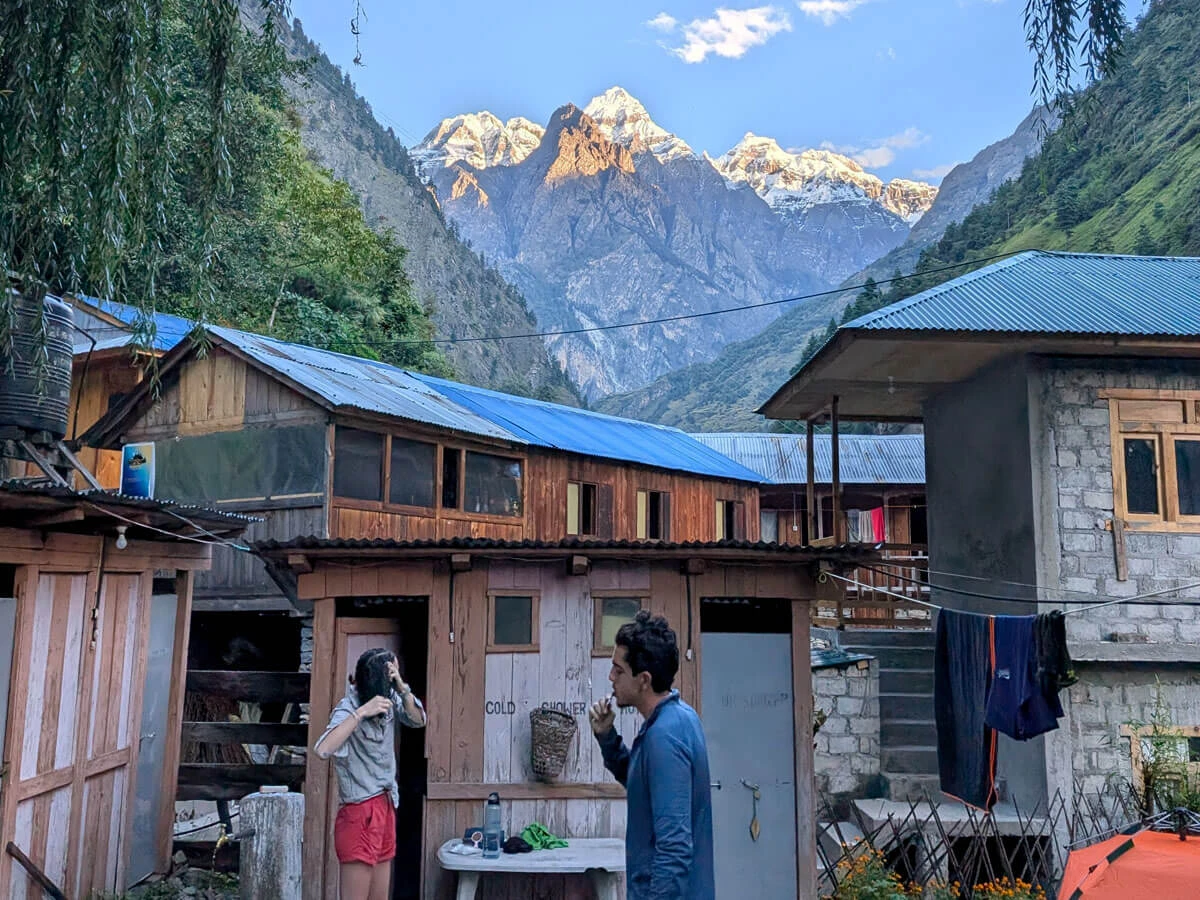
Tea houses, guesthouses, and mountain lodges are the most utilised and popular accommodations in the Manaslu Circuit. These are comfortable accommodations at locations along the route that offer a place to eat, rest, or communicate with the trekkers. Tea houses at destinations like Jagat, Lho, Shyala, Samagaon, and Samdo provide better lodging and food facilities. At the same time, other places do not offer much infrastructure and provisions. Nevertheless, all the tea houses in the region are outfitted with basic accommodation necessities in the form of bedding and beds, toilets, baths, and dining. Staying in these establishments puts you in a true Nepali setting with friendly Nepalese people, making you and your party feel at home.
Camping on the Manaslu Circuit Trek
For trekkers who do not want to stay at tea houses, the Manaslu Circuit trek allows campers to spend their nights under the open sky above. Traditionally, the Manaslu trail was a camping trail; if hiking during camping is allowed, one can carry their camping equipment. Nonetheless, a camping trek on the Manaslu Circuit costs more than the tea house trek. During camping treks, trekkers carry all their necessities like tents, kitchen utensils, fuel, stoves, and personal belongings. In addition, you will always be accompanied by a support crew, a professional kitchen team of cooks, and a helper. They will make sure to pack fairly heavy meals so that the whole experience is quite comfortable and fulfilling. However, if one's focus is on the experience of natural surroundings – the real, wild feel with few to no man-made structures in between – then camping in the Manaslu region is ideal.
Assessing Difficulty Levels and Anticipating Challenges
Assessing the difficulty levels and challenges of the Manaslu Circuit Trek is crucial for a successful journey. When planning and preparing for the trek, it is essential to determine how challenging it will be and what kind of obstacles hikers will encounter on the Trek. This trek, which lasts for 12 days, is one of the most interesting treks in Nepal, as it entails several physical and logistical tests that need to be prepared for. These trails involve steep slopes up and down and some rough terrain; thus, some level of physical fitness and endurance is required. Moreover, the elevations while the trek goes higher than 5,000 metres at the Larkya La Pass are quite dangerous due to sudden attacks of altitude sickness. Accommodations should be made accordingly, and one should know the signs for safe trekking.
Furthermore, trekking in the Manaslu region entails hot and dry conditions, especially during high-altitude treks. A drastic decrease in the temperature is expected, with heavy snowfall and strong winds, mostly in the area of Mount Manaslu. Clever dressing, appropriate footwear, and good trekking poles are necessary to overcome these obstacles. There is also a lack of health services, rescue services, and other facilities, so it is necessary to have a good first aid kit and travel insurance.
Nevertheless, embarking on one of the most visually stunning and historic trails in the Manaslu area is worthwhile. During the trek, one gets to see the majestic Mount Manaslu, the wildlife unique to the Himalayan region, and the way of life of the Tibetan people. If specific precautions are taken, challenges are known, and the standards of high altitudes are honoured, then the Manaslu Circuit Trek has infinite beauty and is thrilling to behold.
Manaslu Circuit Trek Permit Required and Cost
The Government of Nepal has declared the Manaslu Region (between Jagat and Dharapani) a restricted area to control mass tourism in this region. Trekkers are required to obtain a special entry permit before heading on the trek. As a result, independent trekkers are not allowed to trek in the Manaslu region, and there must be a minimum of two trekkers in a group, accompanied by a local guide, to the process for permit process. Additionally, your permit must be processed through a registered agency. A freelance guide cannot issue the necessary permits for the Manaslu Circuit.
To trek to the Manaslu region, you will need to have three kinds of permits issued by the Government of Nepal.
A. Special restricted area permit for Manaslu (Manaslu RAP)
- Manaslu RAP is required from Jagat until you cross Sama Gaun. Once you cross the village of Sama, you need another entry permit (ACAP). The permit cost for the Manaslu trek depends on the month and the number of days you will spend in this region between Jagat and Dharapani. The last checkpoint for MRAP is in Sama Gaun.
- Manaslu trek permit costs USD 100 per person for the first seven days and USD 15 per person for each additional day from September to November
- Manaslu trek permit costs USD 75 per person for the first seven days and USD 7 per person for each additional day from December to August.
B. Manaslu Conservation Area Permit (MCAP)
- This Manaslu trek permit is required from Philim, where the Manaslu Conservation Area starts. The entry fee for SAARC Nationals is NPR 1000, and for other Nationals is USD 30 per person throughout the year. A printed photograph and passport copy are required for the MCAP permit.
C. Annapurna Conservation Area Permit (ACAP)
- An ACAP trek permit is required from Dharapani until you exit the ACAP from Beshi Sahar. The entry fee for SAARC Nationals is NPR 1000 Per person, and for other Nationals, it is USD 30 per person throughout the year. As per MCAP, a printed photograph and a copy are required for the ACAP permit.
D. Chum Nubri Rural Municipality Fee
A local development fee of NPR 1,000 is collected in cash at the Jagat checkpoint. This is a newer addition that some older guides don't mention, so carry Nepali rupees before leaving Kathmandu.
Serang Gompa (3100m) in Manaslu Circuit Trek
Serang Gumba is a small paradise at the foot of Shringi Himal, which you should not miss during the Manaslu Circuit trek. The Serung valley is considered one of the four bells hidden among the Himalayas of Asia, as identified by Guru Padmasambhava. Also, it is believed that he meditated here.
Hinang Gumba (3100 m) in Manaslu Circuit Trek
Hinang Gompa, located in Hinang village, is one of the most beautiful gompas you will encounter during your Manaslu circuit trek. It sits with a backdrop of Mt. Himalchuli and a yellow pine forest in the background. Gautam Buddha is the main idol of this gompa, with Guru Rinpoche (Padmasambhava) on the right and Guru Karmapa on the left. Hinang Gompa is also a lama school, and students study to move to Namobuddha in Kathmandu during the winter.
Birendra Lake (3620m) in Manaslu Larke Pass Trek
Birendra Lake is a glacier lake formed from the melting ice of Mt. Manaslu. It is the most popular and the easiest side trip of the Manaslu circuit, just about half an hour away from Sama village. Most people spend their acclimatization day here in this lake, enjoying the serene beauty of this emerald lake and an open field where Dzopkyos and yaks will be grazing.
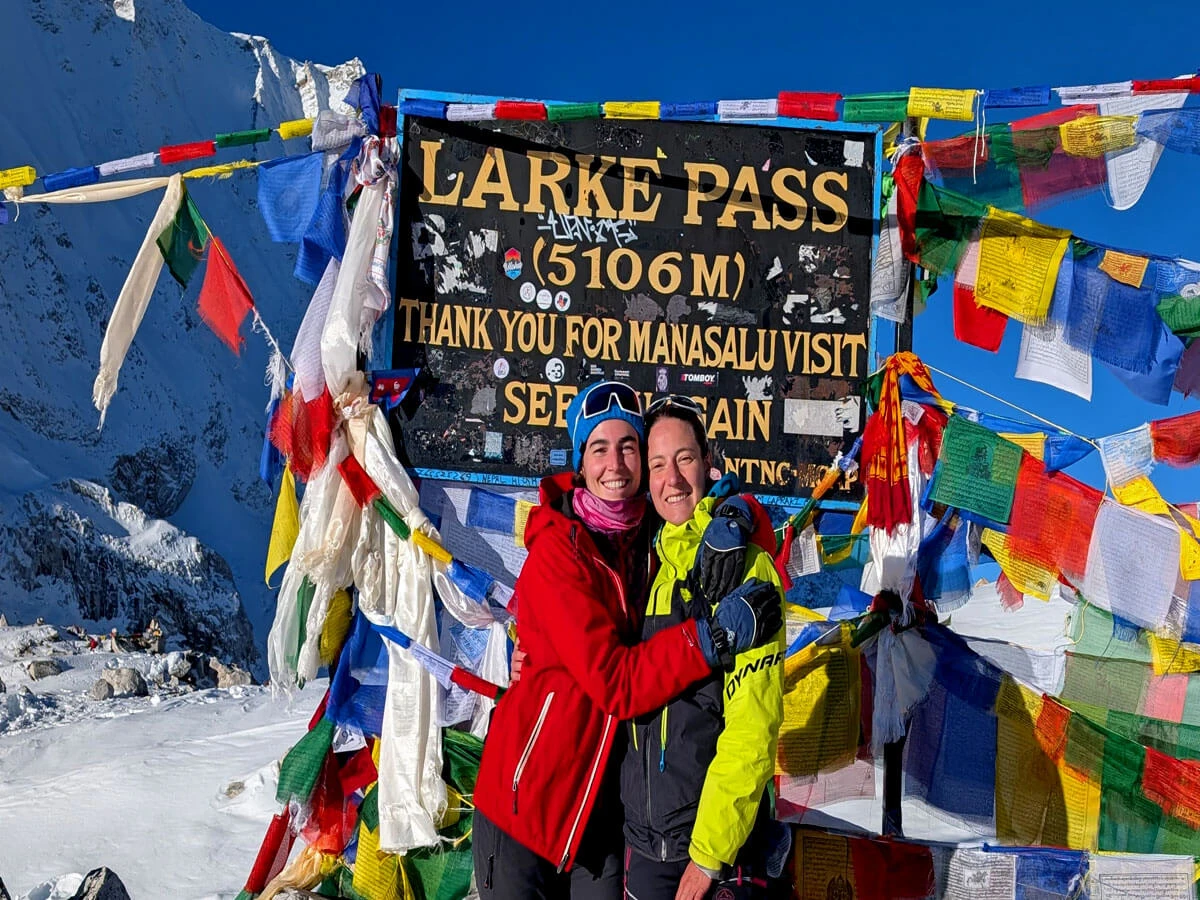
Larke Pass (Larkya la) 5106m
Larke Pass is the highest elevation in the Round Manaslu trek. The steep climb to Larkya Pass can be tiring, but the mountainous vistas of Himlung Himal (7,125m), Cheo Himal (6820m), Kang Guru (6980m), and Annapurna II (7937m) from this pass are breathtaking.
Manaslu circuit trekking begins with a drive from Kathmandu to Arughat and then the trail continues through the picturesque valley and alongside Larke pass (5,106 m.) and it, at last, takes you to Mt. Manaslu zone after having an entire outing all around, the trail takes you back along Annapurna's great trekking route to Besishahar and after that, you get a private or public bus and return to Kathmandu.
Further experience and trekking packages in the Manaslu region: Manaslu Tsum Valley Trek, Manaslu Tsum Valley and Larkya La Pass Trek
Highlights
- Embark on Manaslu Circuit Trek through the off-the-beaten and untouched area of Manaslu to Annapurna
- Enjoy the beautiful conservation area and cross the 5106 m Larke pass
- Take a view of Nepal's Himalayan range with the eighth-tallest mountain, Manaslu
- Scenic drive to Arughat & trek through the Buddhist village of Bhimtang & Samdo
- Explore the unique cultural diversity of those remote villages
Outline Itinerary
Photo Gallery


14 Days Manaslu Circuit Trek, & Larke Le Pass Itinerary
Manaslu Circuit trek (Larke Le Pass) itinerary can be changed according to your interest, so if you want to extend your trek, we can make it longer and explore more around the Manaslu trek area, and if you have less time and still would like to visit, we can make it shorter.
Well, the Nepal Adventure Team will customize your itinerary as per your request.
Arrival at the Kathmandu (1350m) via respective airlines.
Upon arrival at Kathmandu International Airport, a representative from Nepal Adventure Team will pick you up at the airport & transfer you to the Hotel in Kathmandu / around Thamel – the interesting part of Kathmandu. After some time for tea and snacks, our guide/pioneer will give brief information about hotels, Nepali cultures, and your Mansalu and Larke pass trekking with a welcome dinner in a typical Nepali restaurant along with a cultural program.
Drive to Machha Khola (930m) by means of Arughat (600m) 7/8 Hours.
The morning is a great time for a long drive through the curved roads towards the Gorkha region, located in the mid-western part of Nepal, to start this wonderful trip. The ride causes the temperature to rise as the glossy areas pass through many homestead towns, or towns for a while, following the Trisuli stream, and then turns off the main Kathmandu/Pokhara highway to Arughat, traveling along a broken road to reach Machha Khola, with the Budhi Gandaki River alongside.
Trek to Jagat (1,410m) 5/6 Hours.
Morning walk occurs to take after Budhi Gandaki upstream to get to Khorla Beshi, a farming community. From here on, the wonderful winding way leads to the destination of Tatopani, known as the “Hot Spring,” where people get a chance to take a hot bath. If time allows it, the walk continues by passing through the village of Dovan and crossing the river Yaruphant, and continuing up to Jagat village after adequate rest.
Trek to Deng (1,800m) 6/7 Hours.
The journey then progresses towards the higher altitude along the Budhi Gandaki River, passing quite a few small and clean farm houses. After that, have a rest, then a trek with a short ascent and descent to Nagjet, ascend to a beautiful village of Philim, and then walk through farm terraces of golden grains of wheat and barley until reaching a rocky ridge top. There are many tourist spots in the Kullu Valley, but this voyage devotes one night to the Deng village.
Trek to Namrung (2,630m) 6/7 Hours
As indicated before, the time has come to enter the high Manaslu Himalaya area. The morning walk again moves gradually down towards a riverbank to reach Bihi Bazaar, a small village. Specifically starting from here, we can see more of the incongruities that are distinctly of the Tibetan culture and people. You then proceed on the easy route along the gradual track up to Ghap village before reaching Namrung village, where one spends the night with an astonishing view of Mount Manaslu.
Trek to Shyala (3,500m) 5/6 Hours
Henceforth, tree lines end, and the vegetation is more degraded, with few stunted juniper bushes. Reach the huge village of Samagaon by walking on a gradual trail and enjoying the views of the Manaslu base camp. Continuing the trip to ‘Birendra Lake’ along we can climb up to take a beautiful view of the place for 45 minutes in the afternoon. Overnight in Shyala village.
Trek to Sama Gaun (3530 m) 4/5 Hours
The trek from Shyala to Samagaun is a scenic and gentle walk through wide alpine meadows with stunning views of Mount Manaslu and its surrounding peaks. The trail passes yak pastures, prayer walls, and small stone huts, reflecting the strong Tibetan culture of the region. After a pleasant descent along glacial streams, you arrive at Samagaun, one of the largest and most traditional villages on the Manaslu Circuit, offering breathtaking mountain scenery and a peaceful Himalayan atmosphere.
Rest and Acclimatization Day
This acclimatization day is essential for adjusting to the high altitude before approaching Manaslu Base Camp. After a hearty breakfast, prepare your packed lunch and begin the hike toward Manaslu Base Camp, which takes approximately 3 hours to reach at an elevation of 4,800 meters. Spend time exploring the area and capturing stunning photographs before returning to Samagaun.
Trek to Samdo (3800 m) 3/4 Hours
Then follow the amazing landscape back and up again to finally reach Samdo, which has basic lodges for an overnight stay. Himi, Samdo is the initial village nearest to the Tibetan border by people of Tibetan origin who have been involved in cross-border trade with Tibet for centuries.
Trek to Dharamsala / Larke phedi (4,460m) 3/4 Hours
It requires crossing the ice of the river several times and then moving on to a country that is all barren at that time, but a morning march is not arduous on the gradual ground on which there are few up and down movements. After the trek to the Larke Phedi (base of Larke la) has been accomplished, one will have the afternoon free after lunch to have a short hike. The geographic location of the viewpoint of Larke Peak is in the Himalayas.
Cross Larke la (5,106 m) and to Bhimtang (3,720m) 8 Hours.
A Big Day! Begin very early in the morning to reach the Larkya-La pass, where we can enjoy a fine view of the surroundings. This walk can be tiring, strenuous, and lengthy, but the views of the surrounding hills, valleys, and mountains, including Mt. Manaslu, K-gham La pass, Larke Peak, Bouddha Himal, Himalchuli, and Peak 29, are truly appealing. Some of them rest while others head for Bhimtang to spend a night in the village.
Trek to Tilje (2300 m) 5/6 Hours
Relative to the other day, today's trip will be a moderate trek with most of the slope absolutely, through the captivating forest of rhododendron, pines, and oak from Gho to Tilche. The village is a Gurung one, ever blessed with the most traditional values.
Drive to Benshi Sahar by local Jeep, and again drive to Kathmandu
It is possible to use it and make a one-day trek from Kathmandu to Dharapani, where the altitude is lower, and it is located on the route of the Annapurna Circuit trek. Thus, we will travel in a jeep to go to Beshisahar for the night halt. Lamjung is one of the districts of Nepal, situated in the western part of the country, and Besishar is the largest town and the district headquarters. It will also take the driver through several villages, Syange, Nagdi, and Bulbule along the Marsyangdi river, which flows down to Bensisahar, and drive to Kathmandu directly.
Finale departure
It is the last day set aside for your astonishing tour in the beautiful country of Nepal. Some free time up to the departure: Accommodation, meals, and leisure up to the final departure to the international airport. This is your guide – team leader, hoping that you enjoyed your time in the Manaslu Circuit Trekking, and please do consider us again for your next trek.
14 Days Manaslu Circuit Trek, & Larke Le Pass Cost Details
Includes
Transportation for Manaslu Circuit Trek
- Airport Transfer (Arrival/Departure)
- Local Sharing Bus, and Jeep (Kathmandu to Machha Khola, and Tilje to Kathmandu)
Accommodation During the Trip
- 2 nights hotel in Kathmandu on a BB basis (bed and breakfast), 12 nights tea house lodge accommodation in the mountains
Meal During the Trip
- 13 Breakfast, 12 Lunch, 12 Dinner (1 Special farewell dinner), Fruit salad every day after dinner
Trekking Guide
- An experienced, English-speaking, and Nepal government license holder guide, his food, accommodation, daily salary, transportation, equipment, and trek insurance
Permits and Fees
- Manaslu Special Trekking region Permit (In Spet-Oct USD 100 for a week, and USD 15 per day, and In Dec-Aug USD 75 for a week, and USD 10 per day)
- MCAP (Manaslu Conservation Area Project) permit, ACAP (Annapurna Conservation Area Project) permit
- TIMS Card (Trekkers Information Management System) fees
- Local Government (Rural Municipality) entrance fee
Equipment and Others
- Sleeping bag, down jacket, duffel bag (If Porter required), and trekking stick
Nepal Adventure Team's Cap, as a gift and a certificate of appreciation
First Aid Medical Kit Bag and Trekking Map
All government VAT and Local Taxes
Excludes
- Nepal visa fee, and International flight (airfare)
- Porter option (If you require a porter, does costs USD 325 for 12 days)
- Personal expenses such as phone bill, chocolate, bakery, all drinks, battery charge, laundry
- Extra accommodation and meals behind schedule
- Travel insurance and emergency rescue
- Tips to guide and porters
Dates & Availability
The following dates are the fixed departure dates and a common schedule. If you want a special and private package, we can arrange one for you, and booking is open for 2026/2027
Add-Ons
Essential Information
Manaslu Circuit Trek Permit
To gain the insight one expects before embarking on a trek in Nepal, it is essential to know that several regions require different types of permits. These permits include local permits, restricted area permits, TIMS Cards, and National Park Permits, all of Which Are appropriate for the Manaslu Circuit Trek. This article provides detailed information about the required permits for the Manaslu Circuit Trek and where to get them.
The Manaslu Circuit Trek was initiated in 1991 for international tourists. However, the Nepalese government has declared Tsum Valley and other villages in the Manaslu region restricted trekking zones. Therefore, arriving at the territories listed above, independent travelers are prohibited from hiking alone.
For the Manaslu Circuit Trek, you will need three permits: The three important permits to climb the Manaslu base camp are the Manaslu Restricted Area Permit, the Manaslu Conservation Area Permit, and the Annapurna Conservation Area Permit. These permits are required, and hikers who wish to trek must organize their trek through a local tour operator or hire the services of a government-authorized guide. Also, it is important to note that at least two trekkers are needed to get those permits.
Required Documents
Passport
For the Manaslu Circuit Trek, you always have to have your original passport with you. It should ideally be valid for at least six months from the date of your entry into Nepal. This document is essential when applying for any permit and the identification process.
Visa
A Nepal visa is required while in Nepal, especially for those taking Nepal treks. This type of visa can be granted upon arrival at the country's airports, specifically Tribhuvan International Airport in Kathmandu, or at any of the country's border-crossing points. However, they may try to obtain the visa at a consulate or embassy of the Nepalese Republic in their home country before the journey.
Permits
Manaslu Restricted Area Permit
The Manaslu Restricted Area Permit is provided by the Department of Immigration of Nepal. For this permit, you are required to have a valid passport/visa, the itinerary of your holiday, including the trekking company details, and two passport-size photographs. To access the restricted area, a person must also indicate the dates to enter and exit the area.
Manaslu Conservation Area Permit (MCAP)
The Nepal Tourism Board accredits the Manaslu Conservation Area Permit. For this permit, you must provide a passport, visa, or another immigration document with a recent photograph of yourself. This permit helps protect wildlife in the Manaslu area.
Trekkers' Information Management System (TIMS) Card
Another important card to obtain for trekking in Nepal is the TIMS card (Trekking Information Management System). The card can be obtained from the Nepal Tourism Board and Trekking Agencies Association of Nepal (TAAN), which requires a valid passport/visa for the Himalayan country and one passport-size photograph. Safety and security will also assist in tracking trekkers on the move.
Trekking Arrangements
To trek in this area, you need to be with an organized group and have a confirmed booking with a local trekking agency since independent trekking is prohibited in the Manaslu region. Furthermore, you will require proof that a licensed guide will guide you throughout the trek. The activity must be with a group of at least two trekkers to qualify for the permits.
Additional Documents
There should be travel insurance for such eminent treks with added features like high-altitude trekking or emergency evacuation. Always ensure that you have several people to call in case of emergency, and the telephone numbers of the agency that you engaged for the trekking services.
Where to Obtain Permits
Permits can be obtained from the Department of Tourism, NTB, which is located in Kathmandu and Pokhara. The Restricted Area Permit is an official document issued in Kathmandu by the Department of Immigration. The permits required largely depend on the choice of trekking destination, and your trekking agency will help with the acquisition of the necessary permits as well as with preparations for the trek.
Budgeting and Cost Considerations for the Manaslu Circuit Trek
As with the preparation and planning of the Manaslu Circuit Trek, it is essential for hikers to prepare a cost estimate to cover various expenditures. Foreseen costs include accessing means of transport, accommodation, food and beverages, permits, and guide fees.
Transportation
Although it is a faraway area, arrangements for traveling to and from the starting point of the trek and for returning to Kathmandu will cost you a lot of money. There are two main options for transportation: private jeeps and local buses.
Private Jeep
Choosing a private jeep means high comfort and the opportunity to adjust the timetable to one's needs. It can transport a group of trekkers and their equipment in a single go and also helps to directly enter the location where the trek begins. It is even more costly than public transportation, but the convenient and relatively faster way of transport makes it reasonable in the long run. The cost of a private jeep transfer from/to Kathmandu to the starting/ending point of the trek is USD 125 to 225, respectively.
Local Bus
However, cost-conscious tourists should take a local bus for transportation during their travels. Public transport, like buses, is easily available from Kathmandu up to the starting point of the trek. While this option is comparatively cheaper, it can be less comfortable and time-consuming due to halts at several intervals and crowded coaches. The cost of a local bus ticket for the journey from Kathmandu to the starting point and back has been stated as USD 9 to 10.
Food and Drinks
Food expenses are another important necessity that needs to be taken care of. Food served in the tea houses ranges from local to international meals such as dal bhat, noodles, and soups, among others, that are prepared in a Western style. Transportation issues also contribute to the high cost of food because the further up you go, the higher the price of food. It is imperative that one plan on spending up to USD 4 to 5 on each meal. Also, beverages like bottled water, tea, and coffee are sold at an unspecified price between USD 2 and 3 based on various factors.
Permits
As mentioned, several permits are required for the Manaslu Circuit Trek:
- Manaslu Restricted Area Permit: $ 75 for April, March, and May, and $100 for August, September, and October
- Manaslu Conservation Area Permit (MCAP): NRP 3000 Per Person and NRP 600 for SAARC countries.
- TIMS Card: NRP 2000 Per person and NRP 1000 for SAARC countries.
Guide and Porter Services
A licensed guide is required, and sometimes, a porter might be hired to carry personal luggage and belongings. It is always helpful to know that there are competent guides who offer information concerning the route, culture, and other safety measures to be taken into consideration. Not to mention that those individuals who want help transporting their belongings can hire porters. The cost of the services of a guide per day per individual ranges between USD 35 and 90, whereas that of the porter ranges between USD 25 and 35 per day. You should be able to budget for their wages, meals, and accommodations when organizing the team.
Alternative trek to Manaslu Circuit Trek
If a person gets tired of the Manaslu Circuit, he or she may find several other treks in Nepal to do, which are equally exciting in their own way. A well-known option is the Annapurna Circuit Trek, which covers various territories and cultural points of view. This trek offers you sublime sights of the vegetation, such as the subtropical forests, terraced fields, and alpine meadows, and a trial of crossing the Thorong La Pass, which is 5,416 meters above sea level. En route, one gets a view of the cultural flavours of the 'Gurung,' 'Thakali,' & 'Manangi' people, making the entire trekking expedition very colourful. Nevertheless, the Annapurna Circuit has advantages in the form of permits and better trekking facilities; thus, it is preferable for different types of tourists.
Another good option is the EBC Trek or the Everest Base Camp Trek, which presents an opportunity to follow the routes of famous climbers. This wonderful trail offers breathtaking views of the world's tallest summits – Mount Everest, Lhotse, and Ama Dablam. The tour goes through the darkest Sherpa area, with the scenic towns of Namche Bazaar and Tengboche; trekkers can get to know the local population and visit temples over 200 years old. The EBC Trek is associated with plenty of teahouses, making it very comfortable and challenging regardless of altitude.
For those seeking a destination that isn't filled with as many people, you can go for the Upper Mustang Trek, which leads you into the hidden kingdom of Mustang. This trek stands out because the landscape is barren, dusty, and occasionally rocky, with eroded cliffs, natural springs, deserted caves, monasteries, etc. The people of this region are almost Tibetan, and the area is not heavily influenced by modern civilization. Giving trekkers an excellent first-hand look at the lifestyle of the indigenous population. The Upper Mustang Trek costs more and requires a special permit. Still, the experience of exploring a less-frequented area and meeting culturally significant monuments is more than compensation for the money spent.
Besides, for those who cannot climb a high Himalayan peak or have less time to trek, the Langtang Valley Trek is shorter and more comfortable. Located in the Central Region of Nepal and north of Kathmandu, the Langtang Valley boasts fir zones, alpine meadows, and mountain snow. It also features cultural stages, as there are scenarios to stop at the local Tamang and Tibetan settlements to explore the cultures and customs of the Himalayan folk. The Langtang Valley trek is comparatively easier and can be done in a limited number of days. It is suitable for trekkers who don't have much time for the trek or those not interested in going for a rigorous trek.
Packing Essentials: Gear Guide for the Manaslu Circuit Trek
Gearing up for the journey, the Manaslu Circuit Trek could only be embarked on after careful preparation, especially in what to pack. This means that there is a variety of options regarding the terrain, climate, and geography, meaning that the right equipment is necessary for safety and efficiency.
Clothing
- Base Layers
- Insulating Layers
Outer Layers
- Trekking Pants and Shirts
- Warm Hat and Gloves
- Trekking Socks
Footwear
- Trekking Boots
- Camp Shoes
Gear and Equipment
- Backpack
- Daypack
- Sleeping Bag
- Trekking Poles
- Headlamp
- Water Bottles or Hydration System
Accessories
- Sunglasses
- Hat and Sunscreen
- Buff or Scarf
- Personal First Aid Kit
- Multi-tool or Knife
- Dry Bags
- Personal Items
- Toiletries
- Towel
- Snacks and Energy Bars
- Travel Documents
- Camera or Smartphone
Insider Tips for a Memorable Manaslu Circuit Trek Experience.
To have the most incredible experience on your trek to Manaslu Circuit, you should opt for an experienced local guide who understands the area's social and cultural background. Travel lightly, but do it smart so that you do not overlook items that would be necessary in case of fair or cloudy weather. It's important to acclimate well and not cover too much ground in the first few days, since altitude sickness could be a big problem here. Immerse yourself in the local culture by enjoying meals and talking to the locals in the tea houses that you will be staying in during your trek. For breathtaking scenery, it is best recommended to trek during the spring and autumn when the trekker traffic is low. Finally, it is necessary to take care of the place with kindness and act according to the traditions and customs that will help keep the region's natural beauty.
Why Trek Manaslu Circuit with the Nepal Adventure Team?
When trekking the Manaslu Circuit with the Nepal Adventure team, you make an unforgettable journey to this stunning area. The Nepal Adventure Team is a group of young and creative local people who truly love their country and nature. Everything about your trek is under careful planning and organization to get all the necessary permits. We also aim to provide the right and professional guides and porters who are well conversant with the physical geography and etiquette of the area.
We understand that security is crucial during the trip; thus, our team will ensure that all clients are safe and comfortable. We respect nature, and our guides are sensitive to the local culture and ensure that our treks do not harm the environment. When deciding to take a trek with us, you are not only going out on a memorable experience but also supporting the local people. Follow us on this journey through the Manaslu Circuit to experience a genuine and insightful trekking adventure that is carefully crafted to introduce you to the authentic beauty of Nepal.
14 Days Manaslu Circuit Trek, & Larke Le Pass FAQs
The trek to the Manaslu region is a moderately strenuous trek. If you have some trekking experience and love walking then it can serve as an advantage to go for the Manaslu region trekking.
The best time for the Manaslu trek is during the Autumn season (September to November). As during autumn, there are least chances of rainfall, and the Himalayas views are clear.
Similarly, the Spring season (March to May) is also a good time for trekking to Manaslu. During spring the dense forest is cover with beautiful colorful flowers.
Manaslu trek offers accommodations that are usually basic in terms of facilities. You can find tea houses and lodges with basic facilities.
Camping trekking can also be another option for Manaslu trek. Our company staff can manage all the necessary arrangements for a camping trek.
The tea houses offer a simple continental food menu. The basic food items like Dal Bhat, soups, porridge, noodles, etc are some of the best meals you can have during the trek.
Normally, vegetarian food served in the tea house is locally produced and is good for your health. If you pre non-veg, it is best to check with the guide if the meat is fresh or not before you place the order.
Only 40% of the area in Manaslu has a cell phone signal. Most of the camp has a satellite phone for emergency contact. You can get a 4G sim card of Ncell with an internet package if you are interested in the internet.
Manaslu region falls under a restricted area. Hence you need a special permit to trek to Manaslu. You require three permits.
Restricted Area permit
Manaslu Conservation Area Project (MCAP) permit
Annapurna Conservation Area Project (ACAP) permit
You cannot apply for a trekking permit for Manaslu yourself. As per the government rule, you will need to contact the registered agency and your agency will carry out the necessary process and have your permit issued for you.
No, you don’t need a TIMS Card for Manaslu trekking. However, you will need Manaslu restricted area permit (MRAP), Manaslu Conservation Area Permit (MCAP), and Annapurna Conservation Area Permit (ACAP).
During a trek to Manaslu, you will need to trek to Beshi Sahar from Dharapani which is part of the Annapurna Conservation Area as a part of the regular Manaslu Circuit Trek. And although you will trek only two days in the Annapurna Conservation Area, you still need to obtain a permit.
Permits for both Manaslu and the Annapurna Conservation Area cost USD 30 per person for each area unless you are the members of SAARC country. However, for the restricted area permit, the price varies depending on the month of a trek and the number of days you spend between Jagat and Sama Gaun.
Manaslu trek permit costs USD 100 per person for the first seven days and USD 15 per person for each additional day during the month of September to November
Manaslu trek permit costs USD 75 per person for the first seven days and USD 7 per person for each additional day during the month of December to August.
You need two printed passport-sized photographs, a scanned photograph, and a passport copy. Printed photographs will be used for ACAP and MCAP, whereas the scanned photograph is required to upload on the online application form for the Manaslu RAP.
Normally, it will take a minimum of one and a half hours to issue the permit. Sometimes due to an error in the online system and everything might need to be done manually, which might take a couple of hours.
Yes, it can be issued in advance. For this, you are required to provide your corresponding agency with a scanned copy of your passport’s main page, an e-copy of flight tickets to Nepal, and a visa number if you have already obtained one in your home country.
No, not at all! We cannot issue a permit for a single trekker. To apply for the Manaslu trek, the minimum requirement of the trekkers is two.
Yes, a separate permit is required for the Tsum Valley. This will cost USD 35 per person for eight days from September to November and USD 25 per person for eight days from December to August.
No, the Department of Immigration remains closed on public holidays. Thus, we need to issue the permit in advance if there is a long public holiday coming up.
Yes, we can customize the Manaslu Circuit trek as per your needs and requirements. We can plan your trip that fits your budget and convenience.
What Our Guests Say?
My friend and I did the Manaslu Circuit Trek with Nepal Adventure Team, and we had such an amazing time!
Jeeban (the owner) has been very welcoming,...
My friend and I did Manaslu Circuit trekking with Nepal Adventure team. Jebaan (the owner) was very kind to welcome us and guide us through our stay in Kathmandu. As...
We booked the 16 days Trek to Manaslu Larke pass trekking with Nepal adventure Team for a group of 8. Well organized trek and Guide. Our Guide was so friendly...