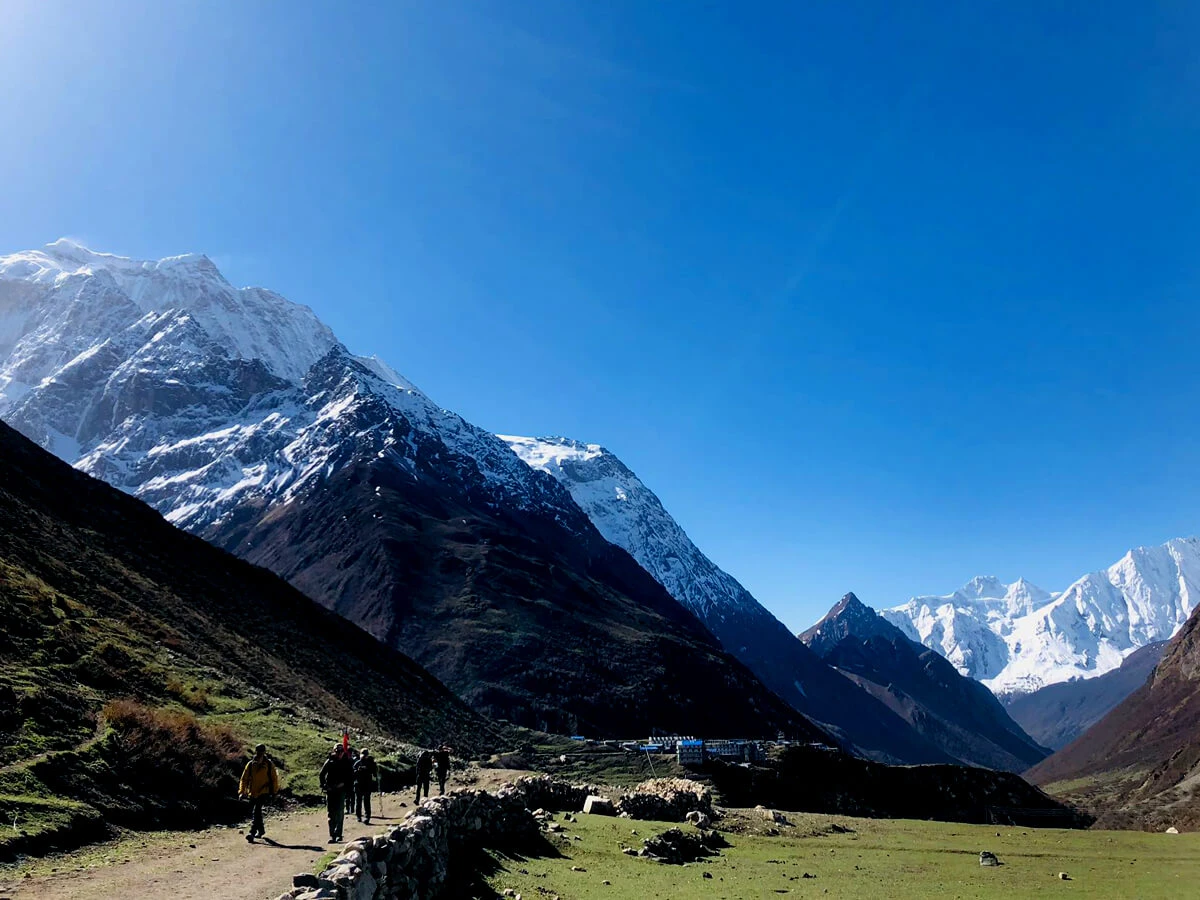
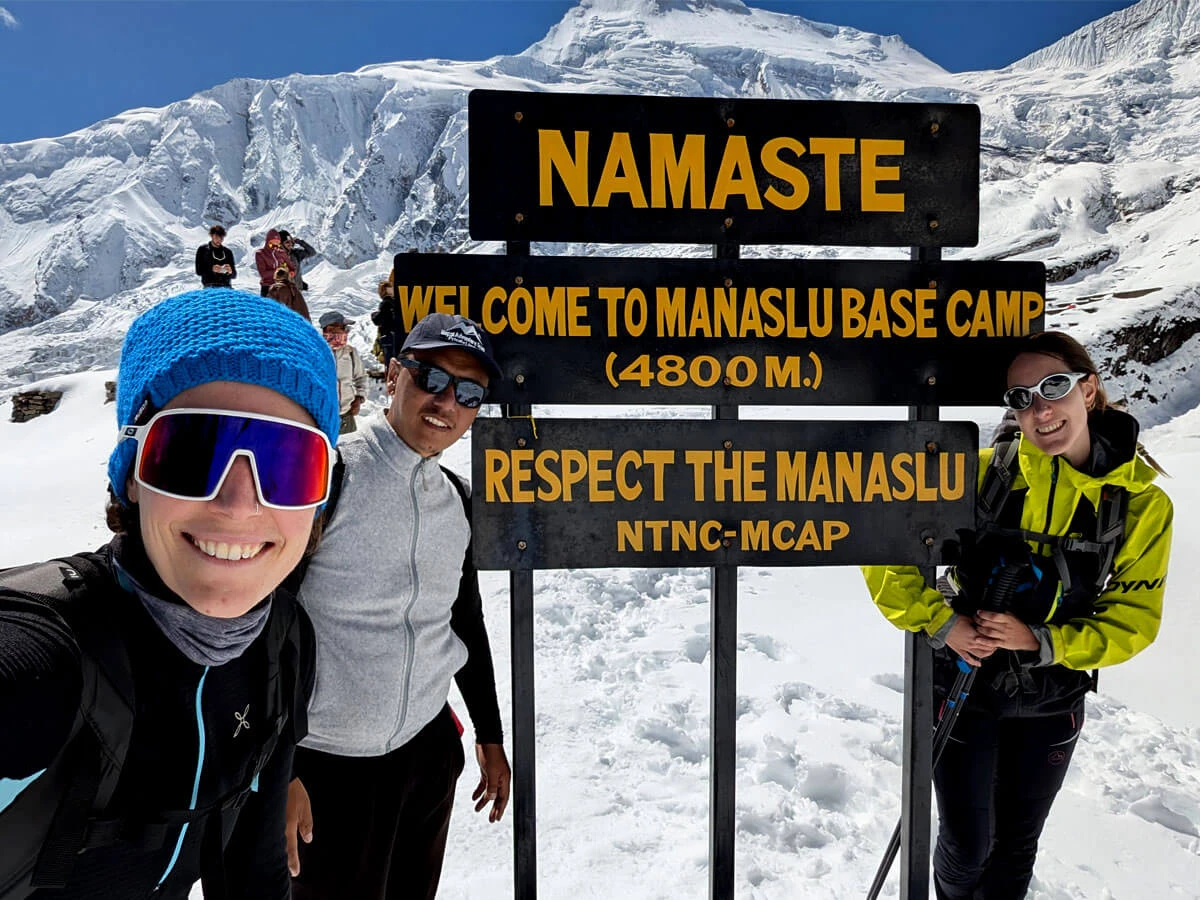
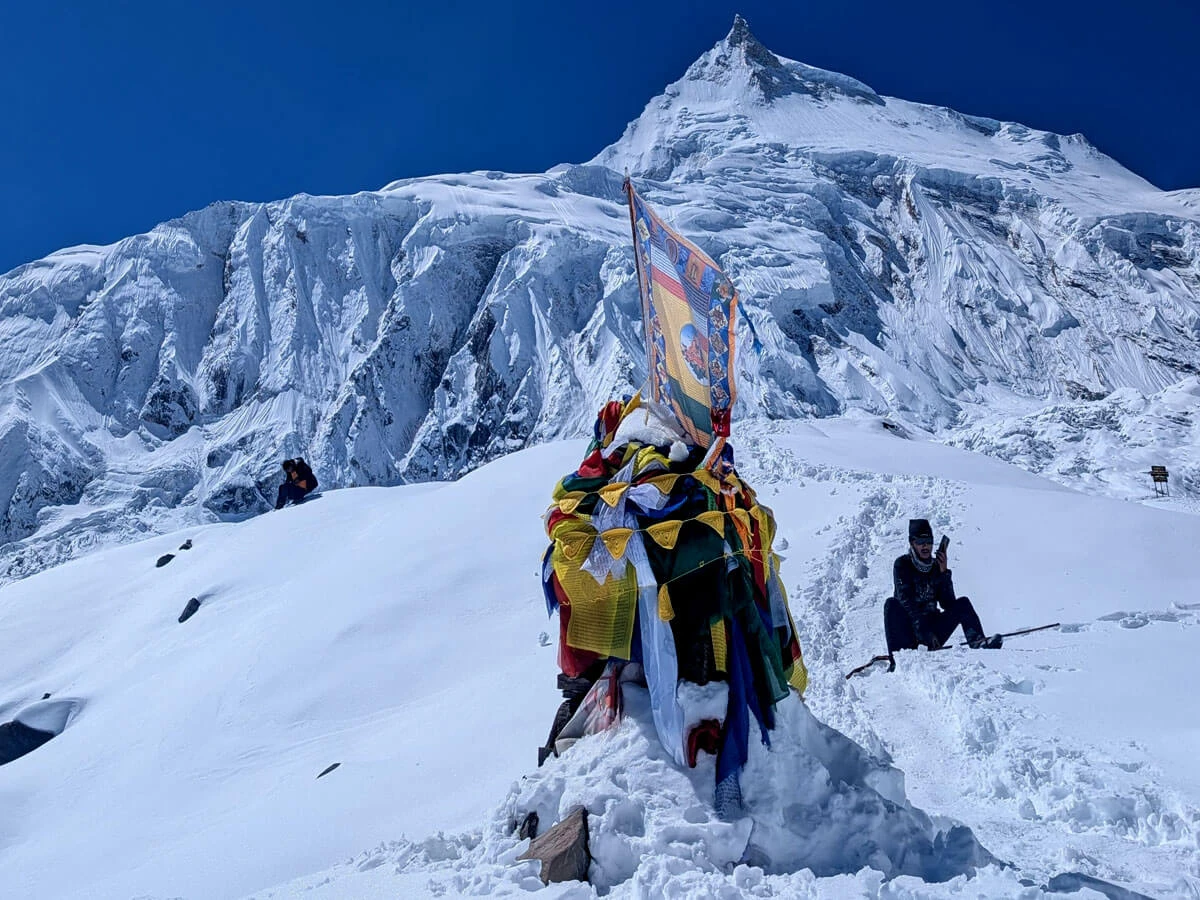
Short Manaslu Circuit Trek is a 10-day teahouse trek around Mt. Manaslu, the world's 8th highest peak, and one of Nepal's most underrated restricted treks after Everest, Annapurna, and Langtang. Interestingly, solo trekking isn't allowed here; a minimum of two trekkers is required, along with a government-licensed guide, the Manaslu Restricted Area Permit, MCAP, and ACAP. The trail follows the Budhi Gandaki river and crosses Larkya La Pass (5,106m), keeping the demanding Namrung to Bhimthang stretch intact while trimming the lower acclimatization days, making it best suited for trekkers with some high-altitude experience. Along the way, you'll pass Nubri Valley villages with Tibetan-influenced customs, ancient monasteries like Pungyen and Hinang Gompa, and the glacial Birendra Lake. Our package includes all necessary permits, transportation, accommodation, and guide support throughout the trip.
10 Days Short Manaslu Circuit Trek
Trip Facts
What Is the Short Manaslu Circuit Trek?
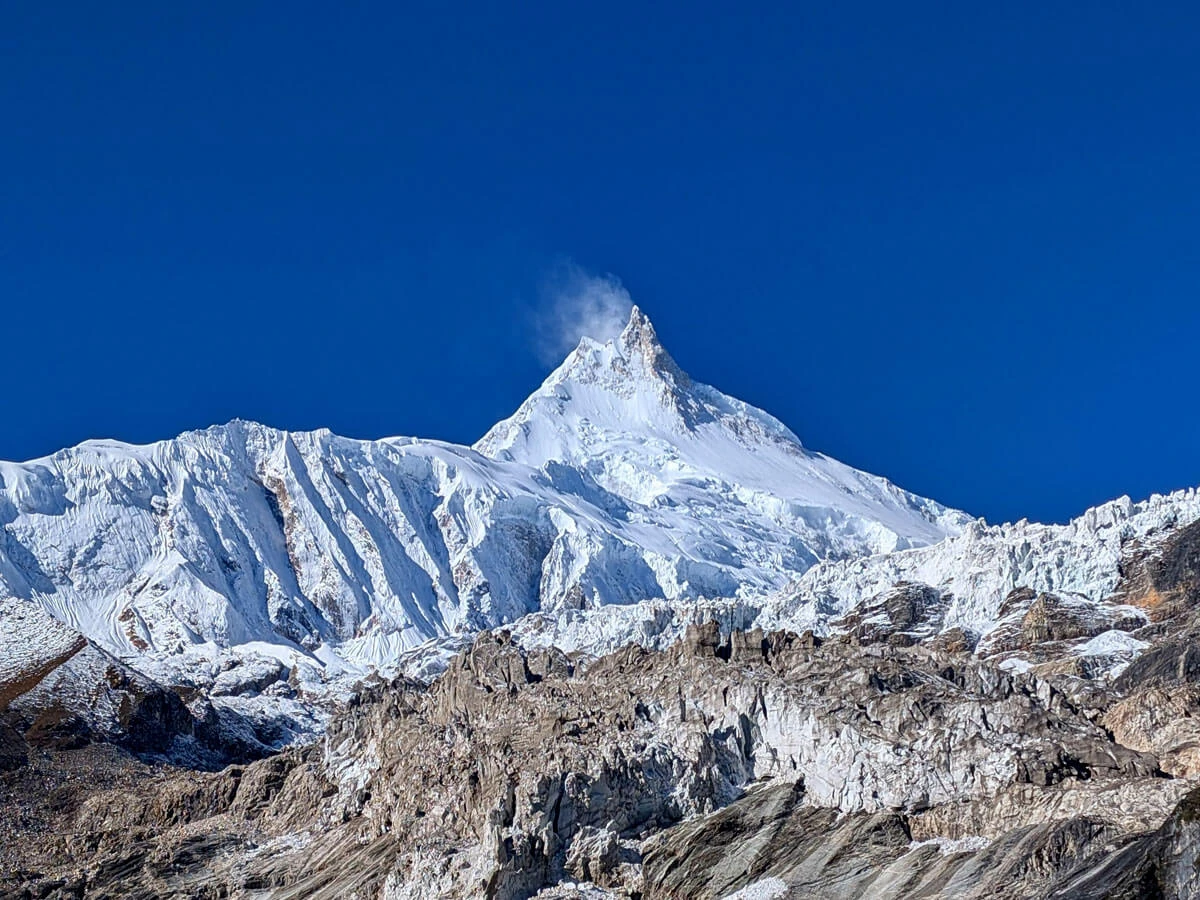
The Short Manaslu Circuit Trek is a 10-day teahouse trek around Mt. Manaslu, the world's eighth-highest mountain at 8,163 meters. It follows the Budhi Gandaki river through the Manaslu Conservation Area and crosses Larkya La Pass at 5,160 meters before dropping into the Annapurna region near Dharapani.
The route has been open to foreign trekkers since 1992, but remains a restricted area, which keeps trail traffic low and village life closer to its traditional form than on Everest or Annapurna routes. The trek moves through a blend of Nepali and Tibetan culture, and trekkers regularly note that the upper Manaslu region feels closer to Tibet than to the rest of Nepal. The Nubri Valley communities above Namrung still practice customs like polyandry, where a woman may be married to two or more brothers.
For trekkers who want the Larkya La crossing and Nubri Valley culture without the full 14 to 16-day classic itinerary, this shorter version trims the lower acclimatization stretch while keeping the entire Namrung to Bhimthang section, the hardest and most rewarding five days of the circuit, fully intact.
Our Team runs this as both a fixed departure and a private, custom-dated trek for groups exploring the Manaslu region on a tighter schedule.
How Many Days Is the Short Manaslu Circuit Trek?
This itinerary runs 10 days door to door from Kathmandu, starting with a drive to Machha Khola and ending with a drive back from Dharapani via Besisahar. It is one of the shortest complete Larkya La Pass itineraries available, compared with 14 to 16 days on the standard Manaslu Circuit Trek or Manaslu Tsum Valley combination.
Why Choose the Short Manaslu Circuit Trek
If your time in Nepal is limited but you still want the full Larkya La Pass crossing and the Nubri Valley culture, the short version answers a specific need. It keeps the trek's hardest and most rewarding section intact, the five days from Namrung to Bhimthang, while trimming the acclimatization-heavy lower stretch that longer itineraries use to ease into altitude gradually.
This version suits trekkers who already have some high altitude experience, since the pace to Sama Gaon is faster than the standard itinerary allows. It is not the right choice for a first-time high altitude trekker with no prior trekking background.
Compared to Everest Base Camp or Annapurna Circuit, Manaslu still sees a fraction of the foot traffic, which means quieter trails, less crowded teahouses at Samdo and Dharamsala, and a Nubri Valley that has not been reshaped by mass tourism.
Why Choose Nepal Team Adventure for Your Short Manaslu Circuit Trekking?
When you are planning a trek in a restricted area of Nepal, where permits are mandatory, guides are legally required, and the nearest hospital can be a two-day walk away. The company you choose is not a minor detail. It is the most important decision you make.
Here is why you should choose Nepal Team Adventure for your Manaslu Circuit trek.
- Government-licensed Manaslu guides with wilderness first aid training, fluent English, and personal ties to the Nubri and Tsum communities.
- Full permit processing for the Restricted Area Permit, MCAP, and ACAP is handled through registered government channels, so you're never turned back at a checkpoint.
- 10+ years of experience in the Manaslu region, with deep route knowledge and altitude emergency response experience.
- Customized itineraries built around your fitness, time, and interests, including Tsum Valley extensions, extra acclimatization days, or a Base Camp side trip.
- Small group sizes for more personal attention and flexibility on the trail.
- Transparent, all-inclusive pricing, no surprise permit or porter fees on the mountain.
- Verified and registered with the Nepal Tourism Board, and reviews on TripAdvisor and Google.
- Honest safety decisions, if the pass or weather forces a change, you hear it immediately, and your safety always comes first.
What is the Best Time for the Short Manaslu Circuit Trek?
The Short Manaslu Circuit Trek in Nepal is known as one of the most beautiful treks of the Manaslu region, is possible in the pre-monsoon or the post-monsoon period. March through May is the beginning of spring, and the area's climate is generally favourable. However, there might be occasional showers, and the flowers, especially rhododendrons, give the trails a spectacular burst of colour. This period has relatively mild climates, thereby making it suitable for trekking. It also prizes some of the best views of the surrounding mountains, including Mount Manaslu. It is much more vibrant, with lush foliage and flowers, adding real beauty to the trails of the trek.
Another good season for the Manaslu round treks and other treks in Nepal is autumn, which is in September, October, and November. The monsoon rains wash away dust and pollutants, thus offering pristine air and splendid views of the looming mountains. The climate is relatively moderate to warm, and most of the time, the weather is favourable for trekking, with few dangers from extreme terrains or paths. It also coincides with major festivals in Nepal, including Dashain and Tihar, so that one can get a real feel of the cultural tour in addition to trekking. The first of these seasons is ideal for appreciating the natural beauty and cultural heritage that the Manaslu Circuit offers its visitors.
Accommodation Options During Your Manaslu Circuit Trek
The Manaslu Circuit Trek offers two distinct accommodation options: tea houses and camping, each with unique charm and benefits.
Tea Houses on the Manaslu Circuit Trek
Tea houses, guesthouses, and mountain lodges are the most utilised and popular accommodations in the Manaslu Circuit. These are comfortable accommodations at locations along the route that offer a place to eat, rest, or communicate with the trekkers. Tea houses at destinations like Jagat, Lho, Shyala, Samagaon, and Samdo provide better lodging and food facilities. At the same time, other places do not offer much infrastructure and provisions. Nevertheless, all the tea houses in the region are outfitted with basic accommodation necessities in the form of bedding and beds, toilets, baths, and dining. Staying in these establishments puts you in a true Nepali setting with friendly Nepalese people, making you and your party feel at home.
Camping on the Manaslu Circuit Trek
For trekkers who do not want to stay at tea houses, the Manaslu Circuit trek allows campers to spend their nights under the open sky above. Traditionally, the Manaslu trail was a camping trail; if hiking during camping is allowed, one can carry their camping equipment. Nonetheless, a camping trek on the Manaslu Circuit costs more than the tea house trek. During camping treks, trekkers carry all their necessities like tents, kitchen utensils, fuel, stoves, and personal belongings. In addition, you will always be accompanied by a support crew, a professional kitchen team of cooks, and a helper. They will make sure to pack fairly heavy meals so that the whole experience is quite comfortable and fulfilling. However, if one's focus is on the experience of natural surroundings – the real, wild feel with few to no man-made structures in between – then camping in the Manaslu region is ideal.
Major destination during the Manaslu Circuit trek
Serang Gompa (3100m) in Manaslu Circuit Trek
Serang Gumba is a small paradise at the foot of Shringi Himal, which you should not miss during the Manaslu Circuit trek. The Serung valley is considered one of the four bells hidden among the Himalayas of Asia, as identified by Guru Padmasambhava. Also, it is believed that he meditated here.
Hinang Gumba (3100 m) in Manaslu Circuit Trek
Hinang Gompa, located in Hinang village, is one of the most beautiful gompas you will encounter during your Manaslu circuit trek. It sits with a backdrop of Mt. Himalchuli and a yellow pine forest in the background. Gautam Buddha is the main idol of this gompa, with Guru Rinpoche (Padmasambhava) on the right and Guru Karmapa on the left. Hinang Gompa is also a lama school, and students study to move to Namobuddha in Kathmandu during the winter.
Birendra Lake (3620m) in Manaslu Larke Pass Trek
Birendra Lake is a glacier lake formed from the melting ice of Mt. Manaslu. It is the most popular and the easiest side trip of the Manaslu circuit, just about half an hour away from Sama village. Most people spend their acclimatization day here in this lake, enjoying the serene beauty of this emerald lake and an open field where Dzopkyos and yaks will be grazing.
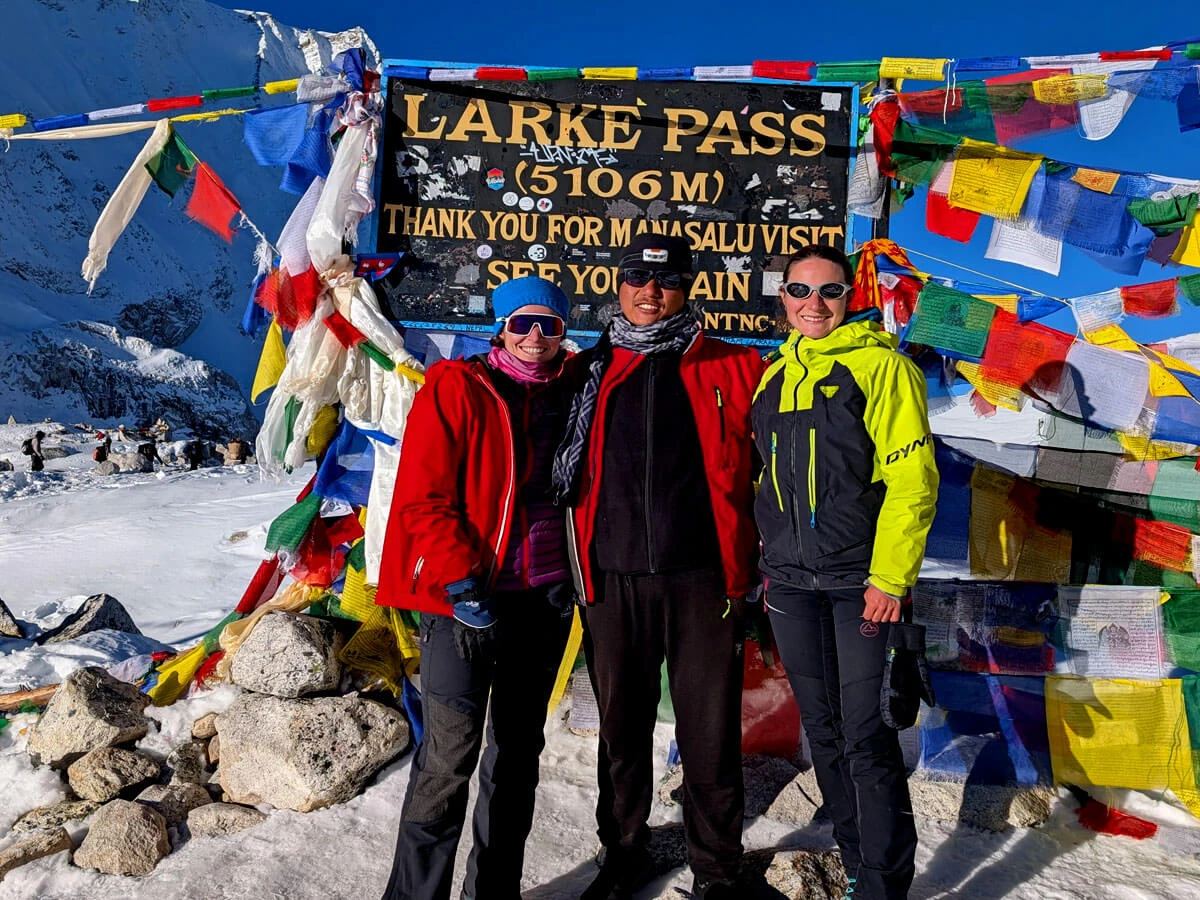
Larke Pass (Larkya la) 5106m
Larke Pass is the highest elevation in the Round Manaslu trek. The steep climb to Larkya Pass can be tiring, but the mountainous vistas of Himlung Himal (7,125m), Cheo Himal (6820m), Kang Guru (6980m), and Annapurna II (7937m) from this pass are breathtaking.
Manaslu circuit trekking begins with a drive from Kathmandu to Arughat and then the trail continues through the picturesque valley and alongside Larke pass (5,106 m.) and it, at last, takes you to Mt. Manaslu zone after having an entire outing all around, the trail takes you back along Annapurna's great trekking route to Besishahar and after that, you get a private or public bus and return to Kathmandu.
What Permits Do You Need for the Manaslu Circuit Trek in 2026?
The Manaslu region between Jagat and Dharapani is a government-designated restricted area, so independent trekking is not allowed here. You need a minimum of two trekkers in your group, a licensed guide, and a registered trekking agency to process your permits. A freelance guide cannot issue Manaslu permits, so your permit must be processed through a registered agency. The Short Manaslu Circuit Trek requires four documents, arranged in Kathmandu before departure:
- Manaslu Restricted Area Permit (MRAP) is the most important document on the list, controlling how many people enter the route each season. Fees vary by season, with higher costs during peak spring and autumn months. Required because the region borders Tibet and passes through restricted high-altitude terrain.
- The Manaslu Conservation Area Permit (MCAP) covers your movement through the protected landscape that the entire route passes through. The current fee is NPR 3,000 per person. Funds go toward wildlife protection, trail maintenance, and community development inside the conservation zone.
- Annapurna Conservation Area Permit (ACAP) applies to the final section near Dharapani, where the Manaslu trekking route crosses into Annapurna territory to complete the loop. The current fee is NPR 3,000 per person. Many trekkers are surprised by this one, but it is a legal requirement at the standard exit point.
- The Chumnubri Rural Municipality Entrance Permit is the one most trekkers and even some agencies miss entirely. Covers the major settlements along the upper route, including Jagat, Deng, Namrung, and Samagaon. The fee is NPR 1,000 per person and goes directly to the local government body managing these communities, making it one of the most direct ways your money reaches the villages you actually walk through.
Do you need a TIMS card for Manaslu?
No. The Restricted Area Permit already logs your name, passport number, and route with the Department of Immigration, so a TIMS card adds nothing extra for this trek. TIMS only becomes relevant if you continue past Dharapani deep into the open Annapurna Circuit.
Permit fees are subject to revision each season. Always confirm current rates with your trekking agency before departure.
Where to Obtain Permits
Permits can be obtained from the Department of Tourism, NTB, which is located in Kathmandu and Pokhara. The Restricted Area Permit is an official document issued in Kathmandu by the Department of Immigration. The permits required largely depend on the choice of trekking destination, and your trekking agency will help with the acquisition of the necessary permits as well as with preparations for the trek.
Required Documents
Passport
For the Manaslu Circuit Trek, you always have to have your original passport with you. It should ideally be valid for at least six months from the date of your entry into Nepal. This document is essential when applying for any permit and the identification process.
Visa
A Nepal visa is required while in Nepal, especially for those taking Nepal treks. This type of visa can be granted upon arrival at the country's airports, specifically Tribhuvan International Airport in Kathmandu, or at any of the country's border-crossing points. However, they may try to obtain the visa at a consulate or embassy of the Nepalese Republic in their home country before the journey.
Trekking Arrangements
To trek in this area, you need to be with an organized group and have a confirmed booking with a local trekking agency since independent trekking is prohibited in the Manaslu region. Furthermore, you will require proof that a licensed guide will guide you throughout the trek. The activity must be with a group of at least two trekkers to qualify for the permits.
Additional Documents
There should be travel insurance for such eminent treks with added features like high-altitude trekking or emergency evacuation. Always ensure that you have several people to call in case of emergency, and the telephone numbers of the agency that you engaged for the trekking services.
Major Highlights of the Manaslu Circuit Trek
- Beautiful view of Mount Manaslu (8,163 m): It is the world's 8th highest peak, towering over the entire circuit
- Trek to breathtaking Larkya La Pass (5,106 m): the highest and most rewarding high-altitude crossing on the trail
- Trek through the two most popular conservation areas: Manaslu and Annapurna, on a single circuit
- Cross rivers, breathtaking waterfalls, and traditional suspension bridges along the Budhi Gandaki gorge
- Walk through diverse vegetation zones: from subtropical Sal forests to treeline alpine meadows and tundra terrain
- Explore Nubri Monastery and the ancient Pungyen Monastery perched above Lho village
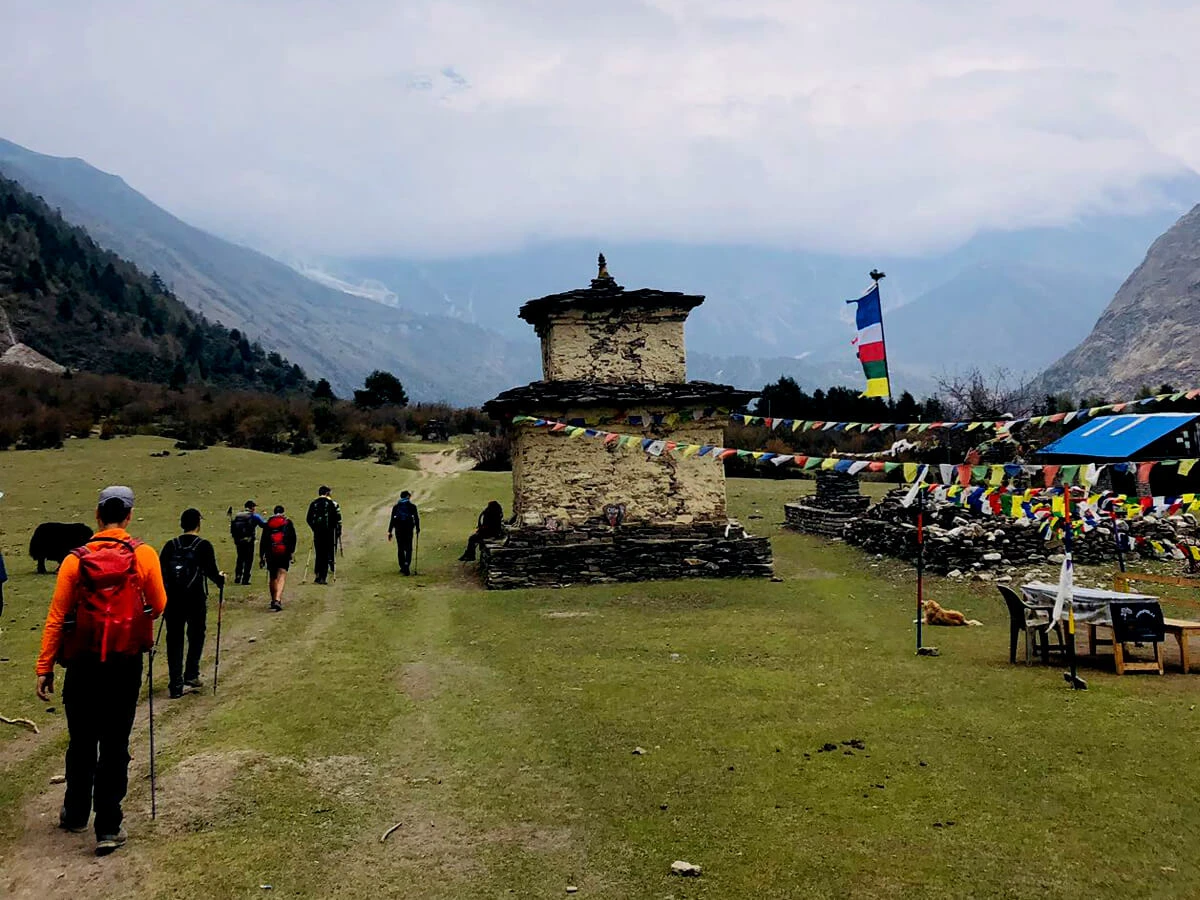
- Discover centuries-old monasteries, sacred chortens, and carved mani walls lining the high-altitude trail
- Rest beside the glacial Birendra Lake (3,620 m): one of the most serene stopovers on the entire route
- Pass through multiethnic trailside villages: Brahmin, Chhetri, Dalit, Gurung, Sherpa, and Tibetan communities
- Immerse in rich and diverse local cultures, traditions, and the Himalayan way of life along every stage of the trek
- Witness panoramic views of more than two dozen snow-capped Himalayan peaks throughout the circuit
- Reach the Nepal-Tibet border at Samdo: a rare and privileged position on any trekking route in Nepal
- Customised itinerary and dedicated trekking support tailored to your pace, interests, and schedule
Outline Itinerary
Photo Gallery


10 Days Short Manaslu Circuit Trek Itinerary
Drive to Machha Khola (870 m) 7 - 9 Hours
On the first day of the Trek, we head towards Machhai Khola, which is the starting point for the Manaslu Circuit Trek. You will enjoy the scenic drive by a private jeep, which is much more comfortable and safer to reach Machha Khola. You can find the pitched road to Dhading Besi on the Prithvi Highway. Then, the drive on the bumpy, rugged road begins. You will reach Machha Khola after Arughat Bazaar, the largest settlement in the area.
Machha Khola to Jagat (1,340 m) 5-6 Hours
After the first day of hours of walking and a night stay at Machha Khola village, on this day you head towards Jaga. Just as the previous hours of walking, Jagat is also about 6-7 hours away from Machha Khola. You will walk on a relatively easy trail along with Budhi Gandaki River and reach Khorla Besi (960 m). Then, Tatopani (930m) lies an hour away from Khorla Besi. Tatopani refers to hot water, and this village is famous for hot springs. Continually, walking a couple of ridges, you will reach Dovan (1000 m). Dovan is the spot for lunch. Yauraphat is the next spot after resting and having lunch. Following the trail, you reach Jagat, a wide valley, which lies on the west side of the Budhi Gandaki River. Jagat is the overnight stop for today.
Jagat to Deng (1,850 m) 6-7 Hours
Today’s overnight stop is at Deng. Like in previous days, you head towards Deng after having breakfast. The trail is decorated with a stone staircase down to the river. Crossing the river, you will climb up the terraced hill of Salleri (1440 m), where you can have a beautiful view of Sringeri Himal at 7,187 meters. Sirdibas is another small village at 1430 meters that you pass by. Then, crossing a suspension bridge over Ghatta Khola leads to a steep climb that leads to Philim (1590 m). Bypassing Philim and Ekle Bhatti (1600m), a suspension bridge joins you to Deng.
Deng to Namrung (2,630 m) 6-7 Hours
Today, you will walk from an altitude of 1,850m to 2,630m, where Namrung is situated. You may encounter altitude differences, plantation, and habitation. Passing through the mani walls and Chortens, the trail continues along the river. Finally, you will reach Namrung (2630 m) after crossing the Budhi Gandaki river. You will stay overnight at Namrung.
Namrung to Sama Gaon (3,530 m) 5- 6 Hours
Today, you will cover 17.7 kilometers of trek distance to reach Sama Gaon, which takes about 6 to 7 hours. You will walk through many prayer walls, along with mani stones. Passing through the oak and rhododendron forest, you will climb to Lihi (2900 m). Besides, Lihi, your trek route will take you through the Buddhist villages of Sho (3,000 m), Lho (3,180 m), and Shyala (3,520 m). You can have a spectacular view of Mt. Manaslu (8,160 m) and Manaslu North (7,157 m). Continually, you will cross a glacial river to reach Sama Gaon (3,530 m). You will stay overnight at Sama Gaon.
Sama Gaun to Samdo (3860 m) 3 Hours
On this day, you will start your trek slowly due to the altitude gain. Passing through the yak-broad pastures, you will walk through a long mani wall and then cross the Budhi Gandaki by a wooden bridge. Walk further for a while, and then you will reach Samdo (3860 m). Samdo is a beautiful village with lodges where you will stay overnight. You can enjoy exploring the village.
Samdo to Dharamsala (4,460 m) 3 -4 Hours
You leave Samdo and move forward on a broad trail. Crossing a wooden bridge over the Budhi Gandaki River, you step on the ancient trading route to Tibet. Without further delay and a long walk, you reach Dharamsala (4460 m), which is also known as Larkya La Phedi. You can have a beautiful view of the Larkya Glaciers, along with the spectacular Mt.Manaslu. You will stay overnight at Dharmasala, and tomorrow, you will be crossing the highest elevation, Larkya La Pass of the Short Manaslu Circuit Trek.
Dharamsala to Bhimthang (3750 m), via Larkya La Pass (5160 m) 8 - 9 Hours
After breakfast, you will walk through the trail that goes to the north side of the Larkya Glaciers. Following the trail, you can have a beautiful view of Cho Danda and the Larkya Peak. Your trail will take you to Larkya La Pass (5160 m), where you see a majestic mountain view of Himlung Himal (7,125 m), Cheo Himal (6,820 m), Kang Guru (6,980 m), Annapurna II (7,937 m), Himchuli (7,893 m), Ganesh Himal (7,319 m), Shringeri Himal (7,187 m), and Mt. Manaslu (8,163 m). The Tibetan border is located on the northern side of Larkya La. Then, walking through moraines and following the steep trail, you reach Bhimthang. Bhimthang is the overnight stop.
Bhimthang to Dharapani (1,963 m) 6-7 hours
Today, you leave Bhimthang and head towards Dharapani. After crossing the Bhimdang Glacier, you will walk through the ancient pine forest. You will cross the Dudh Khola and walk down to the Marshyangdi Valley. Dharapani is across the Marshyangdi River. You will reach Dharapani by crossing a suspension bridge and resting at Dharapani for the night.
Dharapani to Kathmandu via Besi Sahar by Jeep or Private car
Today, you drive back to Kathmandu from Dharapani, which takes you about 7 to 8 hours. You will find an off-and-bumpy road up to Besi Sahar. You will enjoy the marvelous view of green hills, beautiful villages, and forests along the Marshyangdi River and Trishuli River. After arriving in Kathmandu, you will be transferred to your hotel. You will also join the farewell dinner organized by the Nepal Adventure Team. You can share your joy of adventure and experience of the Short Manaslu Circuit Trek.
10 Days Short Manaslu Circuit Trek Cost Details
Includes
- Kathmandu to Machha Khola by private Jeep
- 9 Nights Tea House Lodge during the trek in the Himalayas
- All Meals: 9 Breakfast, 10 Lunch, and 9 Dinner
- An experienced, English-speaking, Nepal government license holder trekking guide, and his daily salary, food, accommodation, transportation, equipment, and insurance.
- A strong assistance (porter), two trekkers share one porter. Maximum 25 kg
- Manaslu restricted region permits for a week
- ACAP, and MCAP Permits (Conservation fees)
- Local Government entry fee to the Manaslu region
- Dharapani to Besisahar by local sharing Jeep, and Local Hiace to Kathmandu
- required equipment Like a sleeping bag, a down Jacket, and a trekking pole (If needed)
- Complementary Trekking Cap, duffel bag, water purification tablet, and trek completion and appreciation certificate
- All necessary medical trekking kit bag
- All government VAT and Local taxes
Excludes
- Nepal visa fee
- International flight (airfare)
- Personal expenses such as phone bill, chocolate, bakery, drinks, battery charge, laundry
- Extra accommodation and meals behind schedule
- Travel and rescue insurance
- Tips to guide and porters
Dates & Availability
Nepal Adventure Team operates one of the best short Manaslu Circuit treks. Find below both fixed and private departures. Fixed group sharing departures are available on your interested dates. We will organize private treks on the date of your choice. The trekkers should be a minimum of 2 pax due to the restricted region.
Essential Information
Budgeting and Cost Considerations for the Manaslu Circuit Trek
As with the preparation and planning of the Manaslu Circuit Trek, it is essential for hikers to prepare a cost estimate to cover various expenditures. Foreseen costs include accessing means of transport, accommodation, food and beverages, permits, and guide fees.
Transportation
Although it is a faraway area, arrangements for traveling to and from the starting point of the trek and for returning to Kathmandu will cost you a lot of money. There are two main options for transportation: private jeeps and local buses.
Private Jeep
Choosing a private jeep means high comfort and the opportunity to adjust the timetable to one's needs. It can transport a group of trekkers and their equipment in a single go and also helps to directly enter the location where the trek begins. It is even more costly than public transportation, but the convenient and relatively faster way of transport makes it reasonable in the long run. The cost of a private jeep transfer from/to Kathmandu to the starting/ending point of the trek is USD 125 to 225, respectively.
Local Bus
However, cost-conscious tourists should take a local bus for transportation during their travels. Public transport, like buses, is easily available from Kathmandu up to the starting point of the trek. While this option is comparatively cheaper, it can be less comfortable and time-consuming due to halts at several intervals and crowded coaches. The cost of a local bus ticket for the journey from Kathmandu to the starting point and back has been stated as USD 9 to 10.
Food and Drinks
Food expenses are another important necessity that needs to be taken care of. Food served in the tea houses ranges from local to international meals such as dal bhat, noodles, and soups, among others, that are prepared in a Western style. Transportation issues also contribute to the high cost of food because the further up you go, the higher the price of food. It is imperative that one plan on spending up to USD 4 to 5 on each meal. Also, beverages like bottled water, tea, and coffee are sold at an unspecified price between USD 2 and 3 based on various factors.
Permits
As mentioned, several permits are required for the Manaslu Circuit Trek:
- Manaslu Restricted Area Permit: $ 75 for April, March, and May, and $100 for August, September, and October
- Manaslu Conservation Area Permit (MCAP): NRP 3000 Per Person and NRP 600 for SAARC countries.
- TIMS Card: NRP 2000 Per person and NRP 1000 for SAARC countries.
- Chumnubri Rural Municipality Entrance Permit: NPR 1,000 per person
Guide and Porter Services
A licensed guide is required, and sometimes, a porter might be hired to carry personal luggage and belongings. It is always helpful to know that there are competent guides who offer information concerning the route, culture, and other safety measures to be taken into consideration. Not to mention that those individuals who want help transporting their belongings can hire porters. The cost of the services of a guide per day per individual ranges between USD 35 and 90, whereas that of the porter ranges between USD 25 and 35 per day. You should be able to budget for their wages, meals, and accommodations when organizing the team.
The Nubri Valley: Culture Along the Manaslu Trail
From Namrung upward, the trek moves through the Nubri Valley, home to the Nubri people, a Tibetan-origin ethnic community whose ancestors settled this side of the Himalaya centuries ago along the old salt trade route between Nepal and Tibet. Villages here, Lho, Shyala, Sama Gaon, and Samdo, sit inside the Manaslu Conservation Area, which covers about 1,663 square kilometers across seven wards of the Tsumnubri Rural Municipality.
The Nubri people speak a Tibeto-Burman dialect distinct from Nepali, and their daily life still runs on animal husbandry, barley and potato farming, and, increasingly, teahouse tourism. Locals regard Mount Manaslu itself as sacred, sometimes referred to as Pungyen, and consider it a guardian deity of the valley rather than simply a peak to be climbed.
Sama Gaon is the cultural center of this stretch. It houses Pungyen Gompa, a monastery roughly four centuries old dedicated to the mountain, reachable on a short acclimatization hike above the village. Lho is home to Ribung Monastery, a three-story Tibetan Buddhist teaching center that also hosts Losar (Tibetan New Year) celebrations when the trek calendar lines up with the festival.
Because Manaslu only opened to trekkers in 1991 and remains permit-restricted today, tourism here has grown slowly compared to Everest or Annapurna. That slower pace is exactly what has kept the language, dress, farming practices, and monastery life in these villages closer to their traditional form.
Homestays in the Manaslu Region
Formal teahouses are the standard accommodation on this route, but homestay opportunities exist in a handful of villages, most notably Lho and Prok, where families open their homes to trekkers for a shared meal and a bed. These are typically arranged informally through your guide rather than booked online, and facilities are basic, often a shared outhouse and no running water, in exchange for a level of cultural contact a standard lodge stay does not offer.
A homestay evening in Lho usually means dal bhat or thukpa cooked over a wood stove, home-brewed chang (a Tibetan-style barley or millet beer) if offered, and conversation that leans on your guide for translation, since English is limited outside Sama Gaon. If cultural immersion matters more to you than convenience, ask your agency in advance whether a homestay night can be built into the Namrung to Sama Gaon or Sama Gaon to Samdo stretch of the Short Manaslu Circuit itinerary.
Alternative trek to Short Manaslu Circuit Trek
If a person gets tired of the Manaslu Circuit, he or she may find several other treks in Nepal to do, which are equally exciting in their own way. A well-known option is the Annapurna Circuit Trek, which covers various territories and cultural points of view. This trek offers you sublime sights of the vegetation, such as the subtropical forests, terraced fields, and alpine meadows, and a trial of crossing the Thorong La Pass, which is 5,416 meters above sea level. En route, one gets a view of the cultural flavours of the 'Gurung,' 'Thakali,' & 'Manangi' people, making the entire trekking expedition very colourful. Nevertheless, the Annapurna Circuit has advantages in the form of permits and better trekking facilities; thus, it is preferable for different types of tourists.
Another good option is the EBC Trek or the Everest Base Camp Trek, which presents an opportunity to follow the routes of famous climbers. This wonderful trail offers breathtaking views of the world's tallest summits – Mount Everest, Lhotse, and Ama Dablam. The tour goes through the darkest Sherpa area, with the scenic towns of Namche Bazaar and Tengboche; trekkers can get to know the local population and visit temples over 200 years old. The EBC Trek is associated with plenty of teahouses, making it very comfortable and challenging regardless of altitude.
For those seeking a destination that isn't filled with as many people, you can go for the Upper Mustang Trek, which leads you into the hidden kingdom of Mustang. This trek stands out because the landscape is barren, dusty, and occasionally rocky, with eroded cliffs, natural springs, deserted caves, monasteries, etc. The people of this region are almost Tibetan, and the area is not heavily influenced by modern civilization. Giving trekkers an excellent first-hand look at the lifestyle of the indigenous population. The Upper Mustang Trek costs more and requires a special permit. Still, the experience of exploring a less-frequented area and meeting culturally significant monuments is more than compensation for the money spent.
Besides, for those who cannot climb a high Himalayan peak or have less time to trek, the Langtang Valley Trek is shorter and more comfortable. Located in the Central Region of Nepal and north of Kathmandu, the Langtang Valley boasts fir zones, alpine meadows, and mountain snow. It also features cultural stages, as there are scenarios to stop at the local Tamang and Tibetan settlements to explore the cultures and customs of the Himalayan folk. The Langtang Valley trek is comparatively easier and can be done in a limited number of days. It is suitable for trekkers who don't have much time for the trek or those not interested in going for a rigorous trek.
Packing Essentials: Gear Guide for the Manaslu Circuit Trek
Gearing up for the journey, the Manaslu Circuit Trek could only be embarked on after careful preparation, especially in what to pack. This means that there is a variety of options regarding the terrain, climate, and geography, meaning that the right equipment is necessary for safety and efficiency.
Clothing
- Base Layers
- Insulating Layers
- Outer Layers
- Trekking Pants and Shirts
- Warm Hat and Gloves
- Trekking Socks
Footwear
- Trekking Boots
- Camp Shoes
Gear and Equipment
- Backpack
- Daypack
- Sleeping Bag
- Trekking Poles
- Headlamp
- Water Bottles or Hydration System
Accessories
- Sunglasses
- Hat and Sunscreen
- Buff or Scarf
- Personal First Aid Kit
- Multi-tool or Knife
- Dry Bags
Personal Items
- Toiletries
- Towel
- Snacks and Energy Bars
- Travel Documents
- Camera or Smartphone
Insider Tips for a Memorable Manaslu Circuit Trek Experience.
To have the most incredible experience on your trek to Manaslu Circuit, you should always go for an experienced local guide who understands the area's social and cultural background. Travel lightly, but do it smart so that you do not overlook items that would be necessary in case of fair or cloudy weather. It's important to acclimate well and not cover too much ground in the first few days, since altitude sickness could be a big problem here. Immerse yourself in the local culture by enjoying meals and talking to the locals in the tea houses that you will be staying in during your trek. For breathtaking scenery, it is best recommended to trek during the spring and autumn when the trekker traffic is low. Finally, it is necessary to take care of the place with kindness and act according to the traditions and customs that will help keep the region's natural beauty.
10 Days Short Manaslu Circuit Trek FAQs
The Short Manaslu Circuit Trek is a 10-day itinerary, door to door from Kathmandu, starting with a drive to Machha Khola and ending with a drive back from Dharapani via Besisahar.
You need four permits: the Manaslu Restricted Area Permit (MRAP), the Manaslu Conservation Area Permit (MCAP), the Annapurna Conservation Area Permit (ACAP), and the Chumnubri Rural Municipality Entrance Permit. All are processed through a registered trekking agency, since independent trekking isn't allowed in this restricted region.
No. The Restricted Area Permit already records your name, passport number, and route with the Department of Immigration, so a TIMS card isn't required unless you continue past Dharapani into the open Annapurna Circuit.
No. Manaslu is a restricted region, so solo trekking isn't permitted. You need a minimum of two trekkers in your group, along with a government-licensed guide and a registered trekking agency to process your permits.
Larkya La Pass sits at 5,106 metres and is the highest point of the trek, offering views of Himlung Himal, Cheo Himal, Kang Guru, and Annapurna II.
Not ideally. Since the shorter itinerary trims the lower acclimatization stretch, it moves at a faster pace than the standard route and is better suited to trekkers who already have some high-altitude trekking experience.
Spring (March to May) and autumn (September to November) are the best seasons, offering favorable weather, clear mountain views, and stable trail conditions.
The short version keeps the demanding and scenic Namrung to Bhimthang section, including the Larkya La crossing and Nubri Valley culture, fully intact, but trims the lower acclimatization days used in the longer itinerary to ease into altitude more gradually.
Trekkers can choose between tea houses and camping. Tea houses at Jagat, Lho, Shyala, Samagaon, and Samdo offer basic but comfortable lodging with meals, while camping is also possible for those wanting a more traditional, off-grid experience, though it comes at a higher cost and requires a full support crew.
The highest point is Larkya La Pass at 5,106 metres, though Samdo village, near the Nepal-Tibet border, is also one of the highest and most remote settlements along the route.
No. As a restricted area with limited daily permits, Manaslu sees far fewer trekkers than Everest Base Camp or the Annapurna Circuit, keeping trails, teahouses, and village life closer to their traditional form.
Trekkers get views of Mt. Manaslu, Himlung Himal, Cheo Himal, Kang Guru, and Annapurna II, along with more than two dozen other snow-capped peaks visible throughout the circuit.
Yes. Given the high-altitude terrain and remote location, where the nearest hospital can be a two-day walk away, travel insurance covering high-altitude trekking and emergency evacuation is strongly recommended.
What Our Guests Say?
Despite its shorter duration, it didn't compromise on the breathtaking scenery or cultural experiences. The trail offered a perfect balance of challenge and reward, with each day bringing new landscapes...
The Short Manaslu Circuit trek is one of the most mesmerizing treks in Nepal. I reached out to Nepal adventure Team for the trip. The team leader, Jeevan Thapa perfectly...
Incredible experience! The Short Manaslu Circuit Trek was a perfect blend of adventure and cultural immersion. The shorter route still offered stunning vistas of the Himalayas, with towering peaks leaving...