Upper Mustang Tiji Festival Trek

77 Reviews
37 Reviews
Save to Wishlist

Upper Mustang Tiji Festival Trek 2027 is an 18-day trekking package built around the three-day Tiji Festival in Lo-Manthang, celebrated by around 65 monks of the Sakya sect and led by masked dances re-enacting the myth of a deity who saved Mustang from a demon. The Tiji Festival dates for 2027 have now been confirmed, taking place from 1st to 3rd June 2027, and we arrange the fixed departure to match this date. The trek reaches a maximum altitude of 4,353m and combines the festival with classic Mustang highlights like Lo-Manthang, Kali Gandaki Gorge, Muktinath Temple, and Ghar Gumba monastery. Our package includes all necessary permits, transportation, accommodation, and meals throughout the trip.

Trip Facts

Trip Facts

Duration
18 Days
Trip Grade
Moderate
Country
Nepal
Maximum Altitude
4353 m
Group Size
2 - 18 Pax, and More
Starts
Kathmandu
Ends
Kathmandu
Activities
Trekking, and Hiking
Best Time
Springa, and Monsoon Season
Overview

Upper Mustang Tiji Festival Trek 2027 is a trekking package to attend a fascinating annual three-day festival consisting of Tibetan rituals that celebrate the myth of a son who had to save the Mustang kingdom from destruction. The Tiji festival in Lomanthang takes place from June 1st to 3rd in 2027.

The Tiji festival, which locals call the Tenchi Festival, is a monk dance festival celebrated every year in Upper Mustang, Lomanthang. According to Tempa Chhirim, Tenji, commonly pronounced Teeji or Tiji, means “ Prayer for World Peace”. Upper Mustang is a place highly influenced by Tibetan Buddhism and the only untouched, preserved safe zone for Tibetan Buddhism. According to His Highness Dalai Lama, “Authentic Tibetan culture survives only in exile in a few places like Mustang, which has had long historical and cultural ties with Tibet.” The main priest of the Tiji Festival is one of the Top 10 Buddhist priests in the World.

The festival is only celebrated in the indigenous Lomanthang, Upper Mustang. Over the Mustang during the Tiji festival, monks dressed in elaborate costumes and masks perform dances and rituals that are supposed to drive away evil spirits. The Tiji festival dances are all organized by the Choedhe Monastery and led by the monks, who belong to the Sakya sect of Buddhism. The monastery is headed by a Rinpoche, one of the Top 10 Buddhist priests in the World. About 65 monks from Lomanthang, Nhenyul, and Chhosyer reside in this monastery. They practice religious and traditional dances for months just to perform at the Tiji Festival.

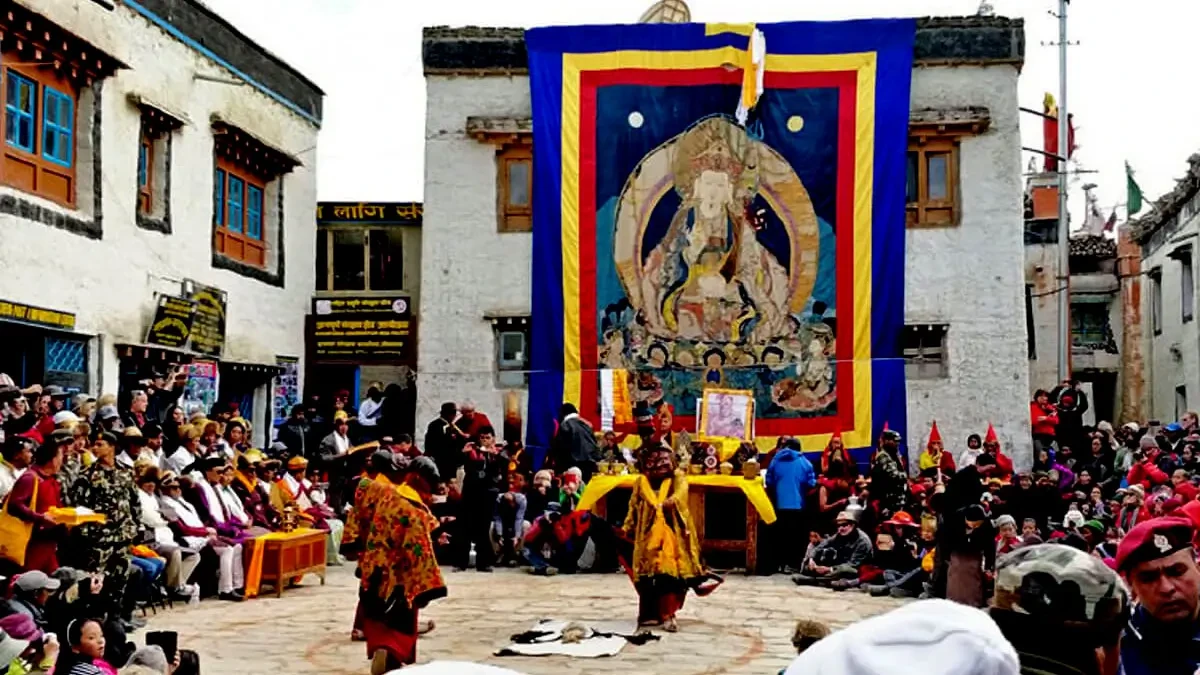
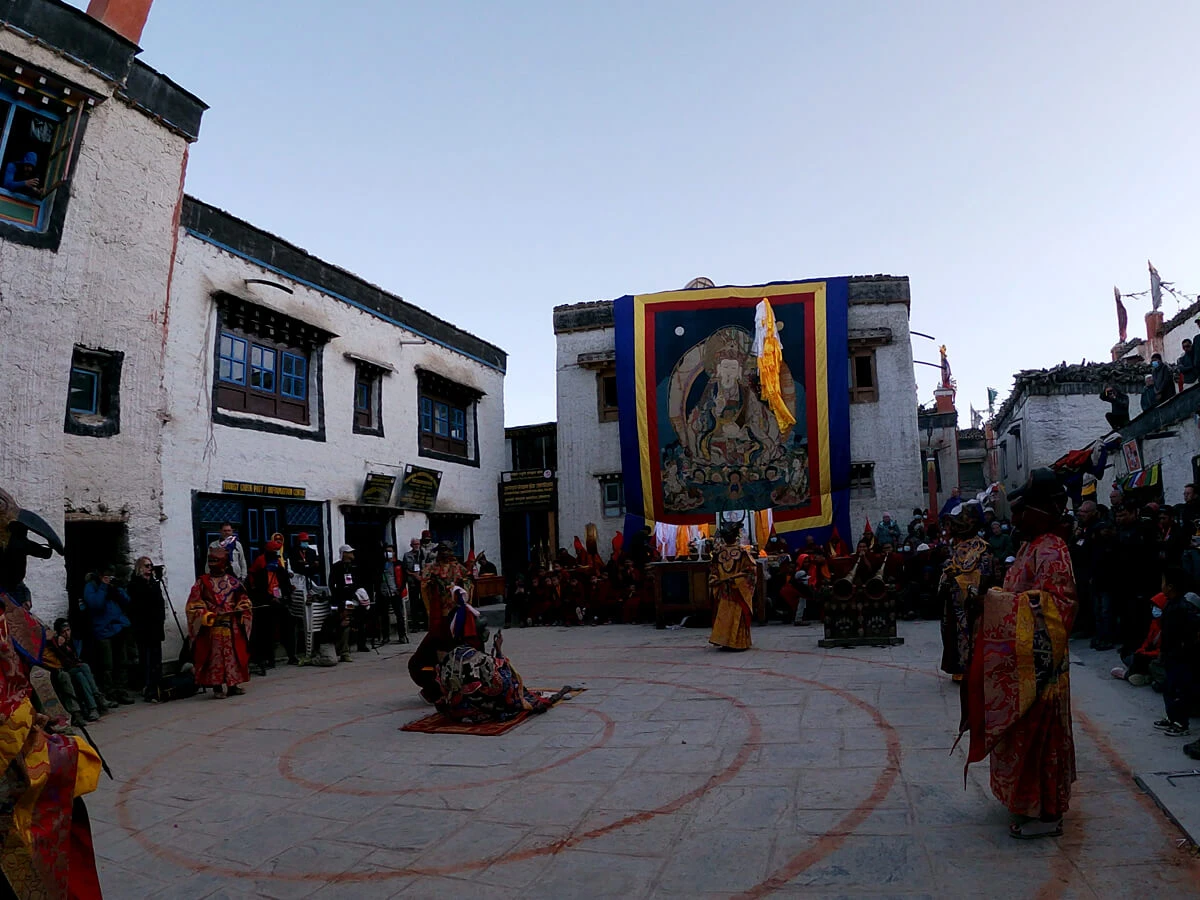
The Tiji Festival begins with the opening of the 400-year-old banner of the respective Lord, who conquered the demons and brought peace. The Tiji Festival is held in the town’s main square. On the first day, monks integrate the dances and complex ceremonies to lead the world towards peace, evoke God, and purify the ground for the further days of the Tiji Festival. The second day is lit as different dances are performed with drums, masks, attitude, swords, and the raging of demons. The king of Lo comes to the town’s main square and settles on the throne for the ongoing Tiji Festival. The third day is all about winning over demons and destruction and welcoming peace.

History of the Tiji Festival

Tiji is a short form of the Tibetan name Tenpa Chirim, which means "prayer for the continuity of Buddhist teachings." People often translate it simply as a prayer for world peace. Locals in Lo-Manthang also refer to the festival as Tenchi. Over time, Tiji became the shorter, more commonly used name among trekkers and outsiders, while Tenpa Chirim remains the formal name used within the monastery.

The Tiji Festival is built around a myth central to the history of Mustang. A demon named Man Tam Ru brought drought and destruction to the Kingdom of Lo, threatening the survival of its people. A deity named Dorje Jono, said to be the son of a Buddhist god, fought the demon for three days and eventually drove him out of Mustang. This victory restored peace and water to the land.

Each day of the three-day festival shows a different part of this battle through masked dance. Day one shows the demon's attack on Mustang. Day two shows Dorje Jono's fight against the demon. Day three shows the demon's final defeat and the return of peace.

The festival has two purposes. It retells the story of Dorje Jono's victory over the demon. It also works as a yearly prayer for peace and protection over the kingdom.

Tiji Festival Date in 2027 in Upper Mustang

Since 2019, the Tiji festival has not been celebrated for three years because of COVID-19. The local people of Lomanthang resumed celebrating the festival in the years since, with the date fixed according to the Tibetan lunar calendar each time. The festival goes on for three days, with monks praying for world peace through masked dances and rituals.

For 2027, the Tiji festival date has now been confirmed. It will take place from June 1st to 3rd in Lomanthang. Nepal Adventure Team arranges the fixed departure for the Upper Mustang Tiji Festival Trek 2027 to match this confirmed date. The highest altitude you'll reach is 4353 meters, with windy, chilly weather. You may have a chance to grab an easy way to travel on the Upper Mustang Tiji Festival Jeep Ride Tour option.

About Upper Mustang, the Forbidden Kingdom

Upper Mustang is a remote region in northern Nepal. It is surrounded by mountains like Annapurna, Dhaulagiri, and Nilgiri mountain ranges. For centuries, it stood as an independent kingdom, separate from the rest of Nepal, ruled by its own king. This history is why the region is often called the Forbidden Kingdom. The name reflects both its isolation and the many years it stayed closed off from outside visitors. Because of its long isolation and its position as a stronghold of Tibetan Buddhism, Upper Mustang remains one of the few places where this culture has survived largely unchanged. 

The region sits along an old trans-Himalayan trade route that connected Tibet with the lowlands of Nepal and India. Traders moved salt, grain, and other goods along this path for generations. Trekkers today still walk the same trails once used by traders on this route. 

Upper Mustang's landscape looks different from the rest of Nepal. Most of the country has green hills and forests, but Upper Mustang is a high-altitude desert instead, with deep valleys, rocky cliffs shaped by strong winds, and centuries-old cave dwellings built into the rock. Many of these caves are still being studied today, and some are believed to be over a thousand years old.    

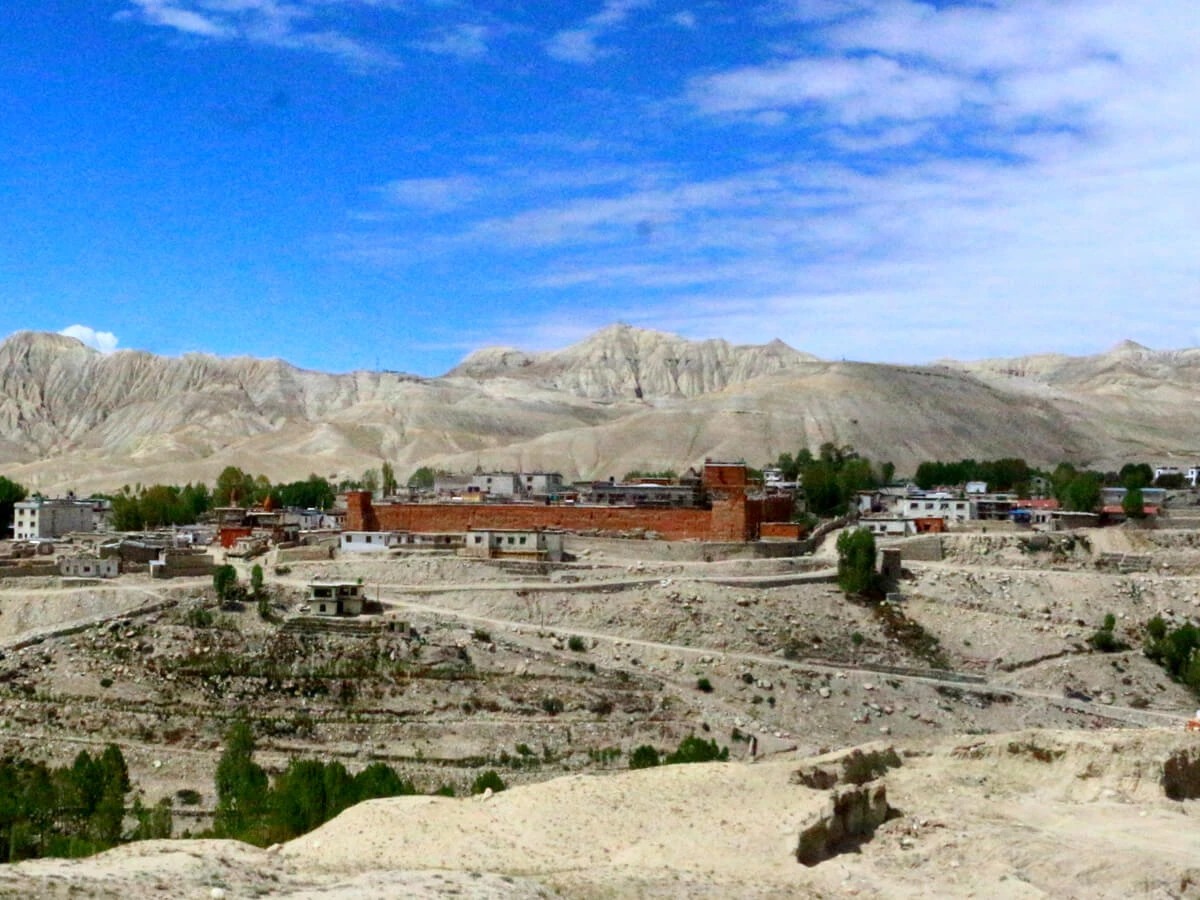
Lo-Manthang, the walled capital city, sits at the heart of this region. This is where the Tiji Festival takes place each year.

Lo-Manthang: Where the Tiji Festival is Celebrated

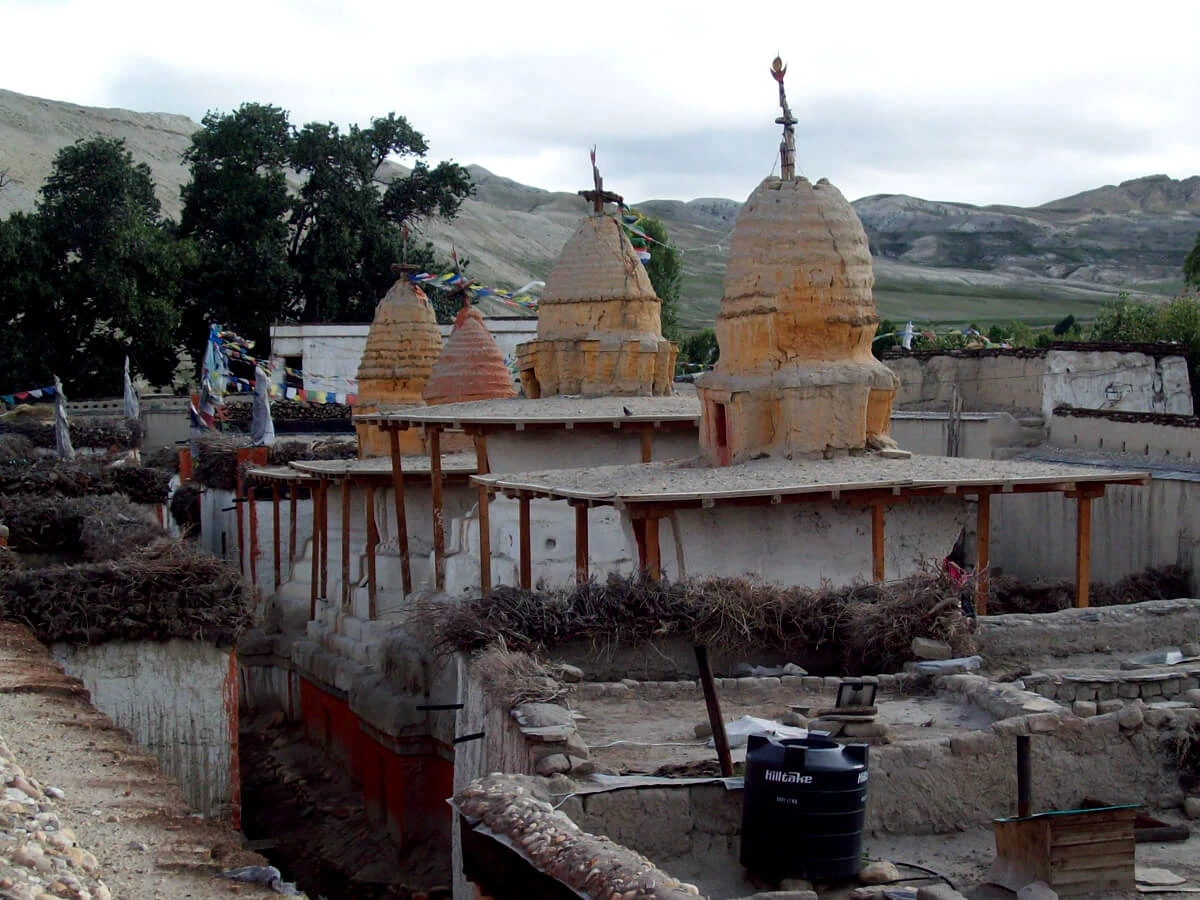
Lo-Manthang is a walled city in Upper Mustang, Nepal. King Ame Pal built it in 1380 as the capital of the Kingdom of Lo. The Tiji Festival takes place inside this walled city, in its main square, and locals still call the wider area the Kingdom of Lo. Inside the walls, narrow lanes connect old monasteries, a former royal palace, and homes that have stood for generations. Many families in Lo-Manthang still live in these same mud-brick houses today, and daily life here moves at a slow, quiet pace outside of festival time.

The former royal palace, known as Tashi Gephel, once served as the main residence of the King of Lo and his family. The monarchy was formally dissolved in 2008, but the former royal family still holds a respected place in the community. The palace continues to overlook the courtyard where the Tiji Festival takes place each year.

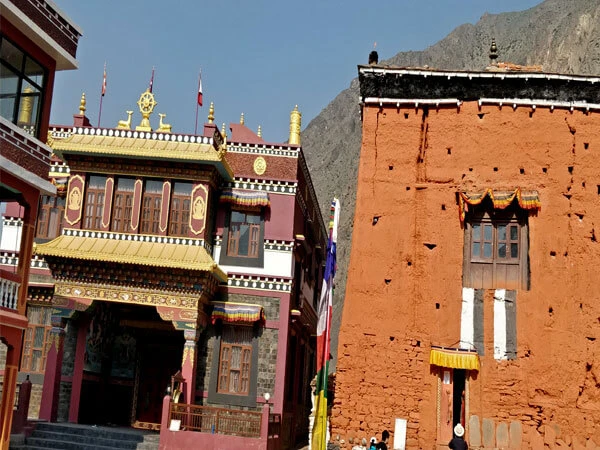
The Choedhe Monastery, the spiritual center of Lo-Manthang, sits at the heart of the city. This is where the monks prepare for the festival, performing the Vajrakila prayers each morning of the Tiji Festival, before the dances begin in the palace courtyard. 

What Happens During the Tiji Festival?

The Tiji Festival runs for three days, and each day has its own energy, rituals, and dances.

Day 1: Prayers and TsaChaam

The first day of the Tiji Festival starts early in the morning inside Chhoede Monastery. Monks gather to perform the Vajrakila prayers, also called the Dorje Sonam prayers. These prayers are quiet and sacred, and they prepare the spiritual energy for the whole festival. While the monks pray, long copper horns sound through the monastery. Drums and cymbals keep a steady rhythm alongside them. As part of the ceremony, monks display a massive, sacred thangka. This traditional painted scroll depicts the deity Dorje Sonam and honored masters of the Sakya lineage who founded the festival.

After completing the morning rituals, the monks move from the monastery to the open stone courtyard in front of the Tashi Gephel Royal Palace. This courtyard is the main square, and it's where the public gathers to watch the rest of the festival. Here, monks perform the TsaChaam dance, also called the Awakening dance, made up of 52 different steps practiced for months in advance. This dance tells the story of the birth of Dorje Sonam, a reincarnated Buddha born to conquer the demon Ma Tam Ru Ta, who brought harm and destruction to the kingdom of Mustang. Visitors can watch monks enact the demon's harassment of the people of Mustang, accompanied by chanted prayers. It also marks the clearing and purifying of the ground for the days ahead.

The word Cham, or Chham, is the general name for these festival dances. TsaChaam is the name used only for this first day. The mood on day one stays calm and steady. It builds slowly toward the bigger battle and victory dances of day two and three.

Day 2: NgaCham, the Battle Dance

The second day begins the same way as the first, with monks returning to Chhoede Monastery for another round of Vajrakila prayers. This continues the spiritual preparation started on day one, building up the energy needed for the battle ahead. Around midday, the monks move back into the palace courtyard. A new thangka is displayed, replacing the one from day one. This scroll shows the powerful image of Guru Rinpoche, also known as Padmasambhava, who is remembered for taming demons of Tibet and Mustang long ago.

The main event of the afternoon is the NgaCham dance, also called the Battle dance. In this performance, Dorje Sonam fights the demon Man Tam Ru Ta and tries to force him back to the Buddha realm. Monks wear fierce, wrathful masks representing protector deities and mythical animals, spinning through sharp, complex steps while carrying swords, daggers, and large ritual drums. The performance includes a wide range of characters, from wolves armed with swords to ghost dances, warriors raging against the demon, and monkey boys who bring moments of humor and entertainment to the crowd.

This is also the day the King of Lo arrives at the festival. He takes his seat in the courtyard as the dances continue around him, adding to the sense of occasion for the crowd. Crowds are at their largest on this day, with people traveling in from villages across Mustang and gathering in the courtyard and nearby rooftops to watch.

Day 3: RhaChham, the Victory Dance

The final day begins the same way as the days before it. Monks return to Chhoede Monastery in the morning to complete the last round of Vajrakila prayers. This closes out the spiritual preparation that started on day one.

The main event of the afternoon is the RhaChham dance, also called the victory dance. The monks wear their most elaborate costumes and masks for this performance. After the courtyard dance, people gather outside the walls of Lo-Manthang toward the nearby open fields. The monk playing the role of Dorje Sonam carries an effigy made from tsampa, a kind of barley flour, representing the demon Ma Tam Ru Ta. Using a sacred bow, the lead dancer shoots an arrow into this effigy, marking the demon's final defeat. At this moment, local men fire traditional long-barreled muskets into the air, a tradition believed to be tied to scaring off the demon and driving away any last trace of evil.

The King of Lo takes part in this final procession as well. Unlike day two, when he watches from his seat, on day three he joins the walk out of the city. He, his family, and senior local officials walk alongside the monks and townspeople. Together, they witness the demon's defeat, a moment believed to bring peace and prosperity back to the land of Mustang. Every year, the Tiji Festival takes place in the hope of spreading peace throughout the world.

Highlights

  • Lo-Manthan; Forbidden Kingdom
  • The world’s Top 10 monks lead the Tiji Festival
  • Classic and Authentic exposure to century-old ceremonies and rituals
  • Panoramic view of the world’s 7th highest mountain, Dhaulagiri and Gangapurna, Tukuche, Manaslu, Thorang
  • Kali Gandaki Gorge, World’s Deepest Gorge
  • Muktinath Temple- high value for Buddhists and Hindus
  • Traditional Palaces, Monasteries, and caves formed on high cliffs
  • Ghar Gumba- the oldest monastery
  • Desert landscape with spires and cliffs, as well as dense green hills and woods
  • Kagbeni - Holy Kaligandaki River Valley
  • Diversified culture, tales, and lifestyle of Gurung, Tibetan, Thakali, Magar, and others
  • A Unique History of Lo-Manathang

Tranquil, unexplored, and unspoiled trails with few/no settlements

Why Choose Us for the Upper Mustang Tiji Festival Trek

  • 14+ years organizing treks and cultural tours across Nepal, including Upper Mustang
  • Licensed and registered with the Nepal Tourism Board (NTB)
  • Member of TAAN (Trekking Agencies' Association of Nepal)
  • Direct local partners in Marpha, Jomsom, and the wider Mustang region
  • Direct experience arranging fixed departures around the Tiji Festival, timed to the confirmed 2027 dates of June 1st to 3rd
  • Full permit processing for the Restricted Area Permit, ACAP, and TIMS card, all handled through registered government channels
  • Domestic flight bookings to and from Jomsom arranged directly, with backup plans in place for the weather delays common in the Mustang region
  • Professional, multilingual guides with real experience leading groups through Upper Mustang and the Tiji Festival itself
  • Itineraries built around your pace, whether that means more trekking days, more rest, or the option to add the Jeep Ride Tour for a lighter version of the trip
  • Small, personal group sizes from 2 to 18 people, so the trip stays attentive rather than crowded
  • Transparent, all-inclusive pricing, with no hidden costs once you book
  • 24/7 support throughout your trip, before, during, and after
  • Reviews on [TripAdvisor/Google]
  • Honest, upfront communication if weather affects Jomsom flights or trek plans, so you always know where your trip stands
Roadmap

Upper Mustang Tiji Festival Trek Itinerary

Upper Mustang Tiji festival trek itinerary for 2026 is our standard package, and if you want to customize it, we are here for you. You may do the trek, and after that, you may drive back to Jomsom or directly to Pokhara as well. You have another option as well, which means you choose the Jeep Ride tour for the Tiji Festival, Or You may call, SMS, or send a Message from WhatsApp/Viber directly to our managing Director Mr. Jeeban Thapa Magar, at +977 9851234322 

Starts: Kathmandu
Ends: Kathmandu
Day 01:

Arrival in Kathmandu (1350 m) via respective airlines

On arrival at Kathmandu international airport terminal, Nepal, Adventure Team staff and a guide will receive you. You are dropped off at your respective hotels in the popular hub of Kathmandu, Thamel. After the refreshment break, our guide/leader will brief us on information regarding hotels, Nepali culture, tours, and Upper Mustang Trekking with a welcome dinner in a typical Nepalese restaurant with a folk cultural program.

Day 02:

Preparation day in Kathmandu

This day is set aside for the preparation of the entire journey. You will be informed of trekking plans and the packing lists, along with what you can expect and how it can be more interesting. A sightseeing tour in Kathmandu is optional; if intended, you can visit a number of world heritage-listed places.

Day 03:

Drive to Pokhara (860 m) 220 km, 6 - 7 hours

Early morning drive of about 08 hours to the popular tourism hub Pokhara, allowing you to explore the Nepali way of life. You are settled in the hotels of Pokhara and can enjoy the peaceful and fresh vibes of the city that are highly appreciated by people from all around the world. Besides, sightseeing is optional for you. (A 30-minute flight to Pokhara from Kathmandu is available as per request, with additional charges.)

Day 04:

Morning fly to Jomsom (2,715 m) and trek to Kagbeni (2858 m) 4 hours

An early morning short scenic flight is made to Jomsom from Pokhara. Throughout the 22-minute flight, you can please your eyes with woods, rivers, and snowcapped high mountains. Jomsom welcomes visitors with apple orchards and a chilly breeze from the mountains around.

Basically, trekking starts from Jomsom through the bank of the Kali Gandaki River leading to Kagbeni. Kagbeni is the gateway of Upper Mustang, and we stay there to enjoy the Kagbeni valley, composed of the windy village, crackling river, and vibrant barren hillocks. 

Day 05:

Trek to Chele / Tsele (3,050 m) 5 - 6 hours

After a night's stay at Kagbeni village, we head towards Chele through the old Trans-Himalayan Caravan route of Nepal -Tibet. This morning's walk by the Kali Gandaki River leads to well-cultivated terraced farm fields near Tirigaon village. Likewise, we will be mesmerized by distinct landscapes and high-shaded cliffs and canyons on the way to Chele.

En route to Chele, we could see pilgrims searching for a fossil named “Salagram Silas,” which is regarded as a sacred stone by Hindus and worshiped as an iconic representation of the supreme Lord Vishnu (one of the three main Hindu Gods).

The walk continues for a few hours through Tangbe and Tsusang (Chusang) villages. Further, broken canyons and ruined castle walls surrounded by high red-shaded cliffs are encountered. After crossing the small bridge, an uphill walk for 45 minutes brings you to Chele village.

Day 06:

Trek to Syangmochen (3,800 m) 5 hours

The morning walk from Chele village gets steeper for an hour onto a ridge at (3,130m) from where one can get a grand view of Gyagar across a huge canyon. Trek continues with a slow climb on the windswept terrain till the pass at 3,540m is reached.

Then walk from Samar village to a ridge that leads to a large gorge painted with red, black, yellow, and white rocks. The journey continues into another valley with juniper trees, a stream, and a climbing drive to a ridge at 3,800m. With a few minutes' walk, Syangbochen is accomplished by having a small settlement with a few tea shops at 3,710m.

Day 07:

Trek to Dhakmar (3820 m) 5 - 6 hours

From Syangbochen, we climb gradually through the fields and pass various settlements. Among those settlements, Ghiling village is our stop for lunch for this day. Ghiling has a monastery as well as a water-rotating prayer wheel. We have a short break and have lunch to energize ourselves for the further walk to Dhakmar. Following the trails, the right path leads to Tsarang while the left leads to Ghaymi village. We take the left turn, cross the Ghami rivulets, and pass Ghaymi village to reach Dhakmar village. Dhakmar is our overnight station 

Day 08:

Trek to Lomanthang (3,700 m) 5 - 6 hours

The 8th-day trek leads to our main destination at Lomanthang. On leaving Dhakmar, the longest and most spectacular series of Mani walls (a sacred-holy prayer stone wall which is built by locals and Buddhist pilgrims) can be encountered. We further climbed to reach Lomanthang. Before reaching Lomanthang, we visit and observe Ghar Ghumba, which is the oldest monastery in the area. After the quality moment at Ghar Ghumba and enjoying the monument, we head ahead to climb up. We pass the highest pass of this trekking route, named Morang-La, with an altitude of 4353m. Being nearer to Lomanthang, we see the grand view of the walled village of Lomanthang. A short downhill walk leads to a stream that outlines Lo-Manthang village; from here, a short climb on a plateau takes us toward the wall of our ultimate destination, Lomanthang. The only entrance to the village is from the northeast gate, the main entrance gate.

Day 09:

First Day of Tiji Festival

On the 1st day, the monks perform a dance called ‘TsaChaam’. This tells the story of the birth of ‘DorjiSonam’- a reincarnated Buddha to conquer a demon. This demon harassed the kingdom of Mustang and brought huge destruction to the country. The performance of the first day includes 52 different steps practiced for months, and evoking God and purifying the ground for the dances to take place on Day 2 of the Tiji festival. You can witness the monks enacting the harassment of the said demon on the people of Mustang along with the enchanted prayers.

Day 10:

Second Day of Tiji Festival

The second day is the main list of the Tiji Festival. Many tourists travel 100 kilometers from Jomsom through barren areas to attend the second day of the Tiji Festival. Tourists crowd around the square and the top of the buildings to watch the show of the day by standing shoulder to shoulder with locals. The monks perform ‘NgaCham’. During this performance, DorjeeSonam tries to return the demon to the Buddha realm. You see different dances, dance with drums, by monks, wolves with swords, ghost dances, dangerous attitudes, warriors raging demons, and monkey boys entertaining the audience. The King of Lo arrives on the Second day and settles on his throne.

Day 11:

Third Day of Tiji Festival

On the 3rd and final day of the Tiji festival, the ‘Rhachham’ dance takes place. In this ceremony, DorjeeSonam triumphs over the evil demon and banishes him from Mustang. Numbers of monks enchant prayer and mantras with drums and worship. The festival goes beyond the town’s main square, and monks and people walk through the city. They walk away from the city and fire the gun to scare off the demon and claim victory over the demon and destruction by peace. The monk who plays the role of Dorjee Sonam does this by throwing an effigy. This effigy made from Tsampa (barley) represents the demon ‘Ma Tam Ru Ta’.This defeat brings peace and prosperity to the land of Mustang. Every year Tiji festival takes place in the hope of spreading peace throughout the world.

Day 12:

Trek to Yara (3760m) 5 - 6 hours

After an amazing time in Lomanthang, early in the morning, we head towards Charang. We need to walk for 2 hours to reach Charang. Though we stay at Yara, we visit one of the oldest palaces, monasteries, and open valleys that come on our way. Today, we slowly stroll and explore the area and reach Yara. Yara is another cozy village for our stay.

Day 13:

Trek to Tengbe (3320m) 6 - 7 hours

The trail towards Tengbe from Yara is filled with solitude and tranquility, as we could find no settlements on our way. Probably, there is a small tea house offering limited service far away from the city chaos and urbanization. You just see the Himalayas, barren colorful hillocks, long trails, and Nepal Adventure Team’s guide on today’s entire journey. This day is all about cherishing the tranquility, nature, and settlement-free environment, and enjoying the hike. Having a smooth, gradual, calm hike, we stay at Tengbe to rest.

Day 14:

Trek to Chuksang/ Tsusang (3050m) 8 - 9 hours

This day is the tough day of our trek as we have to walk for long hours. Besides, the trail to Chuksang from Tengbe is more peaceful, settlements, and hustle free than the trails from Yara to Tengbe. We find no settlements at all in this way which makes it a more peaceful, entirely unspoiled nature, with zero human settlements, and just the moments of nature and you. Since there are no settlements on the trail, Nepal Adventure Team arranges packed lunches for you to keep you healthy and energetic. You just have to gradually walk enjoying nature and its tranquility to reach Chuksang for the night stay.

Day 15:

Trek to Muktinath (3800m) 8 hours

This is the last day of the Upper Mustang Trekking to enjoy the unspoiled and unexplored aspects of nature, as this is the end of those trails having limited settlements and human chaos. You see a few settlements and tea house lodges on your way. However, Nepal Adventure Team prefers to use quality-packed lunches for this day as well. You do not have to hike long hours as you did on the previous day from Tengbe to Chuksang. Today, we head to one of the most famous places, named Muktinath, which has the Muktinath Temple at an altitude of 3700m. Muktinath Temple holds high religious value for all Hindus and Buddhists. People from different parts of the world visit the Muktinath Temple and receive blessings. Additionally, Muktinath Temple is situated at the lap of the Himalayas, offering a heart-pleasing view of mountains, hills, and settlements. It has 108 holy water streams and two holy ponds, and bathing in them is believed to be blissful, valuable, a blessing, and a way of salvation. Pilgrims believe it makes them pure.

Day 16:

Drive to Jomsom and fly to Pokhara and transfer to hotel

Early morning, you visit Muktinath Temple and cherish the religious and unspoiled environment. Then, you drive towards Jomsom to take a flight to Pokhara. Jomsom is the only place in this region having modern facilities, quite dense settlements, yet amazing surroundings. However, you can choose to stay at Jomsom instead of Muktinath so that you enjoy more facilities and more rest, and you do not have to walk. Nepal Adventure Team arranges your stay at Pokhara, and if required, sightseeing in Pokhara can be managed. 

Day 17:

Drive back to Kathmandu, 6 - 7 hours

We drive back to Kathmandu on a tourist bus, the way we came to Pokhara. You are transferred to the respective hotels with leisure time for relaxation and shopping for souvenirs. A farewell dinner is arranged for you by the Nepal Adventure Team to add more amazing moments to your stay in Nepal. (A 30-minute flight to Kathmandu from Pokhara is available as per request, with additional charges.)

Day 18:

International Departure

The incredible Upper Mustang Trek ends here on the 17th day. You will be dropped off at the airport by our staff as per your flight schedule. Nepal Adventure Team appreciates you for completing the trek and bids you a warm see-off with the hope of serving you further in the following days.

Need Assistance? Reach Out!
Have questions or need trip planning help? Contact us anytime—our travel experts are here to assist you!
Cost Details

Upper Mustang Tiji Festival Trek Cost Details

Includes

  • Airport pick up and drop off by private Car / Jeep / Hiace
  • Welcome and farewell dinner at a typical Nepali restaurant and cultural dance
  • Three days 3-star hotel in Kathmandu and 2 nights in Pokhara on a BB plan basis
  • Kathmandu – Pokhara – Kathmandu by deluxe tourist bus
  • Pokhara – Jomsom, and back to Pokhara by domestic flight
  • 13 Days 12 Nights tea house lodge accommodation during the trek
  • All meal Breakfast, lunch, dinner, tea/coffee in a cup, and fruit salad for every day
  • An experienced and expert trekking guide and porter (one for two clients) and their salary, food, accommodation, equipment, and insurance
  • Trekking map, equipment, and a First Aid Medical Kitbag
  • Restricted area permit (It does cost USD 50 per day per/person)
  • ACAP (Annapurna Conservation Area Project) permit
  • TIMS (Trekkers Information Management System) Cards permit
  • Company T-shirt, duffel bag, and appreciation letter
  • All local monument fees and taxes
  • All Nepal Government VAT 13% included

Excludes

  • Nepal visa fee and international flight
  • Extra drinks: alcoholic and non-alcoholic
  • Personal expenses such as phone bill, chocolate, bakery items, battery charge, laundry, hot shower, and extra porter
  • Extra accommodation and meals behind schedule
  • Travel and rescue insurance
  • Tips to guide and porters
Upcoming Trip

Dates & Availability

The following dates are the fixed departure dates and a common schedule. If you want a special and private package, we can arrange one for you.

The following are the prices per person.

Add-Ons
Must-Know

Essential Information

Passport & Visa

All foreign nationals, except Indian citizens, need visas to enter Nepal. Getting a visa must be the easiest one, though. You just have to go to the Nepalese Embassy/consulate in your country, or it can also be obtained upon your arrival at Kathmandu International Airport. To get a visa, you need to bring 2 pp size photos, visa fees, and a valid passport.
Tourist Visa Fees: 3-day transit visa - Free of Cost

15 Days – 30 USD

30 Days – 50 USD

90 Days – 125 USD

For more information, please contact the Department of Immigration.
Kalikasthan, Kathmandu
Tel: 00977-1- 4429660 | 4438862 | 4438868 | 4433934
E-mail: [email protected].
Website: http://www.nepalimmigration.gov.np/

Travel Insurance

Travel insurance is a must when you travel abroad. Therefore, before you come to Nepal, please make sure you have your insurance documents with you, since our insurance companies cannot insure foreign nationals. Because of the reason that they cover all the expenses if you face some unfortunate happenings and you have to be rescued or medically assisted during the trip, or if your belongings are lost or stolen.

First Aid Kit/High Altitude Sickness

Nepal Adventure Team strongly suggests that you have a first aid or medical kit. This trip takes you to some high altitudes, though not much, but the slow walks and regular stops between the walks will help you acclimatize to high altitude, saving you from the high altitude sickness called AMS (Acute Mountain Sickness). Gaining altitude without proper consideration of AMS is fatal.

Equipment and Packing Lists

After booking with the Nepal Adventure Team, please pack the necessary items as listed:

  • Travel documents: passport, visa (If you have one), travel insurance, air tickets, voucher, passport photo (x 2)
  • Bank cards or credit cards, travelers' cheques, etc
  • Comfortable boots and runners/sports shoes.
  • 6-8 pairs of socks, woolen/cotton. Fleece jacket, Down / Duvet Jacket, and Rain / windproof jacket.
  • Gloves- 2 pairs.
  • T-shirts 4-6 pcs, shirts (woolen/cotton).
  • A cap for the day and a woolen hat or Balaclava for evening/morning wear.
  • Trousers.
  • Shorts and tracksuits.
  • Sleeping bag (4 seasons) with inner liner.
  • Large and small towels.
  • Toiletries.
  • Water bottle.
  • Sun /snow glass.
  • Ski/walking poles (optional but useful).
  • First Aid/medical kit.
  • Rucksack/backpack.
  • Duffel Bags (carried by porters or animals).
  • Torch / Flashlights with spare batteries.
  • Pen knife/ Swiss knife.
  • Scarf/mask (for dust and wind).
  • Personal hygiene stuff.
  • Any other extras you feel are necessary, like binoculars, cameras, books, journals, and more.

Precautionary Note:

Trekking has been long established in Nepal, so the itineraries are modified and moderated in such a way that you can take it easy and slow. DO NOT RUSH AND ENJOY. There is plenty of time, and the guide will keep track of you all the time. It might be a bit harder or a bit colder, but you will get used to it.

Additional Money

Every traveler is different, and they spend their way. Some spend on food and drinks, while others spend on souvenirs. Either way, consider your own spending habits and also tipping, emergency fund ($200), etc before you pack up and leave.

Trip Specific Safety

Your guide is always there for your safety concerns and to look after your valuables. But you have to be equally careful. Carry some sort of wallet or belt for your important documents and money. The hotels have a safety deposit box where the lock is recommended before passing the luggage.

A Couple of Rules

Possession or use of any illegal drugs is intolerable. It is because of the law that respects the local people and their culture. The group will be expelled in such a case.

Responsible Tourism

Nepal Adventure Team strongly believes that we are all equally responsible for acting in favor of the local people and the surrounding environment. Our clients, too, have an important role to

  • Respect the local laws, customs, and beliefs
  • Always ask for permission before doing something local or consult the leader
  • Keep the area the same as you found it, wherever you go, and dispose of rubbish
  • Support local skills to encourage the positive sides of tourism.

Feedback and Reviews

This is very important for us. After your travel, we want your feedback, whether it is good or bad, since that's the way we can thrive further. To motivate you to finish the review or feedback online, we are going to give you an 8% discount on your next trip with us. Outstanding, isn’t it?

Additional Information

For all the additional information, go to contact us or send a message and call directly to Mr. Jeevan Thapa Magar +977 9851234322 (Viber/WhatsApp)
Ready to Book?
Secure your spot now and take the first step toward your next unforgettable adventure.

What Our Guests Say?

4.9
based on 77 reviews
4.9
based on 37 reviews
4.9
based on 11 reviews
Cultural Extravaganza!!

Witnessing the vibrant Tiji Festival in Lo Manthang was an experience like no other, with its colorful rituals and dances against the backdrop of stunning Himalayan landscapes. The trek itself...

read more +
Hannah Evans
Hannah Evans - United Kingdom
May 07, 2024
A Trek to Remember

Participating in the Tiji Festival was a highlight, with its fascinating rituals and vibrant performances that brought the history and traditions of Mustang to life. The trek offered stunning views...

read more +
Rajesh Kumar
Rajesh Kumar - India
May 05, 2024

You May Also Like

Tiji Festival Jeep Tour
5.0(4 Reviews)
11 Days
18 People
Price From
US$1785
The Pilgrimage Choice
noimage
5.0(7 Reviews)
1 Day
5 People
Price From
US$1955
Need Help? Call Us+977 9841486322