Manaslu Tsum Valley Trek

77 Reviews
37 Reviews
Save to Wishlist

The Manaslu Tsum Valley Trek is an extraordinary 17-day journey into one of Nepal's last restricted valleys. Walk past mani walls, chortens, and centuries-old gompas in villages that only opened to outside trekkers in 2008. From Milarepa's meditation cave to Mu Gompa, the valley's largest monastery, and on to Ganesh Himal Base Camp at 4,200 meters, this route skips the high mountain pass and instead pulls you deeper into Tibetan Buddhist tradition, in the shadow of Himalchuli, Ganesh Himal, and Shringi Himal. Discover the living culture and daily rhythms of the Nubri and Tsum people, in one of the quietest corners of the Himalaya. Our package includes all the necessary permits, transportation, and meals during the trek. 

Trip Facts

Trip Facts

Duration
17 Days
Trip Grade
Moderate
Country
Nepal
Maximum Altitude
4200m
Group Size
2 - 28 Pax, and More
Starts
Kathmandu
Ends
Kathmandu
Activities
Trekking and Exploration
Best Time
Spring (March-May) Autumn (Sept-Oct)
Overview

What Is the Manaslu Tsum Valley Trek?

The Manaslu Tsum Valley Trek is a 17-day journey into one of the most remote restricted valleys in Nepal, tucked behind the Manaslu range near the Tibetan border. It follows the Budhi Gandaki River through the Manaslu Conservation Area before branching off into the Tsum Valley itself, a side valley that remained closed to outside trekkers until 2008.

The route has been open to foreign trekkers for less than two decades, which keeps it far quieter than the main Manaslu Circuit or the Everest and Annapurna routes. Tsum Valley's villages still adhere to the Tibetan Buddhist tradition, with mani walls, chortens, and gompas lining nearly every stretch of the trail. Unlike the Manaslu Circuit, this itinerary does not cross Larkya La Pass. Instead, it pushes deeper into Tsum Valley itself, reaching Mu Gompa and a Ganesh Himal Base Camp side trip before returning the same way toward Kathmandu.

Our team runs this as both a fixed departure and a private, custom-dated trek for groups who want the cultural depth of Tsum Valley without a technical mountain pass.

How Many Days Is the Manaslu Tsum Valley Trek?

This itinerary runs 17 days door to door from Kathmandu, including two days for arrival, sightseeing, and trek preparation, and a full day of driving at each end to and from Sotikhola via Arughat. It is one of the longer ways to experience the Manaslu region precisely because it goes deep into Tsum Valley and back, rather than crossing over to the Annapurna side.

The History Behind Tsum Valley's Restricted Status

Tsum Valley's isolation was never an accident of geography alone. The valley sits close enough to the Tibetan border that it functioned for centuries as a semi-independent Buddhist enclave, governed more by its monasteries than by any central authority, and shaped heavily by waves of Tibetan migration following periods of unrest across the border.

That isolation held even after Nepal opened its major trekking routes to foreigners. Everest and Annapurna were welcoming outside trekkers by the 1960s and 70s. Manaslu itself opened in 1991. Tsum stayed closed until 2008, nearly two decades later, in part because of its sensitivity as a border region and in part because local monasteries were in no hurry to have their way of life disrupted. When it did open, the government kept the restricted area classification in place, which is why the permit system today still requires a guide, a minimum group size, and agency-processed paperwork rather than open independent access.

What that means for you as a trekker is less bureaucratic than it sounds. It means Tsum has had roughly fifteen years of tourism compared to Everest's sixty, and that gap is the reason the valley still feels the way it does.

How This Differs From the Manaslu Circuit

If you are deciding between the two, the honest answer is that they reward different things. The Manaslu Circuit crosses Larkya La Pass at 5,106 meters and loops out through the Annapurna region. This Tsum Valley itinerary skips the pass entirely and instead pushes deeper into the side valley, ending at Mu Gompa and a day hike to Ganesh Himal Base Camp before retracing the trail back.

Choose the Circuit if the pass crossing is the point for you. Choose Tsum if what actually pulls you toward Manaslu is the monasteries, the mani walls, and villages that still run on old Tibetan Buddhist rhythms rather than a high-altitude finish line. We have guided people who did both in the same season, and more than a few came back saying Tsum was the one they thought about afterward.

What a Day Actually Looks Like on This Trek

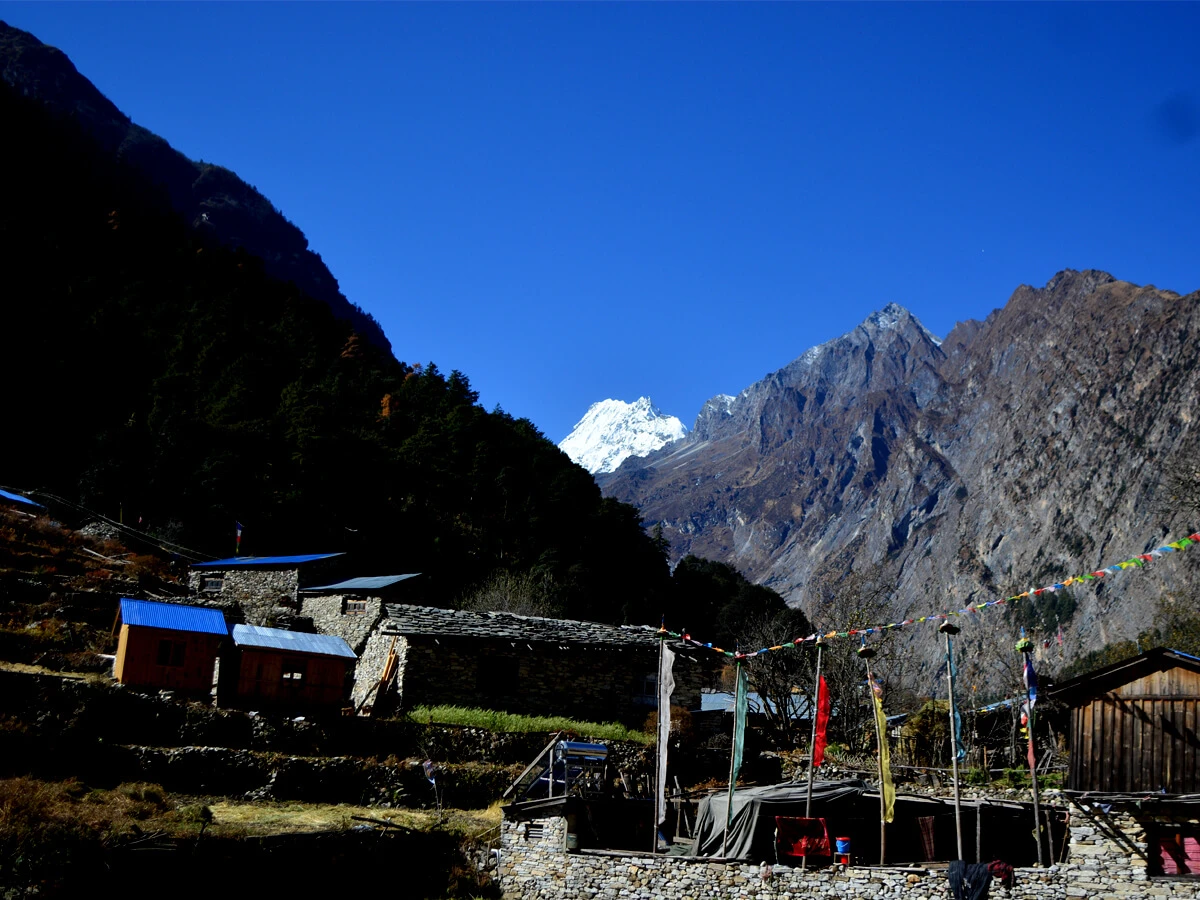
The forest sections in the first week move through Sal and pine, along a river that stays visible almost the entire way, with suspension bridges(Jhulungey pool) strung across the gorge at regular intervals. Once you cross into Tsum proper, the valley opens, and the villages start feeling distinctly Tibetan, in architecture, in language, and in the sheer number of chortens and mani walls lining the trail.

The days themselves run 5 to 7 hours of walking on average, nothing technical, though the altitude gain from Chhokhangparo onward is where most people start feeling it. Two side trips punctuate the second half of the trek: Mu Gompa, the valley's largest monastery, and Ganesh Himal Base Camp, the highest point of the whole route at 4,200 meters. Both are done as day hikes from a fixed base, so you are not carrying a full pack on the hardest walking days.

Why Choose Nepal Adventure Team for Your Manaslu Tsum Valley Trek

When you are trekking a restricted area of Nepal, where permits are mandatory, guides are legally required, and the nearest hospital can be a two-day walk away, the company you choose is not a minor detail. It is the most important decision you make.

Here is why you should choose Nepal Adventure Team.

  • Government-licensed guides with wilderness first aid training, fluent English, and personal ties to the Tsum and Nubri communities
  • Full permit processing for the Manaslu Restricted Area Permit, Tsum Valley Restricted Area Permit, and MCAP is handled through registered government channels
  • 10+ years of experience in the Manaslu and Tsum region, with route knowledge built over repeated seasons
  • Customized itineraries built around your fitness, time, and interests, including a Manaslu Circuit extension over Larkya La or an added Ganesh Himal Base Camp night
  • Small group sizes for more personal attention and flexibility on the trail
  • Transparent, all-inclusive pricing, no surprise permit or porter fees on the mountain
  • Registered with the Nepal Tourism Board, with reviews on [TripAdvisor/Google]
  • Honest safety decisions. If weather or trail conditions force a change, you hear it immediately, and your safety always comes first

Major Destinations on the Manaslu Tsum Valley Trek

Milarepa's Cave (Piren Phu)

On the way to the Nile, the trail passes the cave where the revered Buddhist yogi Milarepa is believed to have meditated. It remains one of the most spiritually significant stops in the entire Manaslu region, distinct from the smaller Milarepa's cave near Sankhu outside Kathmandu.

Rachen Gompa (Nunnery Gompa)

Sitting in a large courtyard near Lamagaon, Rachen Gompa is the female equivalent of Kopan Monastery and one of the most active nunneries in the region.

Mu Gompa (3,700 m)

The largest monastery in Tsum Valley, Mu Gompa, sits at the highest point of the route with sweeping views over the upper valley. It is reached as a day trip from Nile, with your main bag left behind at the lodge.

Ganesh Himal Base Camp (4,200 m)

A day hike from Gumba Lungdung, this side trip climbs past the moraine of the Torogumba glacier for a close look at the Ganesh Himal range from the Ganesh Himal Base Camp.

Gumba Lungdung

A small nunnery perched on a ridge above rhododendron forest, this is one of the more peaceful overnight stops on the trek, surrounded by mountain views in nearly every direction.

Major Highlights of the Manaslu Tsum Valley Trek

  • Trek through the restricted Tsum Valley, one of the last areas in Nepal opened only within the last two decades
  • Visit Milarepa's cave (Piren Phu), Rachen Gompa, and Mu Gompa, the largest monastery in Tsum Valley
  • Day hike to Ganesh Himal Base Camp at 4,200 meters
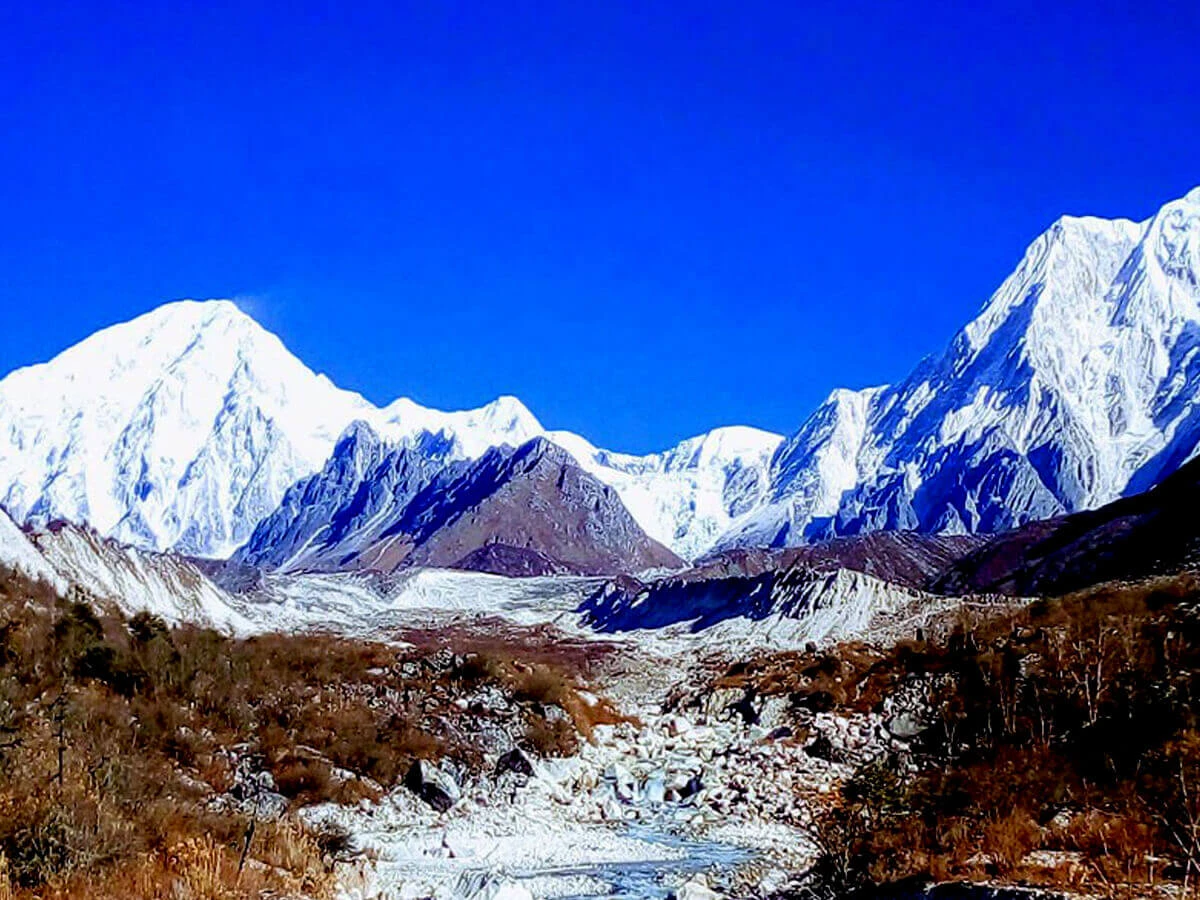
  • Mountain views of Himalchuli, Ganesh Himal, Boudha Himal, and Shringi Himal
  • Walk through Gurung and Tibetan-influenced villages along the Budhi Gandaki river
  • Kathmandu valley sightseeing at Kathmandu Durbar Square, Swoyambhunath, Pashupatinath, and Boudhanath
  • Stay in traditional teahouses run by families who have lived in Tsum Valley for generations
  • Welcome and farewell dinners with Nepali cultural programs
Roadmap

Manaslu Tsum Valley Trek Itinerary

Starts: Kathmandu
Ends: Kathmandu
Day 01:

Arrival in Kathmandu

Nepal Adventure Team representative receives you at Tribhuvan International Airport and transfers you to the respective hotel. After completing the check-in procedure, you can relax in your comfortable hotel. Then you will join the welcome dinner party in the evening at a typical Nepali restaurant where you can enjoy authentic Nepali cuisine assisted by folk cultural programs.

Day 02:

Trek preparation

After breakfast, you will join a guided city tour to places like historical and spiritual values including the world heritage sites of Kathmandu valley. You will first visit Kathmandu Durbar square, a landmark historic attraction that lies in the Basantpur area of Kathmandu. Then you will pay a visit to Swoyambhunath, famously known as “The Monkey Temple”. It is one of the most ancient and religious Buddhist sites in Kathmandu. Soon after Swoyambhunath, you will explore Pasupatinath, which is also one of the most sacred Hindu religious sites in the world. Then for the last visit, you head for Boudhanath, which lies about 6 kilometers east of Kathmandu and is the largest stupa in the valley. After your meaningful sightseeing, you will join a pre-trip session where Nepal Adventure Team will introduce you to your trekking guide and other crew member and discuss the trek at Nepal Adventure Team’s office. Your team leader will give you a quick briefing about your trek as well. You stay overnight in Kathmandu.

Day 03:

Drive to Sotikhola via Arughat (730 m/2896 ft) 7-8 hours' drive

Today you are going to start your day with an early morning breakfast. Then you will start your adventure trek with a scenic drive towards Sotikhola. You will drive west from Kathmandu, through Prithivi Highway. You can have a beautiful river view of the Trishuli river, after a few hours you will reach Dhading Besi, the headquarters of Dhanding Districts. Passing through the greenery hills you move forwards to Arughat. The roads here now get a little rough and tough but the beautiful view of Mt. Manaslu and Ganesh Himal Range will keep distracting you from a bumpy ride. Finally, you then reach Sotikhola after two hours drive from Arughat. In total, it takes about seven to eight hours of driving to reach Sotikhola, including the multiple stops for a short break and lunch. After you reach Sotikhola, you will stay at a comfortable and cozy lodge in Soti Khola and have a good sound sleep.

Day 04:

Trek to Machhakhola (890 m/2965 ft) 6-7 hours

Today you head towards Machhakhola which takes you about six to seven hours. You are going to start your trek by crossing the bridge and walking through the beautiful Sal forest, you then climb onto a ridge above the huge rapids of the Budhi Gandaki. Continue on you then reach Khursani, by passing through the rocky and troublesome trail. Near khursani, you will admire the two wonderful small waterfalls. Then you will be trekking down to Lapu Besi (880 m), which is a small Gurung settlement through the terrace rice field you reach Lapu Besi. Continuing on the rocky trail, climbing up and down on the wide gravel bars. Your trail then takes you to the sandy banks of the Budhi Gandaki river. At last, you reach Machhakhola where you are going to spend your night.

Day 05:

Trek to Jagat (1,400 m/4593 ft) - Lunch at Dovan (1,340 m)

Today, yet again you are going to walk up and down and across the sandy river bed. Later, you will cross Tharo Khola to reach Khorla Besi (960 m). Continue on a narrow trail and a few more ups and downs you can find a small trackside hot spring at Tatopani. As you trek further, the valley gets narrower, you then climb over a ridge and cross the Budhi Gandaki river via a suspension bridge. After crossing the bridge, you continue to climb on a wide, well-designed staircase across a landslide and then over a ridge that takes you to Dovan (1000 m). Here in Dovan, you reward yourself with a hearty lunch and you continue on following the trail which now ascends up to the Budhi Gandaki river. Enjoying the beautiful nature, you arrive at Yuri Khola (1363 m). From here you have to climb more stone stairs to reach Tharo Bharyang. Then passing through paved stones and climbing over a ridge you then reach Jagat, which lies on the west side of the Budhi Gandaki river.

Day 06:

Trek to Lokpa (2,040 m/6692 ft) 5-6 hours

You will follow the sandy banks for a bit and then descend to Sirdibas (1430 m). Following the steep path, you will continue upriver on the left bank after crossing a suspension bridge to reach Philim (1590 m). It is a beautiful Gurung village surrounded by terrace rice fields. You then walk past Philim to the north, along with the view of the narrowing valley across a forest. Walking further you reach Ekle Bhatti (1600 m). Passing through the gorge and the pine tree forests, your trail descends down to Tsum valley. Climb further on zig-zag steps, you can have a first glimpse of the narrow lower Tsum valley. Finally, walking through the forest, you reach Lokpa (2040 m), surrounded by rice fields where you can have a spectacular view of HimalChuli (7893 m), Ganesh Himal (7422 m), Shringeri Himal (7187 m), and many more. You are going to stay at a comfortable lodge in Lokpa.

Day 07:

Trek to Chumling (2,386 m/7828 ft) 5-6 hours

Your trail descends half an hour towards Lunga Khola, along with the view of Ganesh Himal and Boudha Himal you continue moving on the zig-zag difficult trail for two hours through a pine forest you then reach Gumlung (2130 m). Your trail follows the steep path until you reach Ripchet (2470 m), further moving onwards very carefully due to the difficult trail, you cross a wooden bridge over a Shier Khola towards Chumling, your destination for today. You are going to stay overnight tonight. You can visit old Gompa and traditional beautiful houses, accompanied by Shringeri Himal in Chumling.

Day 08:

Trek to Chhokhangparo (3031 m/9944 ft) 5-6 hours

Today you head towards Chhokhangparo. unlike all the other days, today you are going to walk a relatively easy trail. During the trek, you will cross the long suspension bridge on the opposite bank. Continue on your stop for lunch at Rainjham (2400 m). Then you move along with Ganesh Himal side by side, with the beautiful view you continue walking to cross Serpu Khola. Finally, the beautiful village of Chhokhangparo awaits you nestled under cliffs. You stay overnight at Chhokhangparo.

Day 09:

Trek to Nile (3,361 m/1126 ft) 3 hours

Today you are going to walk towards the Nile. Due to the fact that altitude sickness generally occurs above 2,500 meters, you must watch for signs of altitude sickness during the walk. You head east to Lamagaon (3202) through the rice fields and river to the huge courtyard of the Rachen Gompa (3240 m), also known as Nunnery Gompa which is a female equivalent of Kopan Monastery. Moving on, you visit to cave Milarepa’s cave (Piren Phu). You Pass through the villages of Phurbe (3251 m), Pangdun (3258 m), and Chule (3357 m). Finally, you reach the Nile (3361 m) after crossing the bridge over Shier Khola. You stay overnight at the Nile.

Day 10:

Nile to Mu Gompa (3700/12139ft)-back to Chhokhangparo (3030 m) 6-7 hours

Today you leave your bag pack in Nile and head for MU Gompa. You trek the east side of the river, your trail ascends to Mu Gompa (3700 m), the largest monastery in the Tsum valley region. Located at the highest point of the Tsum valley Mu Gomba provides you beautiful mountain view. After exploring Mu Gomba you returned to the Nile, collect your bag pack and head down to Chhokhangparo. You stay overnight in Chhokhanparo.

Day 11:

Trek to Gumba Lungdung (3200 m) 5-6 hours

Today you leave behind Chhokhangparo. After about two hours of walking on the trail, you reach Gho (2485 m). Continue on, you cross a wooden bridge over Shier Khola to reach Dumje (2440 m) where you can find Tibetan medicine herbal clinic and school. Passing through the pine and rhododendron forest you will walk a zig-zag steep trail to reach Gomba Lungdung (3200 m) which is a small Gomba, perched on the ridge above the rhododendron forest for nuns. You stay overnight at Monasteries, watching beautiful mountains in all directions.

Day 12:

Day trip to Ganesh Himal Base Camp (4,200 m) 7-8 hours

Today you will visit Ganesh Himal Base Camp. You will walk through a slightly difficult trail. Passing through the forest you will reach Lundung Khola on the west bank on the wooden bridge which is poorly managed. Then you climb up to the rhododendron forest onto a ridge through the steep trail which leads you to Kharka where you can find stone huts. Continue on you will find a track on grassy land and moraine of the Torogumba glacier, after a couple of hours of walking finally you reach the Ganesh Himal base Camp. You will spend some

time admiring mother nature and then return to Gumba Lungdung. You stay overnight at Gumba Lungdung.

Day 13:

Gumba Lungdung to Lokpa (6-7 hours)

Today you will head back to Lokpa, you are going to start early. Following the trail, you will descend down from Gumba Lungdung you reach Dumje where you will cross the Shier Khola. Climb over some deep gorge, pass through dense forest and cross a suspension bridge to Ripchet (2470 m). Continue on you will walk the steep stairs of Ghumlung, which you passed through already, and then passing through a dense pine forest, you reach Lokpa. You stay overnight at Lokpa.

Day 14:

Lokpa to Lapu besi (6-7 hours)

Today returning back you head for Dovan. You will walk down the trail which takes you to Philim. Following the same Budhi Gandaki trail, you descend down to Sirdibas. Continue on you then reach Jagat, after crossing a few suspension bridges. Moving on you reach Dovan. Stay overnight at Dovan.

Day 15:

Dovan to Sotikhola (6-7 hours)

Your trail follows the Budhi Gandaki river which takes you to Tatopani. After Tatopani you will walk towards Khorla Besi, you will also cross Tharo Khola and head down to Machhi Khola. Continue on you will walk along with Budhi Gandaki River to reach the beautiful village Lapu Besi. Walking through the steep rocky trail you then reach Khursani and through the Sal forest, you reach SotiKhola after crossing a bridge.

Day 16:

Soti Khola to Kathmandu via Arughat

Today you descend down to Arkhet. Then you cross the Arkhet Khola, leaving behind the Budhi Gandaki valley. You arrive at Sante Bazaar and passing through a hydroelectric plant you then reach Arughat Bazaar.

From Arughat, you drive back to Kathmandu by private jeep or a bus, along the banks of Trishuli and Marsyangdi River with the splendid view of greenery hills and forests, mountains, terrace rice fields, and villages. You will have a scenic drive through Prithivi Highway. Soon after you reach Kathmandu you will be transferred to your respective hotel. Later you will join a farewell dinner in the evening, you will celebrate your successful adventure trek.

Day 17:

Final Departure

After so many days of traveling together, we will bid our farewell to each other. Nepal Adventure Team will take you to the airport about three hours before the scheduled flight. Have a safe flight back to your home country and we hope you will plan your next adventure trek with us.

Need Assistance? Reach Out!
Have questions or need trip planning help? Contact us anytime—our travel experts are here to assist you!
Cost Details

Manaslu Tsum Valley Trek Cost Details

Includes

  • The airport picks up and drops by private vehicles.
  • All ground transportation from Kathmandu to Arughat is by regular bus.
  • All accommodation in tea houses, lodge accommodation during the trek.
  • A Three-star hotel in Kathmandu
  • All standard meals (Breakfast, Lunch, and Dinner).
  • Welcome and a farewell dinner
  • English-speaking, government license holder trek leader and assistant guide for above six Pax, with a porter to help you with your luggage (2 trekker porters)
  • All porterage costs and coverage for trek leaders, including their meals, salary, lodging, transportation, and other expenses.
  • Sleeping bag, down jackets, duffel bags, and a walking pole for the trek (down jacket, sleeping bags, and walking pole are to be returned after the trip)
  • All government local taxes and official expenses.
  • Nepal Adventure’s Team company’s t-shirts and medical kit.
  • Nepal Adventure Team company’s appreciation certificate after completing the trek.
  • Rescue arrangements
  • All necessary paperwork and permits for the trek

Excludes

  • Nepal Visa fee
  • International airfare to and from the home city
  • Travel and rescue insurance
  • Personal expenses (phone calls, laundry, bar bills, hot showers, battery recharge) and extra porters
  • Tips for guides and porters
  • Travel insurance
Upcoming Trip

Dates & Availability

Select Departure Dates
Aug 2026
Sep 2026
Oct 2026
Nov 2026
Dec 2026
Displaying August Departure Dates
Start Date
Aug 02, 2026
End Date
Aug 18, 2026
Status
Guaranteed
Price
US$1235
Start Date
Aug 06, 2026
End Date
Aug 22, 2026
Status
Guaranteed
Price
US$1235
Start Date
Aug 10, 2026
End Date
Aug 26, 2026
Status
Guaranteed
Price
US$1235
Start Date
Aug 14, 2026
End Date
Aug 30, 2026
Status
Guaranteed
Price
US$1235
Start Date
Aug 18, 2026
End Date
Sep 03, 2026
Status
Guaranteed
Price
US$1235
Start Date
Aug 22, 2026
End Date
Sep 07, 2026
Status
Guaranteed
Price
US$1235
Start Date
Aug 26, 2026
End Date
Sep 11, 2026
Status
Guaranteed
Price
US$1235
Start Date
Aug 30, 2026
End Date
Sep 15, 2026
Status
Guaranteed
Price
US$1233
US$1235
Must-Know

Essential Information

What Is the Best Time for the Manaslu Tsum Valley Trek?

Spring, from March through May, is one of the best windows for this trek. The climate is generally favorable, occasional showers aside, and rhododendrons add real color to the lower forested sections. Mountain views of Himalchuli, Ganesh Himal, and Shringi Himal are at their clearest through this period.

Autumn, from September through November, is the other strong season. The monsoon rains clear dust and pollutants from the air, leaving crisp views of the surrounding peaks. This window also lines up with major Nepali festivals like Dashain and Tihar, so trekkers get a cultural layer on top of the trekking itself.

Winter is possible for those who do not mind cold mornings at Mu Gompa and Ganesh Himal Base Camp, but the monsoon months of June through August are best avoided due to leeches, landslide risk, and poor mountain visibility. Contact us to customize your trek.

Accommodation Options During Your Manaslu Tsum Valley Trek

Tea Houses on the Tsum Valley Trek

Tea houses and mountain lodges are the standard accommodation on this route. Villages like Lokpa, Chumling, Chhokhangparo, and Nile have better lodging and food options, while some of the smaller stops offer more basic facilities. Nearly all tea houses provide a bed, blankets, a shared toilet, and a dining hall where you can warm up and eat with other trekkers.

Camping on the Manaslu Tsum Valley Trek

Camping remains an option for trekkers who want a more traditional, off-grid experience, particularly around the Ganesh Himal Base Camp side trip where lodge infrastructure thins out. Camping treks cost more than a tea house trek since they require a full support crew, tents, kitchen equipment, and porters to carry it all, but they suit trekkers who want the wildest possible version of the route.

What Permits Do You Need for the Manaslu Tsum Valley Trek in 2026?The 

Manaslu region lies in a restricted area of Nepal. You need three permits for this trek: the Manaslu Restricted Area Permit, the Tsum Valley Restricted Area Permit, and the Manaslu Conservation Area Permit (MCAP). All are processed through a registered trekking agency, since independent trekking isn't allowed in this restricted region. 

Manaslu Restricted Area Permit (MRAP)

  • Peak season (Sep–Nov): USD 100 for the first 7 days, USD 15 per extra day.
  • Off-season (Dec–Aug): USD 75 for the first 7 days, USD 10 per extra day.

Tsum Valley Restricted Area Permit

  • Peak season (Sep–Nov): USD 40 for the first 7 days, USD 7 per extra day.
  • Off-season (Dec–Aug): USD 30 for the first 7 days, USD 7 per extra day.

This is counted separately from the Manaslu permit and applies from the moment you enter the Tsum side valley at Sirdibas.

Manaslu Conservation Area Permit (MCAP)

  • Flat NPR 3,000 per person year-round (NPR 1,000 for SAARC nationals), no seasonal variation.

Do you need an ACAP?

No. This itinerary stays inside the Manaslu Conservation Area and Tsum Valley, and returns to Kathmandu the same way it came in, without exiting through Dharapani into Annapurna territory. The ACAP only applies if you extend this trek into the full Manaslu Circuit, where it costs NPR 3,000 per person, checked at the Dharapani exit point. Know more about permits in the Manaslu region.

Rough total for a 12-day trekking window (peak season): MRAP roughly USD 100 + 5 extra days at USD 15 (USD 75), plus Tsum permit USD 40 + 5 extra days at USD 7 (USD 35), plus MCAP USD 22. That puts combined permit costs somewhere around USD 270 to 280 per person in autumn, a bit less in spring or winter.

Budgeting and Cost Considerations

As with any Manaslu region trek, plan for transportation, accommodation, food and beverages, permits, and guide fees.

  • Transportation. A private jeep offers comfort and a flexible schedule, running [USD 125 to 225] for the Kathmandu to Sotikhola transfer and back. A local bus is cheaper, around [USD 9 to 10], but slower and less comfortable.
  • Food and Drinks. Tea house meals run from local to Western style, with prices rising the further up the trail you go. Budget around [USD 4 to 5] per meal, and [USD 2 to 3] for bottled drinks, tea, or coffee.
  • Permits. The Manaslu Restricted Area Permit runs [$75 for March, April, and May, and $100 for August, September, and October]. MCAP is NPR 3,000 per person. The Chumnubri Rural Municipality Entrance Permit is NPR 1,000 per person. [Confirm current Tsum Valley Restricted Area Permit fee separately.]
  • Guide and Porter Services. Guide rates run [USD 35 to 90] per day, and porter rates [USD 25 to 35] per day, covering wages, meals, and accommodation for the crew.

Tsum Valley Culture Along the Trail

Tsum Valley sits behind the main Manaslu range and remained closed to outside trekkers until 2008, later than the rest of the Manaslu region. Its villages, Chumling, Chhokhangparo, and Nile among them, are home to communities of Tibetan origin whose daily life still centers on barley and potato farming, animal husbandry, and, increasingly, small-scale teahouse tourism.

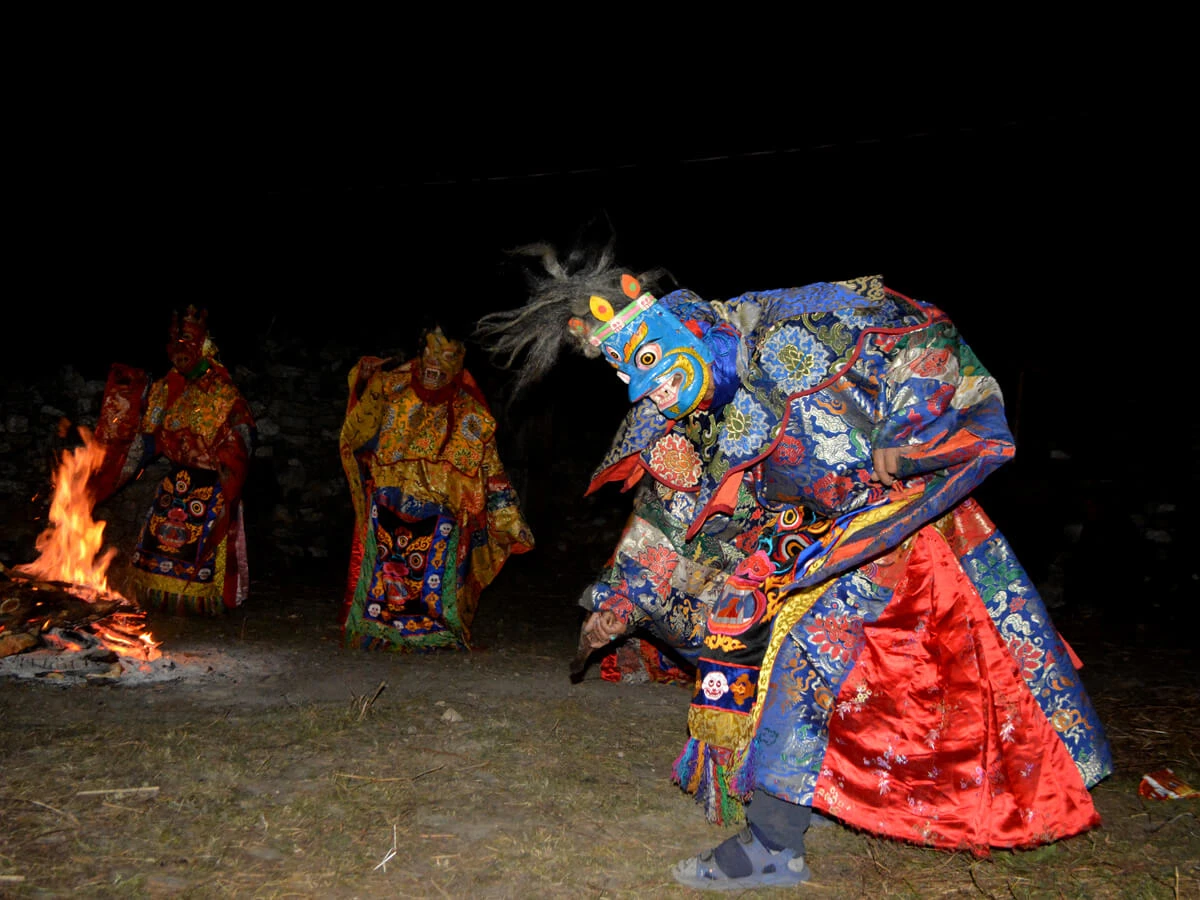
The valley takes its name from Buddhist tradition and is considered one of the beyul, or hidden sacred valleys, identified by Guru Rinpoche (Padmasambhava). This spiritual weight shows up constantly on the trail, in the density of gompas, mani walls, and chortens found even in small, sparsely populated stretches.

Rachen Gompa, the valley's main nunnery, and Mu Gompa, its largest monastery, anchor the upper valley's religious life. Because tourism arrived here later and more slowly than in Everest or Annapurna, language, dress, and monastery routines remain closer to their traditional form.

Homestays in Tsum Valley

Formal teahouses are the standard here, but in a handful of villages, informal homestay arrangements can be made through your guide, offering a shared meal and a bed with a local family rather than a standard lodge stay. Facilities are basic, often a shared outhouse with no running water, but the cultural exchange is worth it for trekkers who want a deeper look at daily life in the valley. If this interests you, ask your agency in advance whether a homestay night can be built into the Chumling to Chhokhangparo stretch of the itinerary.

Alternative Treks to the Manaslu Tsum Valley Trek

If you are weighing this against other options, the standard Manaslu Circuit Trek adds the Larkya La Pass crossing at 5,106 meters and drops into the Annapurna region near Dharapani, for trekkers who want a high mountain pass alongside the cultural experience. The Annapurna Circuit Trek offers a longer, more infrastructure-rich alternative with its own high pass at Thorong La. For a shorter, easier option, the Langtang Valley Trek sits closer to Kathmandu and suits trekkers with less time. The Upper Mustang Trek offers a similarly remote, culturally Tibetan experience further west, at a higher cost and with its own special permit.

Packing Essentials for the Manaslu Tsum Valley Trek

  • Clothing: base layers, insulating mid layers, a waterproof outer shell, trekking pants and shirts, a warm hat and gloves, trekking socks
  • Footwear: broken-in trekking boots, camp shoes for the evenings
  • Gear: backpack, daypack, a sleeping bag rated for below-freezing temperatures, trekking poles, headlamp with spare batteries, water bottles or a hydration system
  • Accessories: sunglasses, sun hat and sunscreen, a buff or scarf, personal first aid kit, multi-tool, dry bags
  • Personal items: toiletries, a travel towel, snacks and energy bars, travel documents, a camera or smartphone

Insider Tips for the Manaslu Tsum Valley Trek

Choose a guide with direct ties to the Tsum community, since local knowledge shapes this trek more than most. Pack light but smart, and do not skip layers for the cold mornings at Mu Gompa and Ganesh Himal Base Camp. Take the acclimatization days seriously, since altitude sickness is a real risk above 2,500 meters even without a pass crossing. Sit with meals in the tea houses and talk with the families running them, since Tsum Valley's cultural depth is its main draw. Trek in spring or autumn for the clearest views and driest trails, and treat monasteries and mani walls with the respect due to an actively used religious site, not just a photo stop.
FAQs

Manaslu Tsum Valley Trek FAQs

This itinerary runs 17 days door to door from Kathmandu, including sightseeing days, drive days to and from Sotikhola, and the full trek through Tsum Valley.

You need the Manaslu Restricted Area Permit, the Tsum Valley Restricted Area Permit, the Manaslu Conservation Area Permit (MCAP), and the Chumnubri Rural Municipality Entrance Permit. All are processed through a registered trekking agency, since independent trekking isn't allowed in this restricted region.

No. The Restricted Area Permit already records your name, passport number, and route with the Department of Immigration, so a TIMS card isn't required.

No. Since it is a restricted region, solo trekking isn't permitted. You need a minimum of two trekkers, a government-licensed guide, and a registered trekking agency.

No. This itinerary goes deep into Tsum Valley and returns the same way, without crossing into the Annapurna region. Trekkers who want the Larkya La crossing should look at the Manaslu Circuit Trek instead.

The highest point is Ganesh Himal Base Camp at 4,200 meters, reached as a day hike from Gumba Lungdung. Mu Gompa, at 3,700 meters, is the highest monastery visited.

Yes. On day 9, the route passes Milarepa's cave (Piren Phu) on the way to Nile, along with Rachen Gompa.


It suits trekkers with some general trekking experience. It does not require technical pass-crossing skills, but the altitude reached at Mu Gompa and Ganesh Himal Base Camp still calls for good fitness and careful acclimatization.

Spring (March to May) and autumn (September to November) offer the most favorable weather, clearest mountain views, and most stable trail conditions.

Trekkers stay in a hotel in Kathmandu and in local teahouses or lodges throughout the trekking days, with camping possible as an alternative, particularly around the Ganesh Himal Base Camp side trip.

No. As a restricted area that only opened to trekkers in 2008, Tsum Valley sees far fewer visitors than the Manaslu Circuit, Everest Base Camp, or Annapurna, keeping monasteries and village life close to their traditional form.

Yes. Given the high-altitude terrain and remote location, where the nearest hospital can be a two-day walk away, travel insurance covering high-altitude trekking and emergency evacuation is strongly recommended.

Ready to Book?
Secure your spot now and take the first step toward your next unforgettable adventure.

What Our Guests Say?

4.9
based on 77 reviews
4.9
based on 37 reviews
4.9
based on 11 reviews
Unbeaten Trail and Tibetan Buddhism main Attraction

When I came to Nepal, I had no idea how I’d be treated and how my experience would be since this is the first time I was traveling to Nepal....

read more +
J
Johnson - Australia
November 04, 2018
Rich Culture, and Trans Himalaya Region

If you are planning to go to the Tsum Valley trek or any other trek in Nepal then I highly recommend that you contact with Nepal Adventure Team. They are...

read more +
A
Amelia - Canada
April 08, 2018

You May Also Like

Luxury Tour
Everest Heli Tour in Nepal
5.0(12 Reviews)
5 Hours
5 People
Price From
US$1125
US$1250
Chitwan Jungle Safari Tour
5.0(4 Reviews)
3 Days
35 People
Price From
US$295
Trisuli Rafting
1 Days
28 People
Price From
US$45
Need Help? Call Us+977 9841486322