Temples, Architecture, and Monuments at Bhaktapur Durbar Square
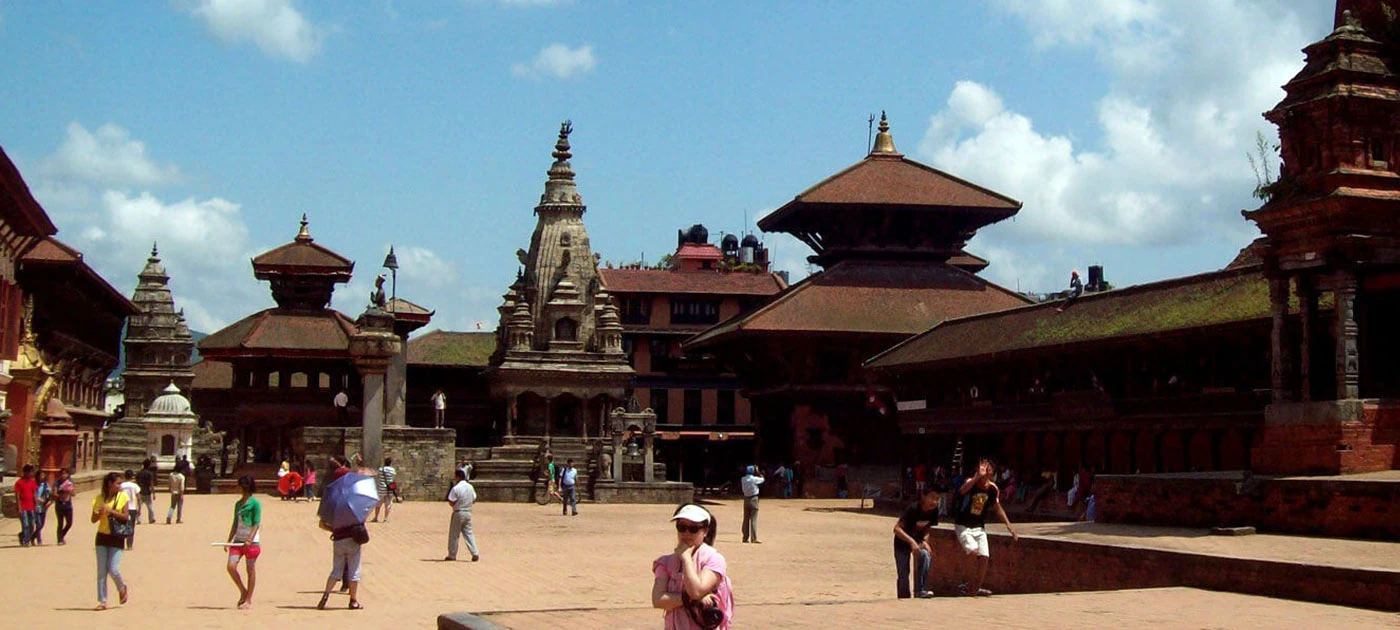
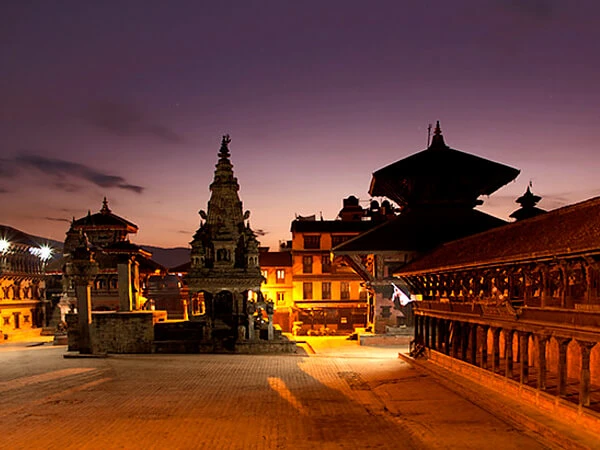
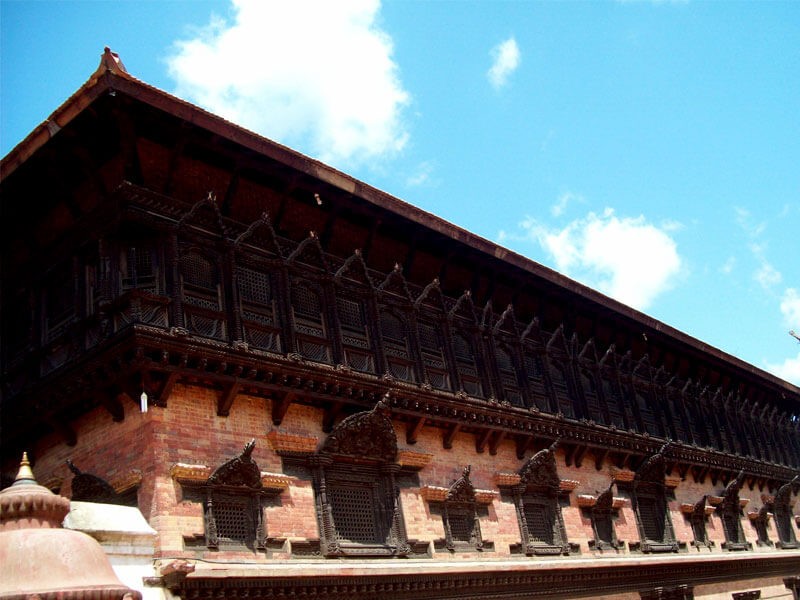
Bhaktapur Durbar Square's layout begins with a 55-window palace built by King Jitamitra Malla and home to royal figures until 1769. Currently, it is a national gallery. Nearby is the Golden Gate leading to Mul Chowk court, where Taleju Temple (temple of goddess Taleju Bhawani)is located. Taleju Bhawani is regarded as the home goddess of the Kathmandu Valley, the residing Kings, and the people, so all three Durbar Squares of the Kathmandu Valley have a Taleju Bhawani temple. In the same token, the entire complex consists of at least four distinct squares: Durbar Square, Taumadhi Square, Dattatreya Square, and Pottery Square but is widely known as Bhaktapur Durbar Square.
Bhaktapur Durbar Square is enriched with the monuments and temples which are briefly described below for your ease while visiting Bhaktapur Durbar Square :
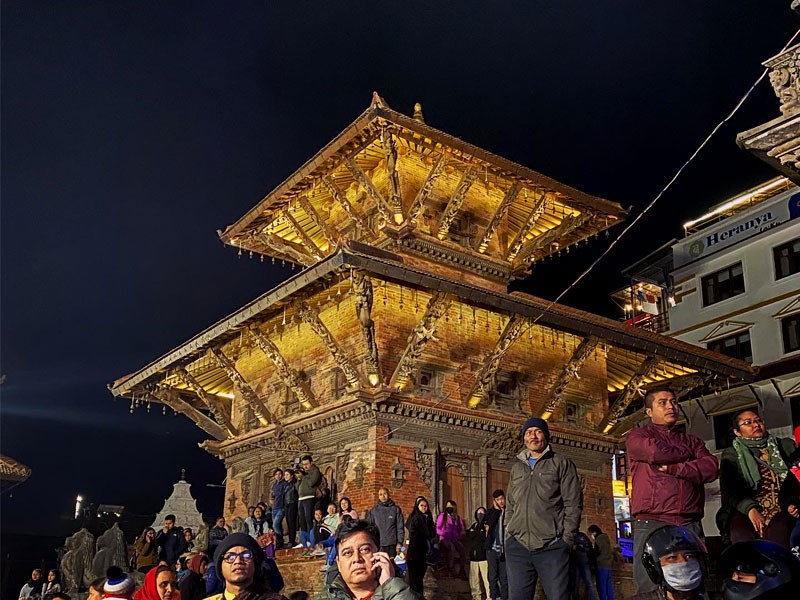
55 Window Palace:
The Palace of Fifty-five Windows was built during the reign of King Yaksha Malla, 1427 AD, and remodeled by King Bhupatindra Malla in the 17th century. The Fifty-Five Window Palace, of bricks walls with gracious setup, sculptural design, and a balcony of fifty-five windows, is considered to be the masterpiece of woodcarvings.
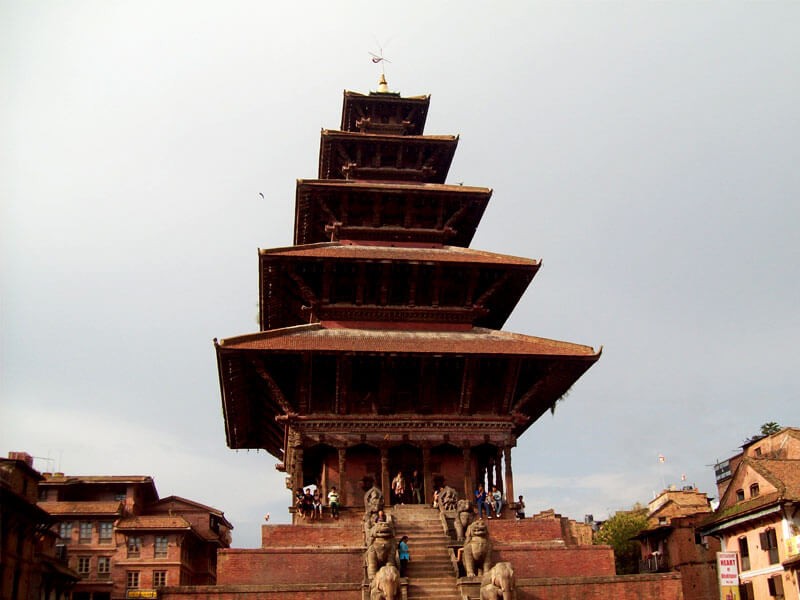
Nayatapola Temple:
Nayatapola means five stories in the Newari Language (the language of the Newar community) as the representation of five basic elements (Earth, Water, Air, Fire, and Space). It is the highest and largest pagoda of Nepal, with statues lined up on two sides of the staircase to guard the presiding goddess Shiddhilaxmi, which can be seen in five layers from the base of the temple. King Bhupatindra Malla built it in 1702 AD.
Golden Gate:
The golden gate is surmounted by a figure of the Hindu goddess Kali and Garuda (mythical griffin) and attended by two heavenly nymphs. In the same token, it is beautified with marvelous intricacy. King Ranajit Malla built it in 1754 AD.
Additionally,
- In 1696 AD, King Bhupatindra Malla installed the Lion Gate.
- Four Pilgrimage Sites: The replication of four pilgrimage sites- Jagannath, Kedarnath, Rameshwor, and Badrinath was made in the area. These four sites are located in India and have a huge religious value as per Hindu Mythology.
- Vastola Temple is dedicated to Goddess Durga and was built by Jaya Ranjit Malla in the 17th century.
- Yakchwor Mahadev Temple was built in 1480 AD by Yakshya Malla and is regarded to be the replication of Pashupatinath Temple.
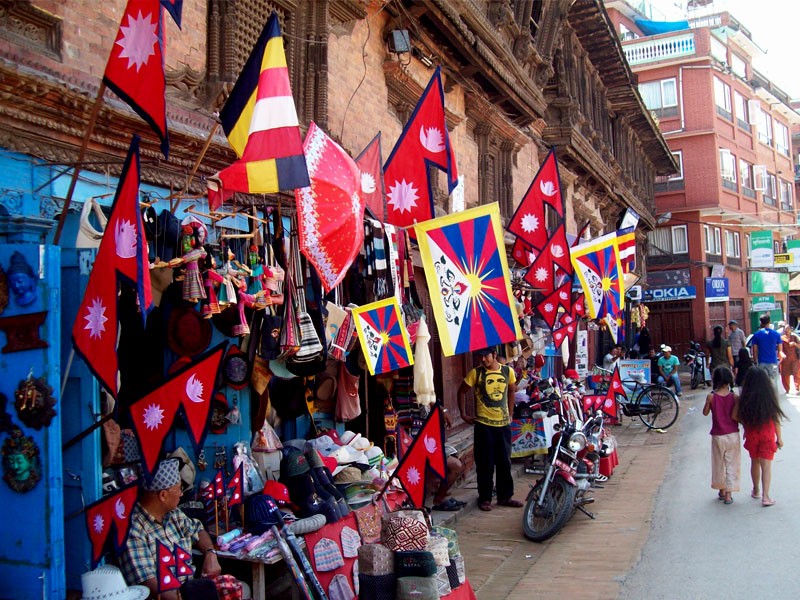
- Taumadhi Square consists of the local community, the local street market, and the iconic Nyatapola Temple.
- Bhairav Nath Temple: Jagat Jyoti Malla initiated the temple by building a one-storied which was later added to two more storeys by King Bhupatindra Malla in 1718 AD
- Narayan Temple, dedicated to Lord Vishnu, was built in the 12th century.
- Dattatreya Temple is the main highlight of Dattatreya Square, which was built in 1427 AD by King Yakshya Malla and later renovated by his son in 1458 AD. It is believed that the temple was originally built using wood from a single tree. The temple is dedicated to Dattatreya, a curious hybrid deity that blends the elements of three main Gods of Hinduism: Brahma (the founder), Vishnu (the preserver), and Shiva (the destroyer).
- Bhimsen Temple is dedicated to one of the personalities of Mahabharat sage where he is the second-oldest brother of the five Pandavas, and was built in 1605 AD.
- Pujari Math is the house of priests built by King Yaksha Malla in the 15th century. Currently, the house is a wood carving museum. It has the famous peacock window situated on the eastern face of the house. The peacock window's designed wooden frame is widely used as gifts and souvenirs in Nepal.
Moreover, Bhaktapur Durbar Square also incorporates assets such as the Erotic Elephant Temple, Ugrachandi, and Ugrabhairab, Hanuman statue, along with cultural assets and lifestyle. You will also see the modified temples that were destroyed in the 2015 earthquake in Nepal. While visiting Bhaktapur Durbar Square, make sure you taste the famous Juju Dhau (King of Curd in the Newari language). Juju Dhau has a unique texture, aroma, and taste as it is traditionally produced by the locals of Bhaktapur. It is highly demanded in Nepal, though only available in the Kathmandu Valley.
Entrance Fees:
- SAARC Nationals: NPR 500
- Chinese Nationality: NPR 500
- Foreign Nationals: NPR 1500
- Nepalese Nationality: Free
Personal Tips
- Carry personal ID certificates (passports).
- It is better to carry a little cash while touring Nepal.
- “Namaste” is widely practiced in Nepal, so you can use Namaste instead of hello/hi to begin any conversation. Nepalese adore foreigners using Namaste.
- If you lose your group/ tour guide, you can communicate with tourist police residing in every tourist area.
- Most Nepalese know the English language, so you can easily communicate with locals.
Do’s and Don’ts at Bhaktapur Durbar Square
- According to local custom, you can get into temples and holy places after taking off your shoes.
- Don’t bring anything with fur or leather products inside the temples.
- Watch the notice for photography and do not take photos of temples/statues without permission. At some of the places, you may not be allowed to have your cameras, and the authorities will return your camera after you visit the concerned area/temples/monument.
- Do not wear a hat/ cap inside holy places, such as temples, or while praying to gods in Nepal.
- Nepalese light, fire, and incense, which they regard as holy and religious, so value them while visiting and do not litter in those areas. If you face allergy or difficulty due to the aroma of incense, you can use a mask to cover your nose and mouth.
- Do not touch any elements/assets with your feet or stretch your feet towards them.